

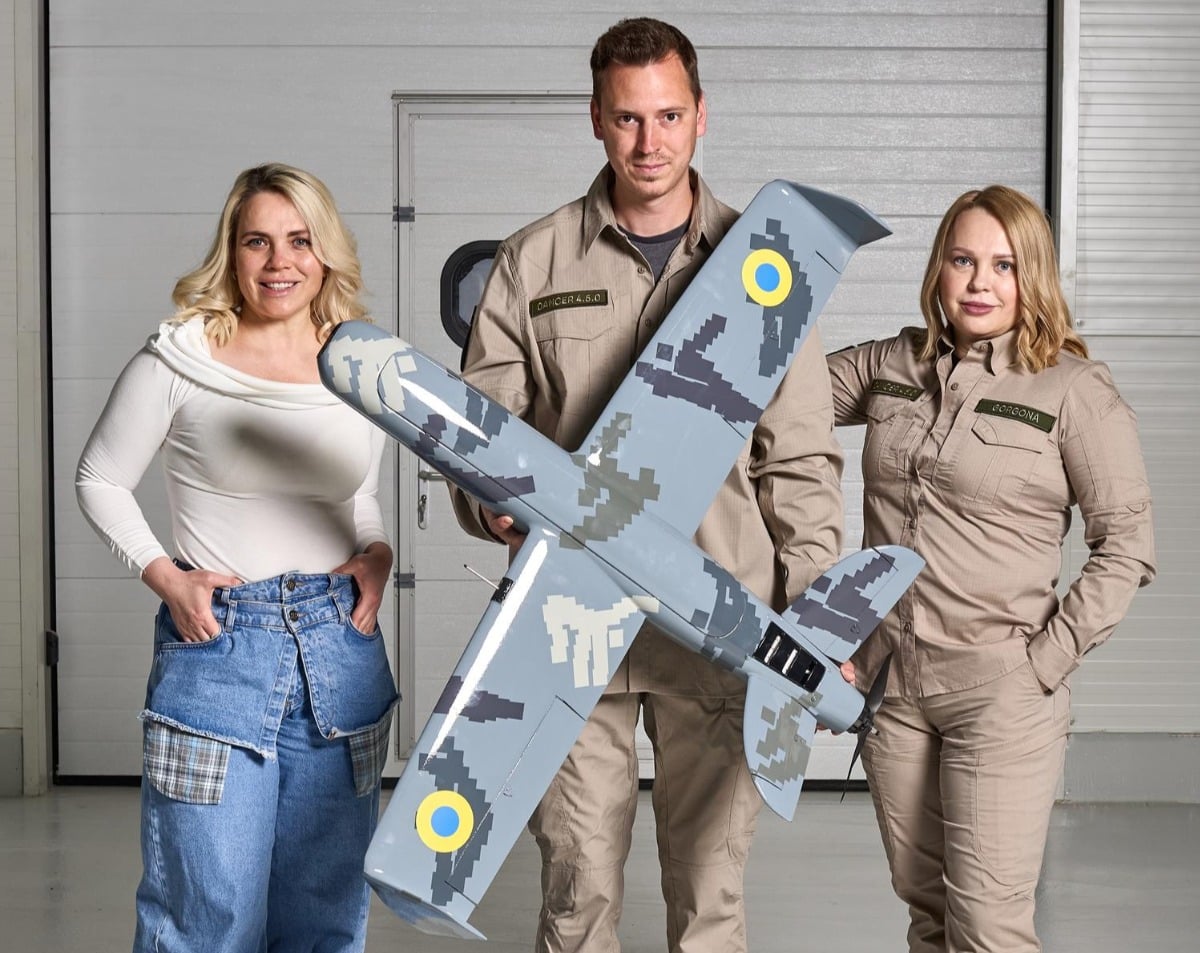
- Ukraine's Yartura unveiled the Dancer 4.5.0 fixed-wing interceptor drone with 450 km/h speed, 30 km range, and AI re-engagement targeting.
- The system carries a 1 kg warhead, weighs 6.8 kg at takeoff, and launches from a pneumatic catapult with electric propulsion.
Ukrainian company Yartura has unveiled a fixed-wing drone interceptor capable of reaching 450 km/h (280 mph) and equipped with an AI-powered automatic target re-engagement system, developed specifically to counter the growing speed of Russian kamikaze drones, the Ukrainian defense outlet Oboronka reported, citing a company announcement.
The system, designated Dancer 4.5.0, arrives as Ukraine’s drone interception network faces a direct technological challenge: Russia is accelerating the speed profile of its attack drones, with jet-powered variants entering the battlefield in growing numbers alongside the slower propeller-driven Shaheds that Ukrainian interceptors have been hunting successfully for months.
“The DANCER 4.5.0 drone interceptor from this complex, with an operating speed of up to 450 km/h and an automatic target guidance module based on artificial intelligence, is designed to work against a wide range of aerial threats and is especially effective in scenarios where targets appear at significant altitude and distance,” Yartura CEO Oleg Bukarenko said.
Co-founder Nadine Omelchenko provided the operational context that drove the program’s development, pointing to a specific tactical problem the team encountered during 2025.
“During the first flight tests, the new drone demonstrated the ability to re-engage the target, effectively performing a complex maneuver around it until the moment of destruction,” Omelchenko said.
The technical specifications confirm a system built around speed and persistence rather than brute lethality. The Dancer 4.5.0 reaches a top operating speed of 450 km/h (280 mph), engages targets at ranges out to 30 km (19 miles), and reaches altitudes up to 4.8 km (15,750 ft). Its takeoff weight is 6.8 kg (15 lb), with a 1 kg (2.2 lb) warhead, and it launches from a pneumatic catapult launcher powered by an electric propulsion system. The base package includes two Dancer 4.5.0 interceptors and a Dancer-B1 ground control and command station, giving operators a redundant engagement capability from a single deployed unit.
The system’s defining feature is the Automatic Target Tracking System, designated ATTS, which allows the drone to re-engage a target if the first attack pass fails. In practice this means the interceptor can circle a target, adjust its approach, and strike again without requiring the operator to manually re-acquire and redirect the drone from the ground station. That persistent re-engagement capability addresses one of the core challenges of drone-on-drone interception: the extremely short engagement windows available when two fast-moving unmanned systems converge, and the high probability of a miss on a first pass against a maneuvering or fast target. A drone that can reattack autonomously until it connects closes that gap in a way that single-pass interceptors fundamentally cannot.
The threat driving the Dancer 4.5.0’s development is documented and specific. According to Ukraine’s Main Intelligence Directorate, Russia’s Geran-5 attack drone, a more advanced variant of the Shahed family, carries a maximum takeoff weight of approximately 850 kg (1,875 lb), cruises at 450 to 600 km/h (280 to 370 mph), flies for up to two hours, and reaches a range of up to 950 km (590 miles). Its stated maximum altitude is 6 km (19,685 ft), though actual observed operational altitude ranges between 200 m (656 ft) and 3 km (9,840 ft). That speed profile, the same 450 km/h that represents Dancer 4.5.0’s top operating speed, is precisely the regime where Ukraine’s earlier-generation interceptors begin to struggle, and it explains why Yartura’s engineers made matching that speed a design priority rather than an aspiration.
The target categories Yartura lists for the Dancer 4.5.0 extend beyond Shahed-class strike drones to include reconnaissance unmanned systems, relay drones used to extend communications range for Ukrainian strike drone operators, small tactical unmanned aircraft, and other aerial systems posing threats to controlled airspace. That breadth of target coverage reflects Ukraine’s operational reality, where the air threat is not a single category of weapon but a continuously evolving mix of systems used for different purposes at different altitudes and speeds.
The system’s name carries its own layer of meaning. Yartura explained that “4.5.0” is a military code phrase meaning “all clear” or “all is calm,” while “Dancer” references the drone’s re-engagement behavior, circling and maneuvering around a target until the kill is confirmed. The company chose the Ukrainian combat dance hopak as the visual identity for the system, a deliberate fusion of cultural reference and combat function.