

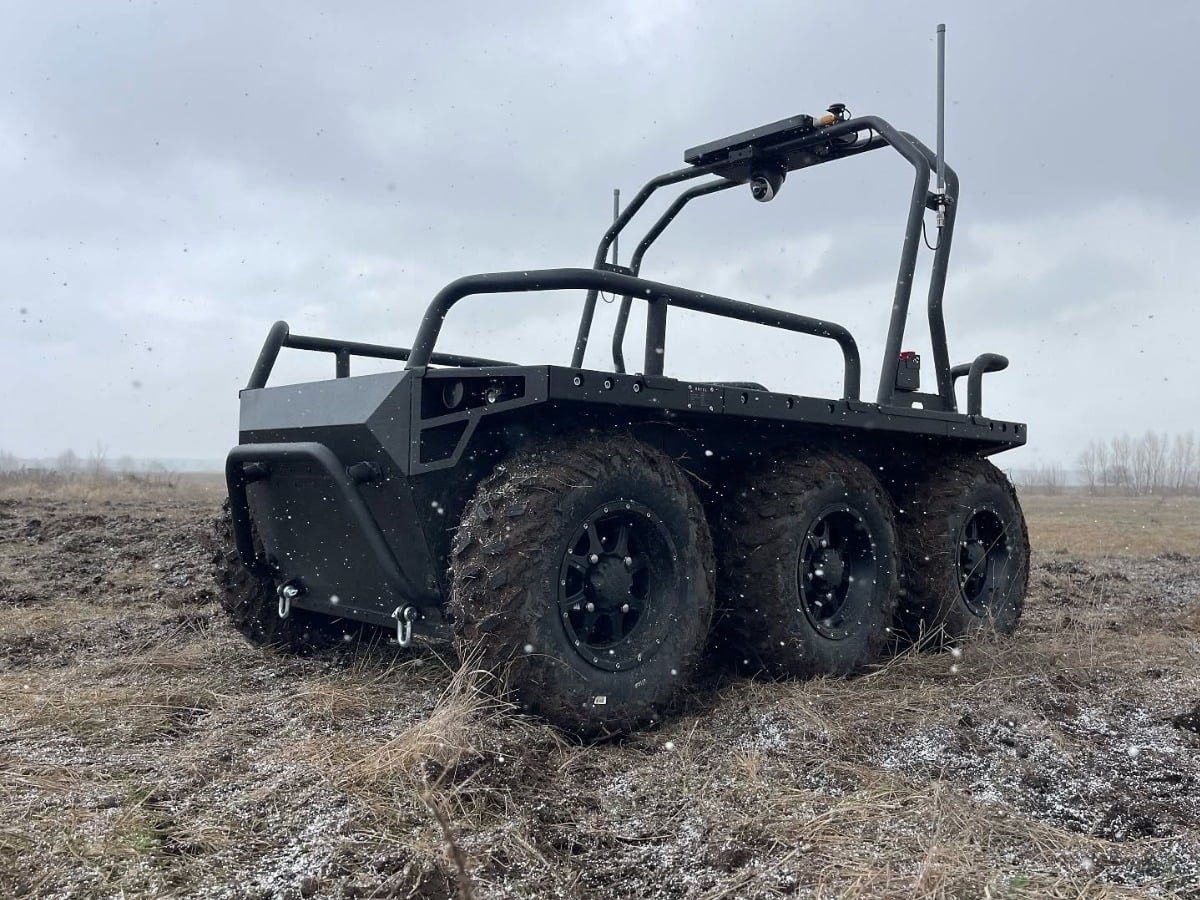
- Ukrainian ground robotic systems completed 16,676 logistics and evacuation missions in June 2026, up 18.6% from May and 122% since January.
- The Defense Procurement Agency has contracted more than 22,000 ground robots for 2026, with over 400 combat units spending ePoints worth roughly $778 million through the Brave1 Market.
Ukrainian ground robots ran more than 16,600 supply and evacuation missions in June, the highest monthly total since the Defense Ministry began tracking the numbers in January, and the pace shows no sign of slowing as Kyiv pushes to get soldiers off the most exposed roads to the front.
Defense Minister Mykhailo Fedorov said the country’s ground robotic complexes, known in Ukraine by the acronym NRK, completed 16,676 missions in June, an 18.6% jump from May and a 122% increase since the start of the year. The military has now logged more than 66,300 of these missions since January, according to the ministry, delivering ammunition and food to frontline positions and pulling out wounded and dead soldiers from areas too dangerous for a truck or a soldier on foot.
“Every mission a robot performs instead of a soldier is a potentially saved life,” Fedorov said.
The monthly numbers tell the story of a technology moving from experiment to routine. January opened at 7,511 missions. February brought 7,960, March climbed to 9,072, April jumped to 11,028, and May reached 14,059 before June’s total of 16,676. That is not a gradual curve. It is closer to a doubling roughly every four months, which matches what Ukrainian officials have said publicly about their ambitions for the program: get robotic platforms carrying essentially all frontline logistics, freeing infantry and support troops from trips that increasingly end in an FPV drone strike before they reach their destination.
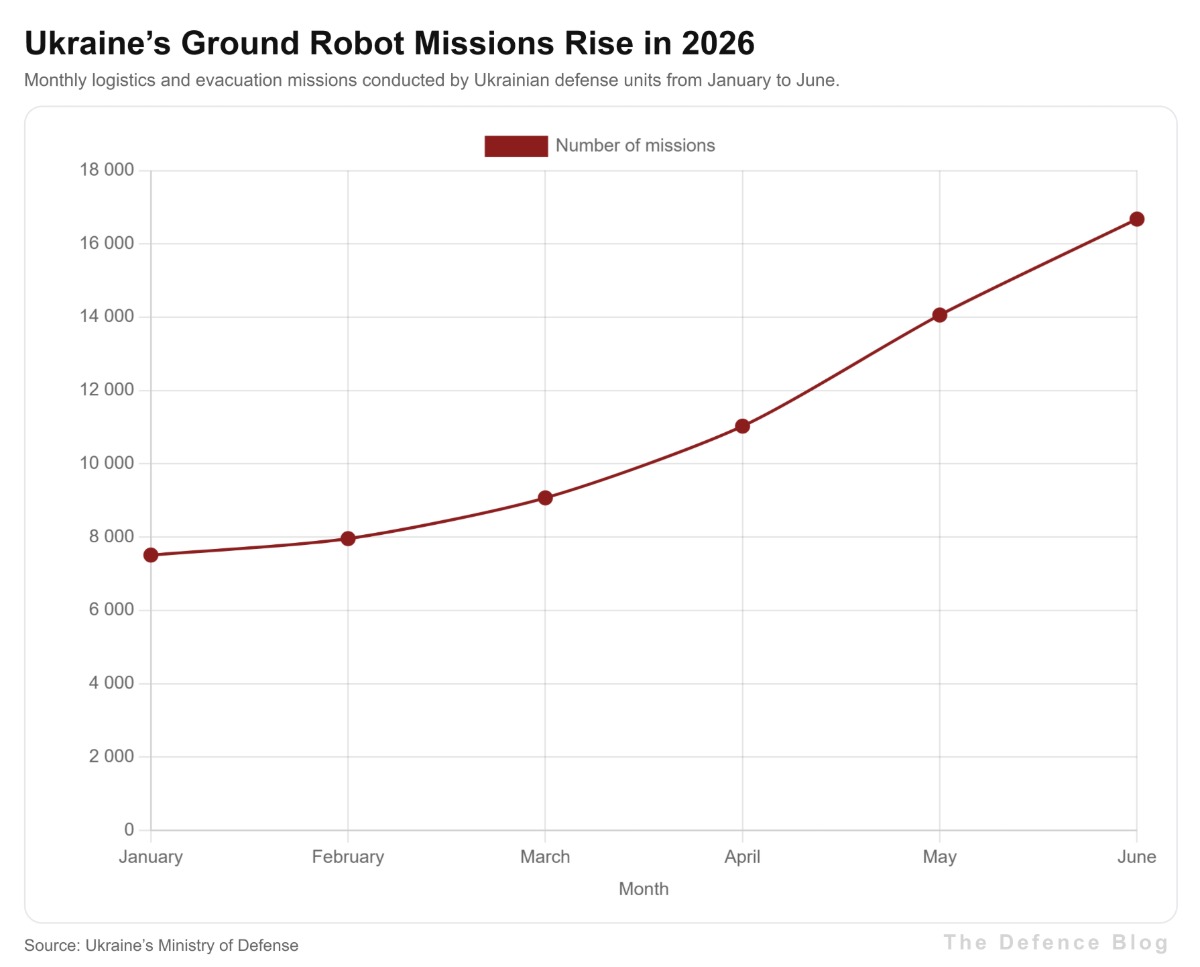
Ground robots, sometimes called UGVs, are wheeled or tracked platforms that range from small cargo carriers to larger armored haulers, remotely piloted by an operator who may be positioned kilometers away from the vehicle itself. Unlike a truck or armored personnel carrier, they carry no crew, so a hit does not cost a life, only a machine that can be replaced faster than a trained soldier. That distinction has become central to Ukrainian tactics as Russian fiber-optic drones, which cannot be jammed by standard electronic warfare, have pushed the effective kill zone along parts of the front out to several kilometers from the contact line. Frontline commanders have described sending an armored vehicle into that zone as inviting an engagement with near certainty, which is exactly the calculation that has driven the shift toward unmanned resupply and evacuation.
Kyiv set out earlier this year to contract 25,000 ground robotic systems in the first half of 2026 alone, more than double what it procured across all of 2025, and President Volodymyr Zelenskyy has spoken of a target near 50,000 units for the year. Fedorov’s ministry has already begun signing manufacturer contracts for 2027, a break from the short production cycles that defined Ukraine’s drone and robotics industry earlier in the war and a sign the government expects the demand for these platforms to keep growing rather than taper off.
To keep pace, the Defense Procurement Agency, known by its Ukrainian acronym DOT, has contracted more than 22,000 ground drones for 2026, with deliveries arriving at units gradually and further contracts expected before the year ends. Separately, by mid May, Ukrainian units had received 1,028 ground robotic complexes worth roughly $11.5 million through the DOT-Chain Defence marketplace, a system that lets soldiers select the equipment they judge most useful rather than waiting on a centralized allocation.
Behind the mission numbers sits an incentive structure the ministry calls ePoints. Units that complete verified UGV missions earn points that can be spent through the Brave1 Market, a defense technology marketplace, on additional equipment: FPV drones, heavier bomber-type drones, more ground robots, electronic warfare gear and other systems. More than 400 combat units have already used the updated ePoints program, ordering equipment worth roughly $778 million, including over 500,000 drones. Fedorov’s ministry says the system does more than reward performance. Because every mission is logged and verified, the ministry can see which robotic platforms are actually working under fire and scale up production of the models that prove themselves, rather than betting procurement budgets on specifications alone.
“Following the President’s directive, we continue to secure Ukraine’s technological advantage and scale technologies that help preserve the lives of our military personnel,” Fedorov said.
The range of platforms entering service has also widened. The ministry has cleared 67 new ground robot models for use in the first half of 2026 alone, a pace of certification that reflects both the size of Ukraine’s domestic robotics sector, now numbering hundreds of companies under the Brave1 umbrella, and the pressure to get working equipment to units quickly rather than waiting on lengthy testing cycles. Recent additions include specialized platforms such as a demining robot cleared to locate and neutralize mines and grenades remotely, reducing the need for sappers to work by hand in contaminated ground.