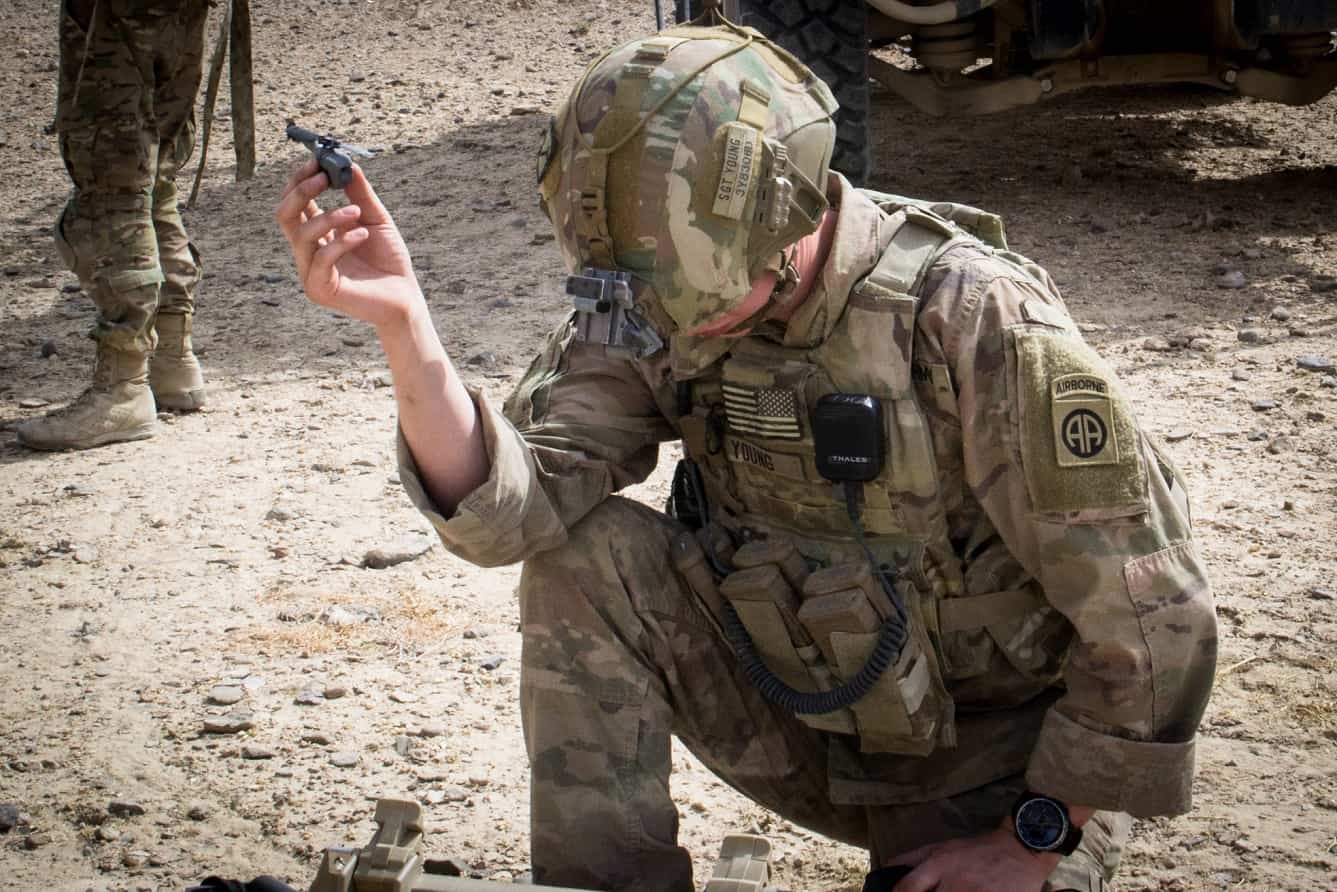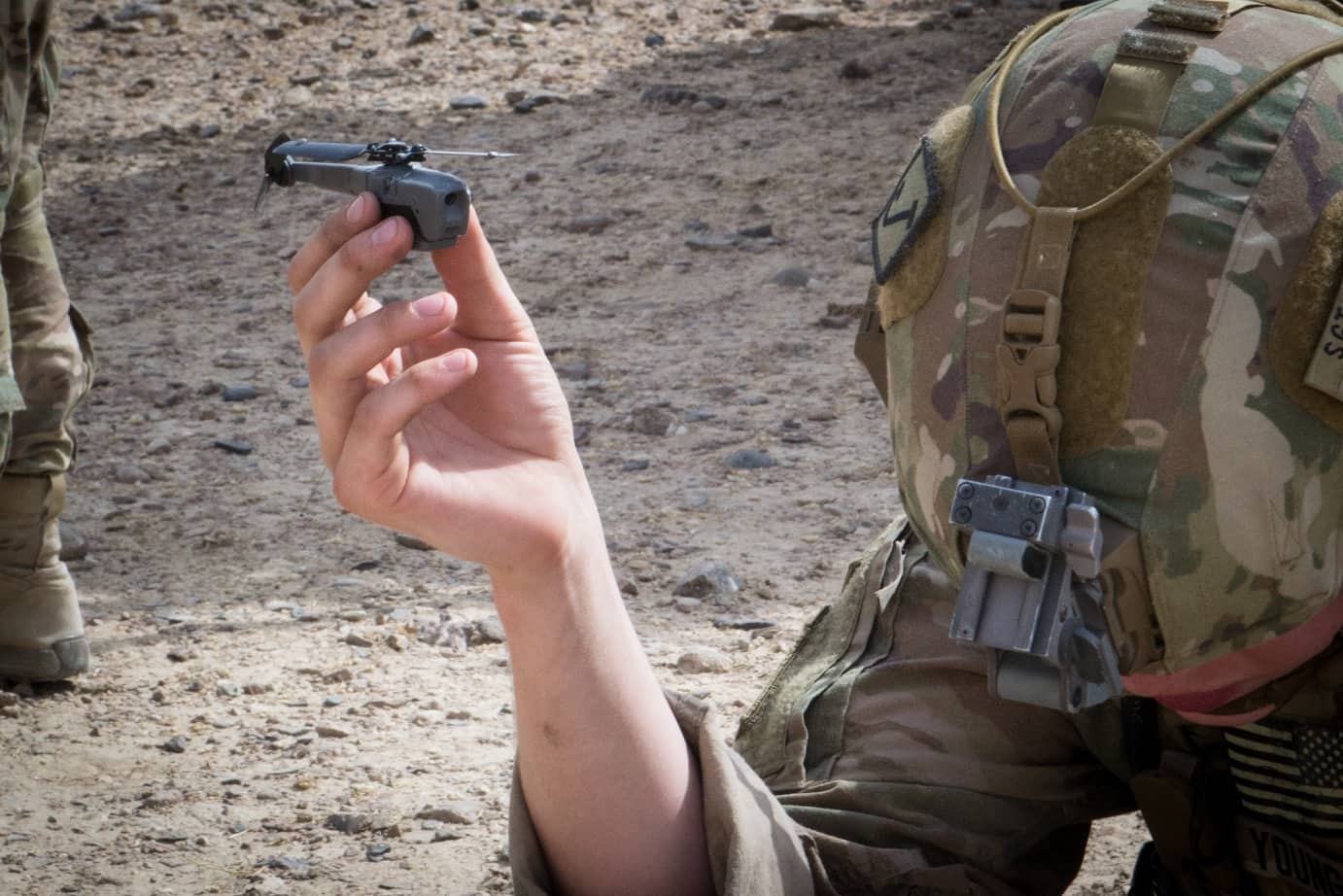
U.S. Army paratroopers use 21st-century personal-reconnaissance Unmanned Aerial System, called the Black Hornet, during a patrol in Afghanistan.
Photos released Saturday by 3rd Brigade Combat Team, 82nd Airborne Division shows a dismounted patrol near in Kandahar, Afghanistan.
The paratroopers conducted the patrol to gauge security within the region and to speak to local Afghan civilians about their concerns. During operations, was launched a Black Hornet personal Unmanned Aerial System in support of a dismounted patrol in the region.
“The Black Hornet provided overhead surveillance for the patrol as it gauged security in the region and spoke to local Afghans about their concern,” said in a release.
The first Army brigade to utilize the personal UAS, paratroopers of 3rd Brigade routinely employ the system to provide on-the-ground elements better awareness of their environment and while reducing their tactical risk.
The Black Hornet is a pocket-sized helicopter drone designed to lets soldiers clear access with greater confidence, maneuver with speed, and gain the high ground. The cutting-edge UAS technology delivers fast reconnaissance from the air. Accurate information, rapidly delivered, can greatly enhance troop operations and mission success.
The Black Hornet can access dangerous hiding places in darkened buildings, caves, and even pipes in daylight, low light, and at night ensuring detection and identification of threats while providing greater security for soldiers monitoring from a safe distance away.
According to open sources, with a 25-minute flight time at ranges of 2 km (1.24 miles) and speeds of 21.49 kph (13.35 mph), the Black Hornet can rapidly and more safely engage targets beyond visual line-of-sight and conduct real-time weapon effectiveness assessment.