

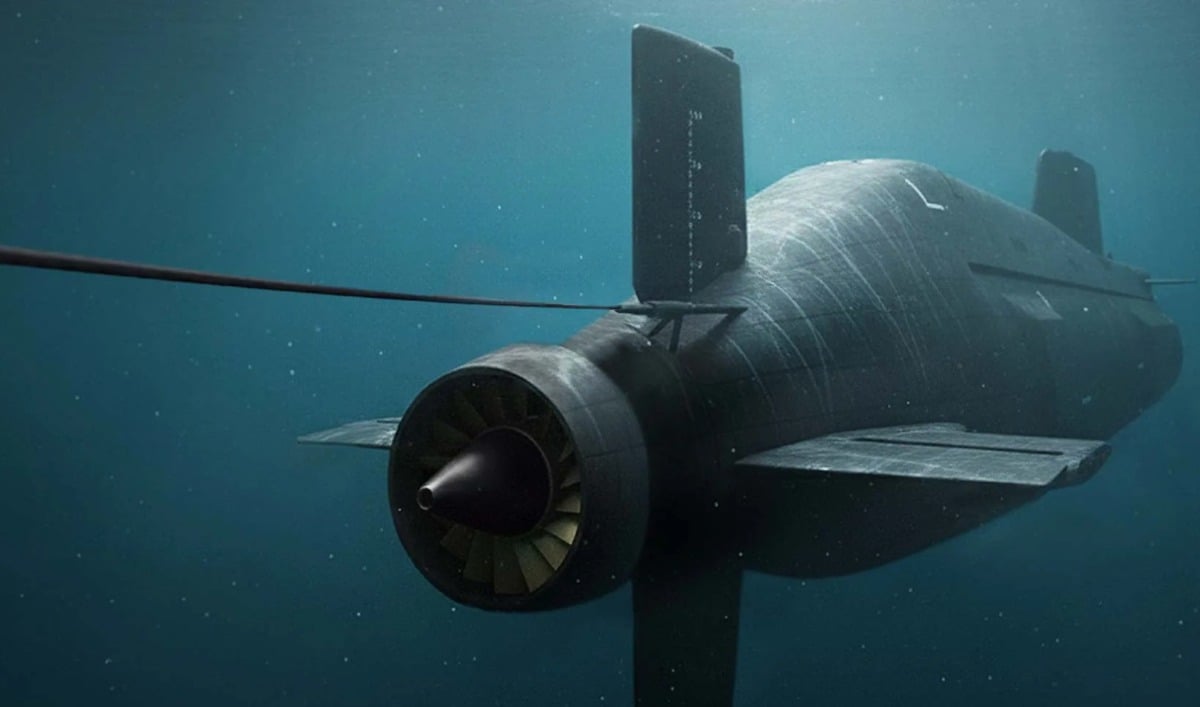
- The Navy awarded L3 Technologies' Chesapeake Sciences Division in Millersville, Maryland, a contract worth up to $42.7 million for towed array sonar support.
- The Naval Undersea Warfare Center, Division Newport, Rhode Island, will manage the contract through an ordering period ending in July 2031.
The U.S. Navy has committed up to $42.7 million to keep that cable, and the sensitive electronics packed inside it, working and improving for the next five years.
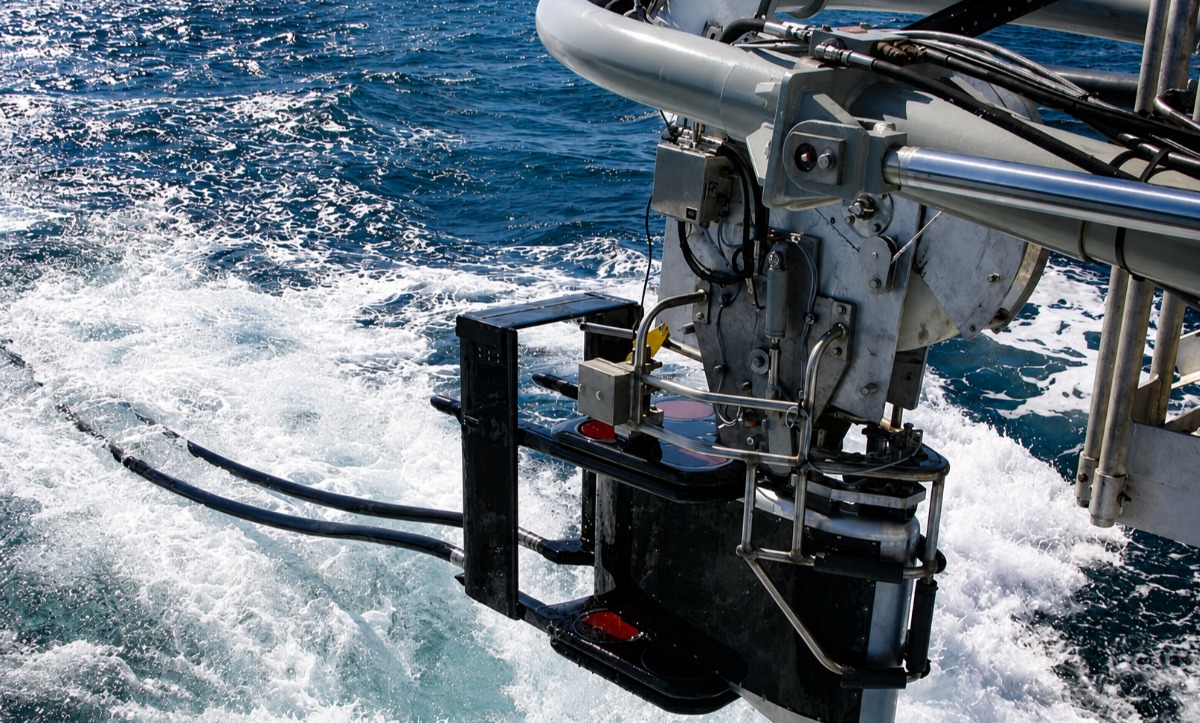
The Department of War awarded the contract to L3 Technologies’ Chesapeake Sciences Division, a Millersville, Maryland-based company that has spent more than a decade building the Navy’s towed array sonar systems, the long cables lined with underwater microphones called hydrophones that submarines tow behind them at a safe distance to listen for the faint acoustic signature of enemy vessels. Towing the array away from the submarine matters because a sub’s own machinery, propulsion, and hull noise would otherwise overwhelm the delicate listening equipment, so stretching the sensor line out on a cable, sometimes hundreds of feet long, lets it pick up sounds a submarine’s onboard sensors alone could never separate from the vessel’s own racket.
The new contract covers hardware and services to support what the Navy calls its towed array programs using towed array integrated product team telemetry, a mouthful of procurement language that essentially means the electronic systems responsible for transmitting acoustic data from the array itself back to the submarine’s sonar operators in real time.
Without reliable telemetry, an array can be perfectly tuned to detect a distant submarine and still fail to get that information to the sailors who need to act on it, which makes the plumbing connecting sensor to screen just as operationally critical as the sensor itself.
Chesapeake Sciences will carry out the work at its Millersville, Maryland facility, and the ordering period under this agreement runs until July 2031, giving the Navy roughly five years to place task orders against the contract as its towed array fleet needs upgrades, replacement parts, or engineering support. To get the arrangement moving, the Navy is obligating $171,010 in what the contract describes as service cost center funds at the first delivery order, money set aside specifically to satisfy a minimum guarantee, the smallest amount the government commits to spending under an IDIQ contract to make the arrangement legally binding for the contractor. That initial obligation is notably tiny compared to the $42.7 million ceiling, underscoring just how much of the contract’s eventual value depends on orders the Navy has not yet placed.
Unlike most large defense contracts, this one skipped the competitive bidding process entirely. The award relies on a specific legal authority found in federal acquisition law, invoking 10 U.S. Code 2304(c)(5) as carried out through Federal Acquisition Regulation 6.302-5, a provision that allows the government to bypass competition when a contract is authorized or required by statute, paired with 15 U.S. Code 638(r)(1), a law tied to the Small Business Innovation Research program that lets agencies award follow-on contracts to small businesses that developed technology through that program without reopening it to competing bidders. In practice, that combination typically signals that Chesapeake Sciences developed some piece of the underlying towed array technology through Navy-funded research and is now the only company positioned to build on that work, a common path for specialized undersea sensor technology where very few companies have the accumulated expertise to compete anyway.
The Naval Undersea Warfare Center, Division Newport, based in Newport, Rhode Island, is managing the contract as the government’s contracting activity, meaning the office responsible for negotiating terms, issuing task orders, and overseeing performance sits at one of the Navy’s primary centers for undersea warfare research and testing. Newport has served as a hub for American submarine and torpedo development for well over a century, and its continued role managing towed array contracts reflects how central passive sonar detection remains to the Navy’s broader anti-submarine warfare mission, particularly as Russia and China both continue investing heavily in quieter submarine designs specifically built to defeat the kind of listening technology this contract keeps funded.