

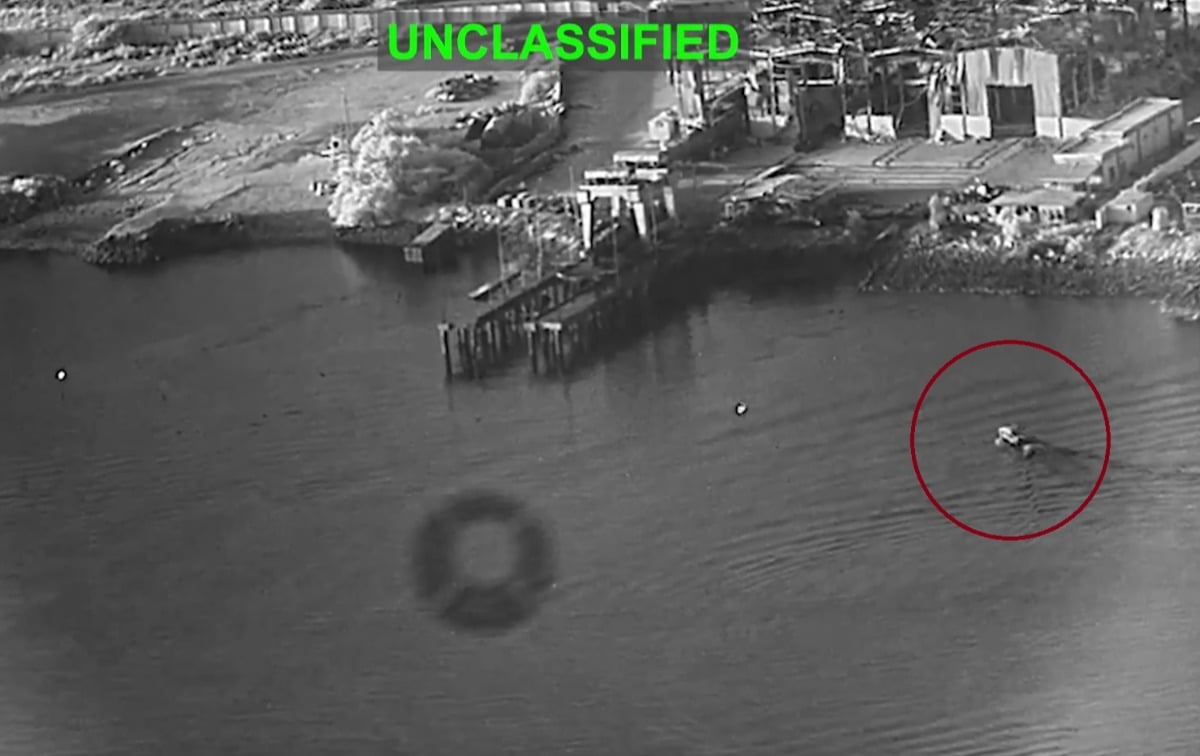
- CENTCOM confirmed three Saronic Corsair unmanned surface vessels struck a submarine and ship maintenance facility at Bandar Abbas Naval Base, Iran, on July 12.
- The strike marked the first time American forces have used sea drones in combat operations, following the same Corsair platform's use in a June 8 personnel rescue.
The U.S. military has now named the exact weapon it used to make history over the weekend, confirming that three Saronic-built Corsair unmanned boats carried out the first combat strike ever conducted by American sea drones, slamming into a submarine and ship maintenance facility at Iran’s Bandar Abbas Naval Base.
U.S. Central Command detailed the operation in a social media post, filling in specifics that were missing when the command first announced the sea drone debut a day earlier without naming the manufacturer or target.
“Yesterday, using multiple one-way attack surface drones, CENTCOM forces successfully struck a submarine and ship maintenance facility in Iran,” CENTCOM said.
“Three Corsair unmanned surface vessels hit the port at Bandar Abbas Naval Base, marking the first time American forces have employed sea drones in combat operations,” CENTCOM said.
“Last night’s strikes degraded Iran’s ability to continue attacking commercial shipping,” CENTCOM said.
Bandar Abbas sits on Iran’s southern coast along the Strait of Hormuz, the narrow waterway through which roughly a fifth of the world’s oil supply passes, and the base there functions as the headquarters for a major stretch of Iran’s naval forces, making it a logical target for a campaign CENTCOM says is built around degrading Iran’s ability to threaten commercial vessels transiting the strait. The base has already taken damage earlier in this conflict, with satellite imagery in March showing smoke rising from a converted oil tanker that Iran had turned into a mobile support ship docked there, so this weekend’s strike adds to a pattern of repeated American pressure on the same facility rather than marking the first time it has come under fire.
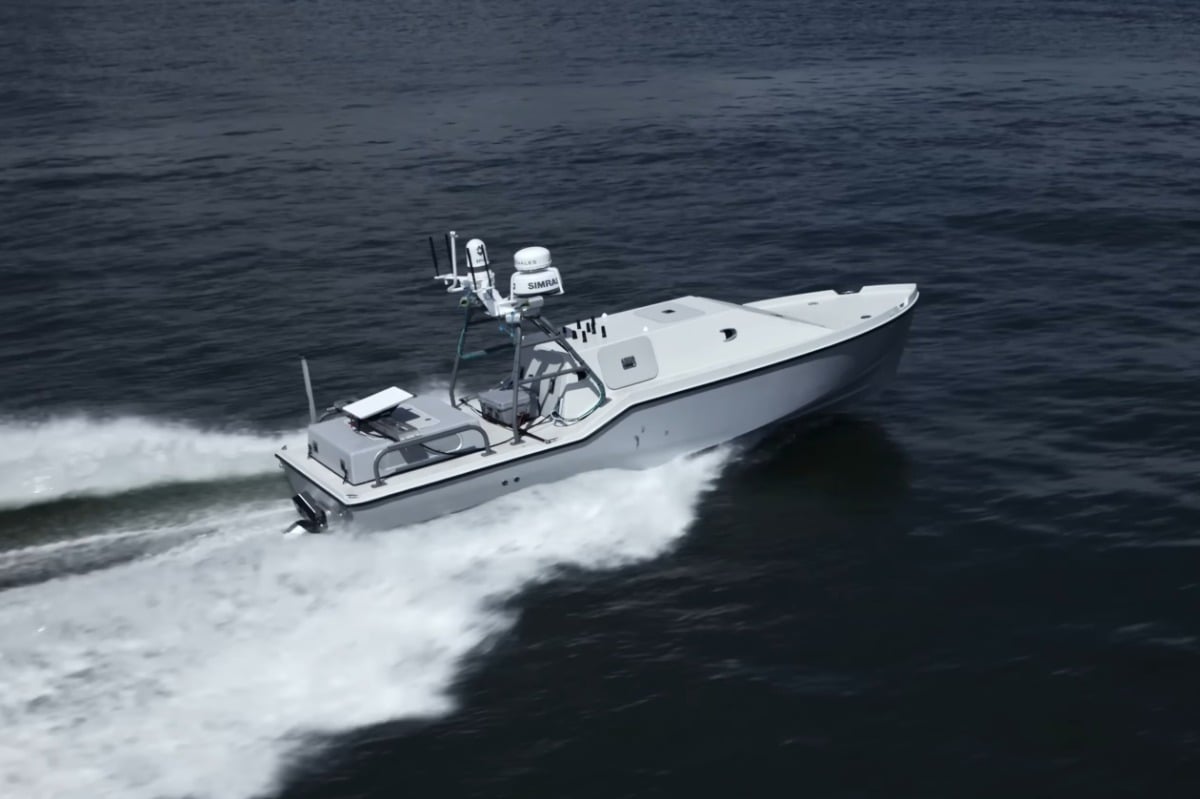
The same type of drone boat made headlines a month earlier, on June 8, when a Corsair operated by Task Force 59, the Navy’s dedicated unit for integrating unmanned systems and artificial intelligence into maritime operations, rescued two U.S. Army aviators from the water after their AH-64 Apache helicopter went down near Oman, an incident Trump blamed on an Iranian strike. That rescue mission marked the first known use of an unmanned military vessel to recover personnel at sea, and CENTCOM’s new statement draws a careful distinction from it, specifying that Sunday’s strike was the first time American forces used sea drones in combat operations, as opposed to the surveillance, rescue, and maritime security roles the Navy had used Corsairs for up to that point.
Built by the Texas-based company Saronic, the Corsair measures about 7.3 meters (24 feet) in length, can carry up to 453 kilograms (1,000 pounds) of payload across roughly 1,852 kilometers (1,000 nautical miles), and reaches a top speed above 35 knots (65 km/h), specifications that let it operate for extended, multiday missions either independently or as part of a networked group with a single human operator monitoring multiple boats at once. The Navy signed a production contract with Saronic worth $392 million in December 2024, and Task Force 59 began fielding the vessels in the Middle East in late March 2026, meaning the boats had been in theater for roughly three and a half months, mostly in surveillance and support roles, before this weekend’s strikes turned them into offensive weapons for the first time.
The Defence Blog reported today that Sunday’s strikes involved sea drones without an identified manufacturer, noting that the Pentagon had evaluated designs from multiple companies as part of its broader push into one-way attack surface vessels and that CENTCOM’s initial statement gave no identifying details.