

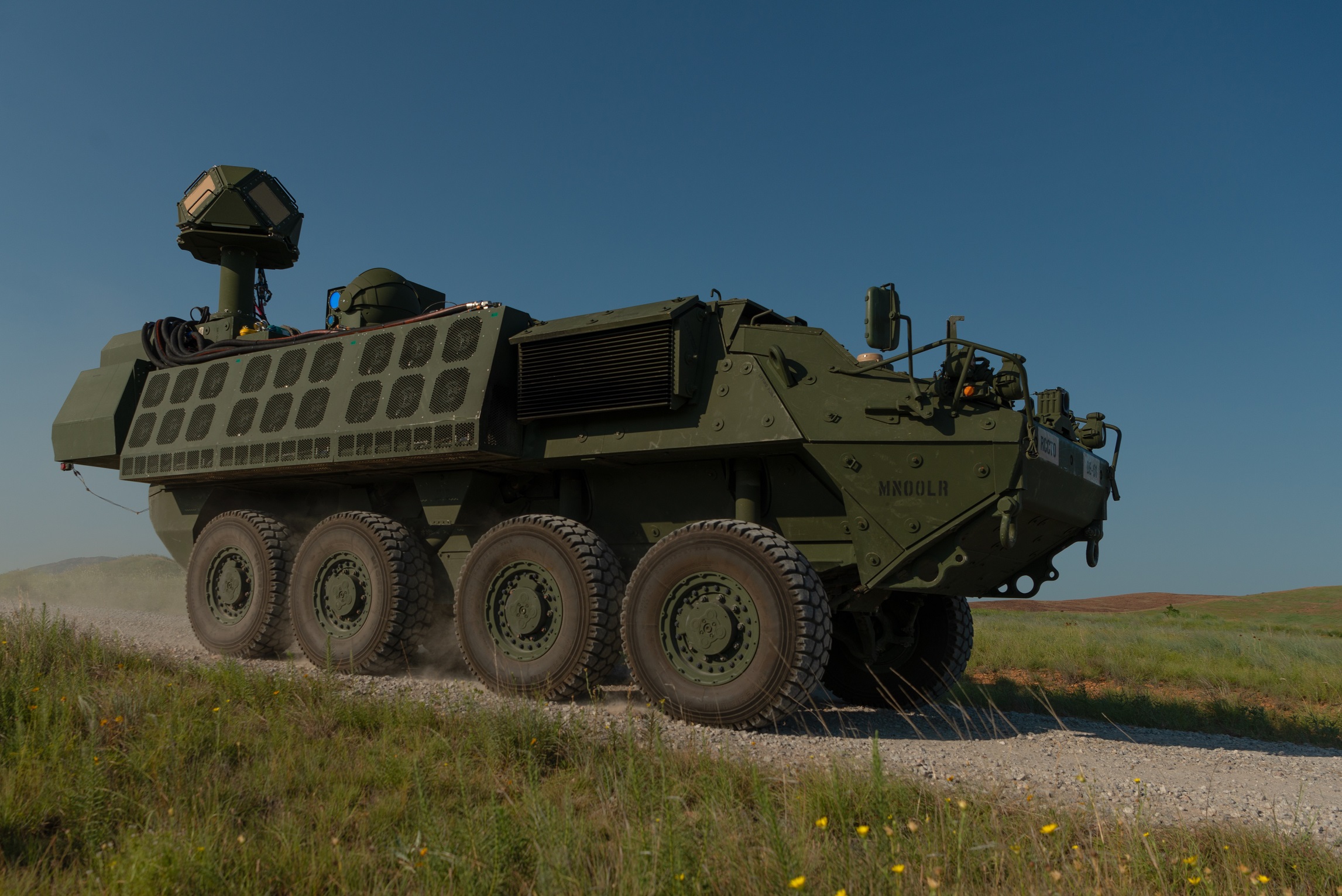
The U.S. Army is on a path to choose an enduring high-tech laser weapon system that will offer lethality against unmanned aircraft systems (UAS) and rockets, artillery and mortars (RAM).
According to a recent service news release, as a leader in new and emerging technology, the Army is fielding next-generation capabilities to advance its Multi-Domain Operations and create standoff.
Nowhere is that more evident than with Directed Energy, where in 24 months, the Army harnessed the promise of lasers, integrated it onto a platform, and produced its first combat capable prototype.
Offering lethality against unmanned aircraft systems (UAS) and rockets, artillery and mortars (RAM), laser weapons now increase Army air and missile defense capability while reducing total system lifecycle cost through reduced logistical demand.
This summer, the Army Rapid Capabilities and Critical Technologies Office (RCCTO), alongside Air and Missile Defense Cross Functional Team, Fires Center of Excellence, and the U.S. Army Test and Evaluation Command, took the laser-equipped Stryker to Fort Sill, Okla. as part of its Directed Energy-Maneuver Short-Range Air Defense (DE M-SHORAD) Combat Shoot-Off. Intended to help protect Divisions and Brigade Combat Teams from UAS and RAM threats, the RCCTO is delivering a platoon of four laser-equipped Strykers by Fiscal Year 2022.
“This is the first combat application of lasers for a maneuver element in the Army,” said LTG L. Neil Thurgood, Director for Hypersonics, Directed Energy, Space and Rapid Acquisition, which includes the RCCTO. “The technology we have today is ready. This is a gateway to the future.”
At the Combat Shoot-Off, the Stryker faced a number of realistic scenarios designed to establish, for the first time in the Army, the desired characteristics for future DE M-SHORAD systems.
“This has been an effort like no other,” said COL G. Scott McLeod, the RCCTO program manager for DE M-SHORAD. “We are building and delivering a brand new capability. This is not a modification or an upgrade. It took just 24 months for the combined government and industry team to design, integrate, and have it ready to perform in an operational environment.”
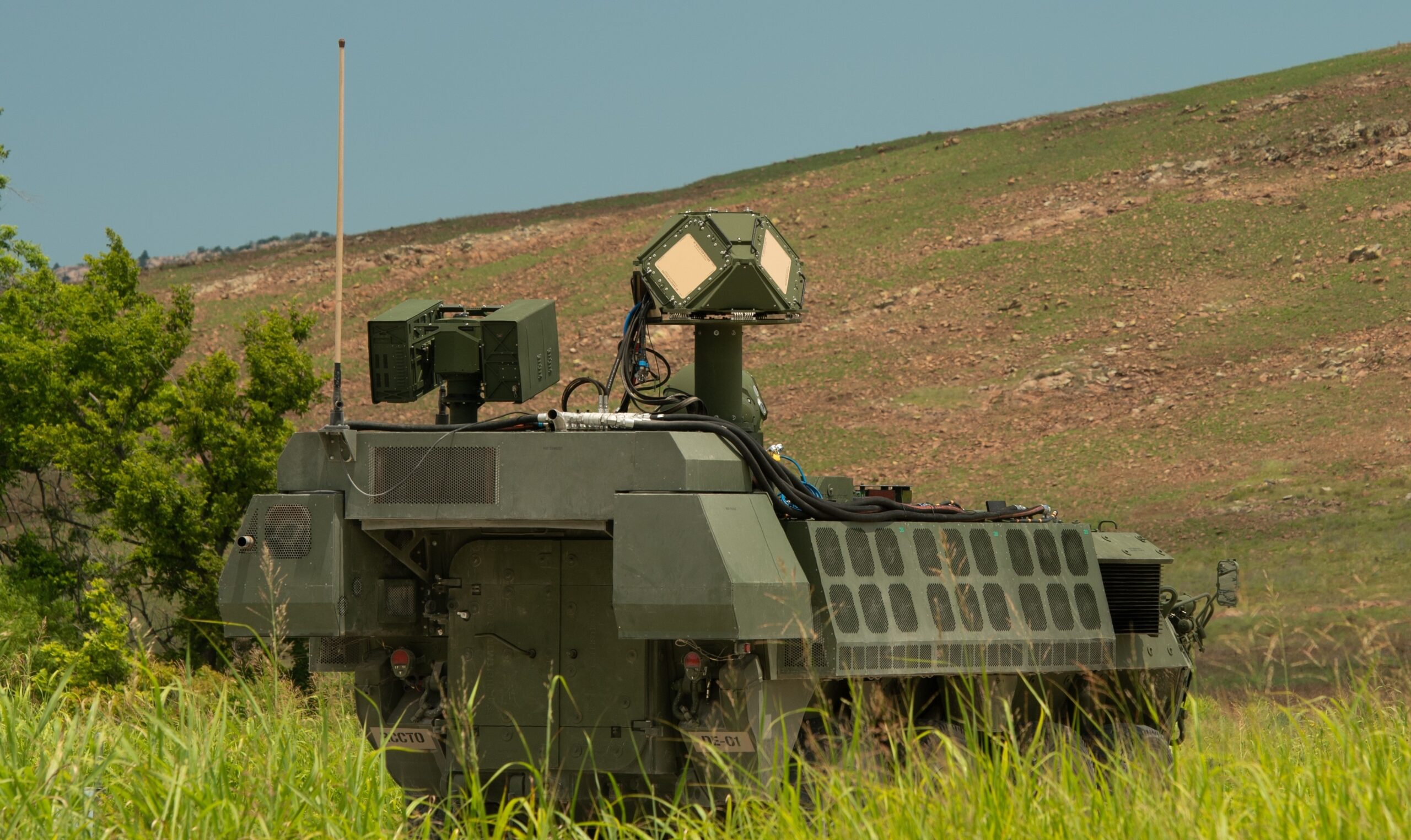
The DE M-SHORAD prototyping effort is part of the Army’s larger modernization strategy for air and missile defense. The Combat Shoot-Off, which ended in late July, trained Soldiers to operate the new defensive weapon, utilizing state-of-the-art immersive technology to quickly familiarize them with the DE M-SHORAD system. Within days, they were operating the system, demonstrating proficiency in target acquisition, aim point selection, and engagements.
Soldier centered design, embedded throughout the prototyping effort, surfaced in unique ways. For example, when it came time to train, Soldiers operating the system suggested using commercial gaming controllers as an improvement over the standard controller. They utilized three-dimensional models of the Strykers on a handheld device so they could virtually walk through the system in x-ray mode to dissect the parts and pieces. This instruction also offered online access to the system’s training manuals, measurements and dimensions, and interactive modules.
The Combat Shoot-Off culminated with Soldiers executing a series of vignettes designed to emulate realistic threats and combat scenarios. The DE M-SHORAD weapon system demonstrated the design characteristics and performance criteria established for the program, representing a major step in prototype completion in time for a fielding in FY22.
“This event marked a key milestone and is a great example of rapid prototyping,” said Dr. Craig Robin, deputy director of the RCCTO’s DE Project Office. “For the first time, we had a combat capable laser out on the range performing against realistic threats. We know it is not going to be perfect, but we will continue to work with Soldiers to incorporate their feedback and lessons learned from this assessment into the design to help inform future directed energy systems.”
To address the support and infrastructure around the prototype lasers, the RCCTO utilizes a unique stakeholder forum known as the Octagon. This integrated group of stakeholders includes representation from all aspects of Doctrine, Organization, Training, Materiel, Leadership, Personnel, Facilities, and Policy. The group works in parallel with prototype development, ensuring the right elements are ready when the prototypes are delivered.
“This is a prototype and we are going to learn from this,” Thurgood said. “We needed this to do two things: design it so it is safe enough to give to Soldiers and make sure it engages with the target it needed to. The science project in this technology is over. It’s time to give our Soldiers this first-ever operational capability.”