Lockheed Martin team recently conducted a successful demonstration of its cutting-edge technology that confirmed F-35’s role as the keystone of the Joint Force and U-2’s ability to rapidly field capabilities for the future.
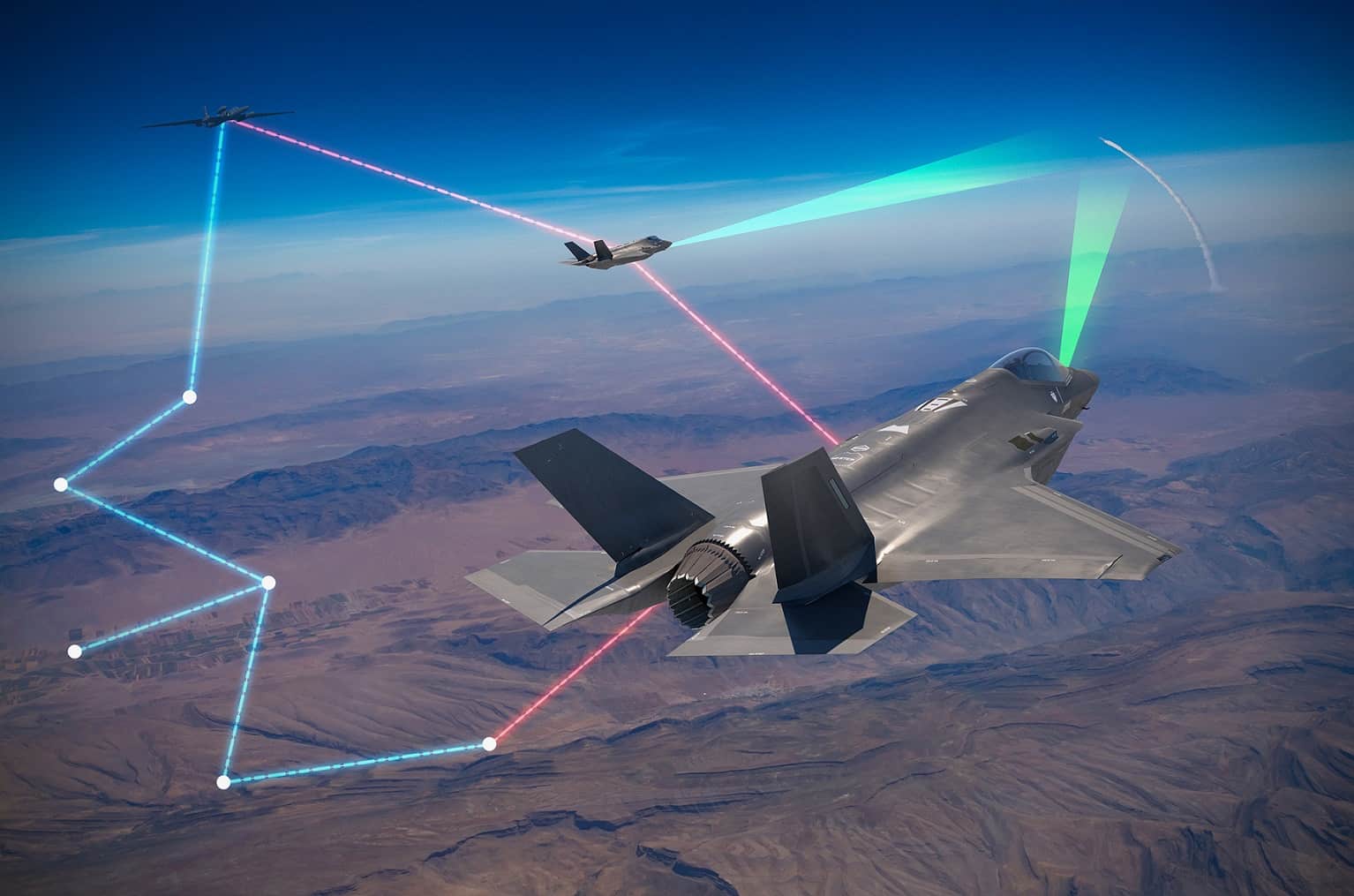
Pentagon’s No.1 weapons supplier reported on Monday that Lockheed Martin’s Advanced Development Programs (ADP), commonly known as Skunk Works, in coordination with Missile Defense Agency and the U.S. Air Force successfully connected an F-35, U-2 and a multi-domain ground station in a ground-breaking test demonstrating multi-domain operations and the secure distribution of sensitive information across multiple platforms.
During the demonstration, called Project Riot, an F-35 detected a long-range missile launch with its onboard sensors and shared the information through the U-2 to the air defense commander on the ground, enabling the commander to quickly make the decision to target the threat. This next-level connectivity reduces the data-to-decision timeline from minutes to seconds, which is critical in fighting today’s adversaries and advanced threats.
In partnership with the Air Force Life Cycle Management Center at Hanscom Air Force Base, Massachusetts, and the Missile Defense Agency, Skunk Works’ Project Riot builds on a series of open systems architecture demonstrations proving how incremental increases in capability can be rapidly fielded to enable a connected network across air, ground, sea, space and cyber domains.
“This demonstration continues our commitment to provide complete battlespace awareness and seamless interoperability to enable multi-domain operations,” said John Clark, vice president of ISR & UAS at Lockheed Martin Skunk Works. “With its long-range standoff sensors, on-board processing and ability to operate in and around contested environments, the U-2 continues to play a critical role in demonstrating new capabilities today, while transforming operations for tomorrow’s battlespace.”
Leveraging common industry standards to drive down cost and shorten schedules, the team achieved four mission critical data points in less than four months:
- Demonstrated the ability to leverage F-35 sensor data for missile defense
- Leveraged the modernized U-2’s extensive payload capacity, modular design and open architecture to provide beyond line of sight communications between the F-35 and a multi-domain ground station
- Established two new data paths to securely transmit 5th generation sensor data at multiple levels of security to the warfighter, enabling a multi-domain network of legacy and 5th generation systems
- Disseminated 5th generation data using the Air Force’s Universal Command and Control Interface and Open Mission Systems standards for faster capability deployment and seamless connection between systems
“The F-35, with its advanced sensors and connectivity, is able to gather and seamlessly share critical information enabling the joint force to be safer and more effective,” said Greg Ulmer, Lockheed Martin vice president and general manager for the F-35 program. “No other fighter jet in the world has this capability – and this test was a critical step on the path to unlocking its full potential for multi-domain operations.”
This demonstration builds on successful flight tests completed since 2013 that establish the foundation for a distributed, systems-of-systems architecture in the not-too-distant future.