

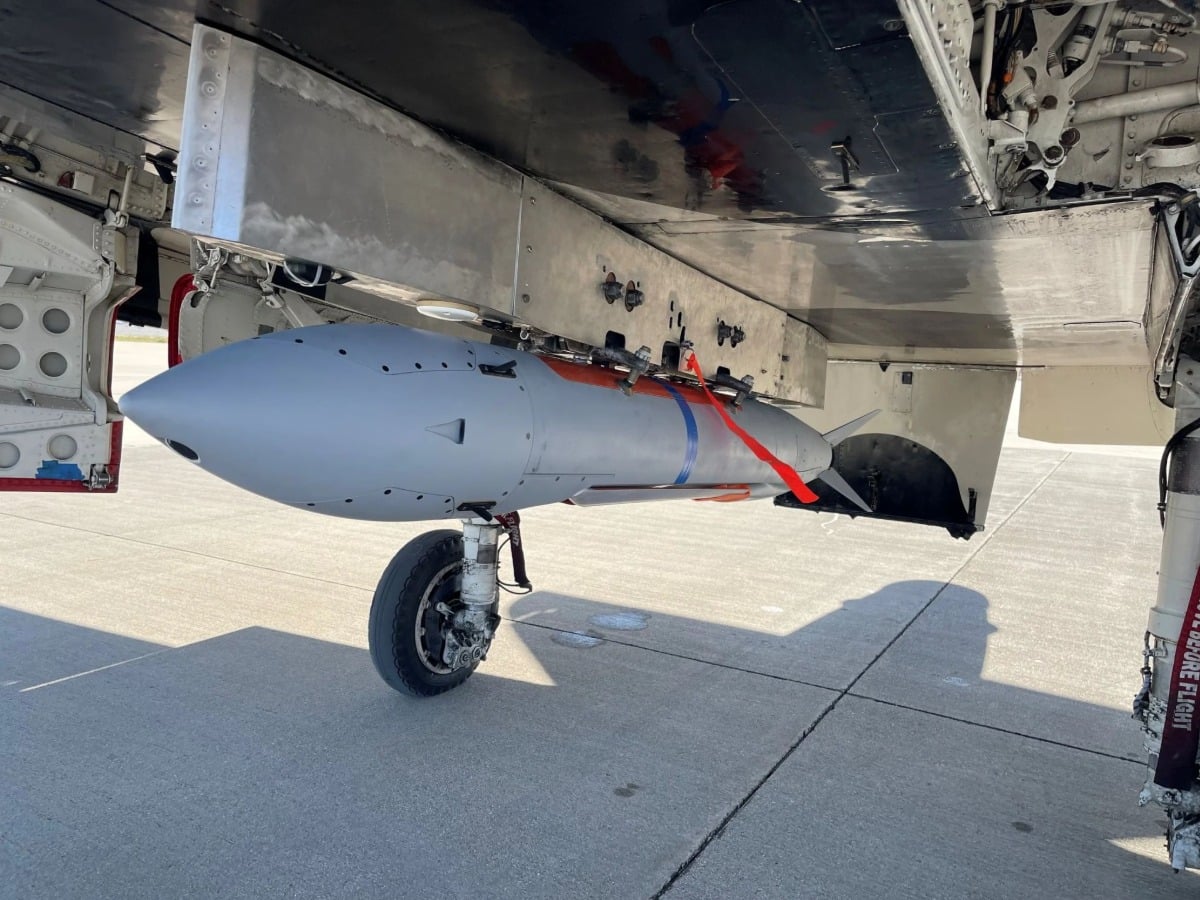
- PAE Munitions awarded CoAspire a $70 million Other Transaction Authority agreement for the Navy's CHAOS cruise missile program.
- PAE Munitions expects to sign at least one additional industry agreement under CHAOS as part of its competitive acquisition strategy.
The U.S. Navy handed a brand-new missile maker $70 million to build a cheap cruise missile, and it says this is only the opening move.
The Office of the Assistant Secretary of the Navy for Research, Development and Acquisition confirmed that PAE Munitions, the Navy’s precision-strike acquisition arm, awarded CoAspire, a company it described as a new entrant into the defense industrial base, a $70 million Other Transaction Authority agreement for the Coalition Heterogeneous Affordable Offensive Strike program, known as CHAOS.
An Other Transaction Authority agreement, often shortened to OTA, is a contracting tool the Department of War increasingly relies on to move faster than the traditional procurement process allows, letting the Navy fund prototype development with fewer bureaucratic hurdles than a standard defense contract requires. The Navy’s use of that tool here signals urgency behind the CHAOS program, which is built around fielding an affordable, mid-range cruise missile capable of striking both land-based targets and moving ships at sea, a dual-purpose capability that matters because most cruise missiles are optimized for one mission or the other, while a system credibly threatening both gives allied navies far more flexibility from a single weapons stockpile.
The Navy office said the award represents PAE Munitions’ direct investment in what it called the emerging low-cost cruise missile market, a corner of the defense industry that has drawn growing Pentagon attention as the war in Ukraine has repeatedly shown both sides burning through precision munitions faster than traditional defense manufacturers can replace them. That shortage has pushed the Department of War to look beyond its usual roster of large prime contractors toward smaller, faster-moving companies willing to build weapons using cheaper materials and quicker manufacturing methods, even if those companies lack the decades of track record that traditional missile builders can point to.
The Virginia-based company describes itself as a privately owned small business that has operated profitably for 13 years without outside investors, remaining entirely owned by its two founders, a structure the company has said lets it move faster than venture-backed or publicly traded competitors weighed down by shareholder timelines and larger internal bureaucracies. CoAspire’s cruise missile family relies heavily on additive manufacturing, commonly known as 3D printing, which the company says maximizes payload capacity while cutting the custom tooling and manual labor that typically drive up costs and slow down production timelines on traditional missile assembly lines.
The Navy’s announcement framed the CHAOS award as significant on two fronts at once. According to the Assistant Secretary of the Navy’s office, the award marks a milestone in developing an affordable maritime strike capability specifically intended for security assistance partners, meaning allied nations that receive American-made weapons through official government sales channels, while simultaneously expanding the broader defense industrial base by bringing competition into a market segment historically dominated by a small handful of established contractors.
The Navy office said PAE Munitions expects to sign at least one more industry agreement under the CHAOS program as part of its stated competitive strategy, indicating that CoAspire will not be the only company building toward this requirement and that the Navy intends to weigh multiple cruise missile designs against each other rather than committing early to a single vendor. Competitive prototyping of this kind has become increasingly common practice within the Department of War’s newer, faster acquisition pathways, since running rival designs against one another before committing to full-rate production tends to produce both better pricing and better-performing hardware than awarding a sole-source contract upfront.
The Navy’s language around accelerating a new entrant into its precision strike portfolio also carries strategic weight beyond this single contract. Precision strike portfolio refers to the broader family of guided weapons the Navy relies on to hit specific targets accurately from standoff range, a category that has traditionally been dominated by a small number of long-established missile manufacturers building exquisite, expensive systems. Bringing in a company like CoAspire, promising missiles built in months rather than years using 3D-printed components, represents a deliberate bet that speed and affordability can supplement, if not replace, some of the exquisite capability the Navy has traditionally paid a premium for.
For a Navy increasingly worried about running short on precision weapons in a prolonged conflict, betting $70 million on a 13-year-old, privately owned missile builder with no outside investors is either exactly the kind of industrial base diversification the moment demands, or a gamble that the low-cost, rapid-manufacturing approach can actually deliver reliable weapons at the scale a real war would require.