

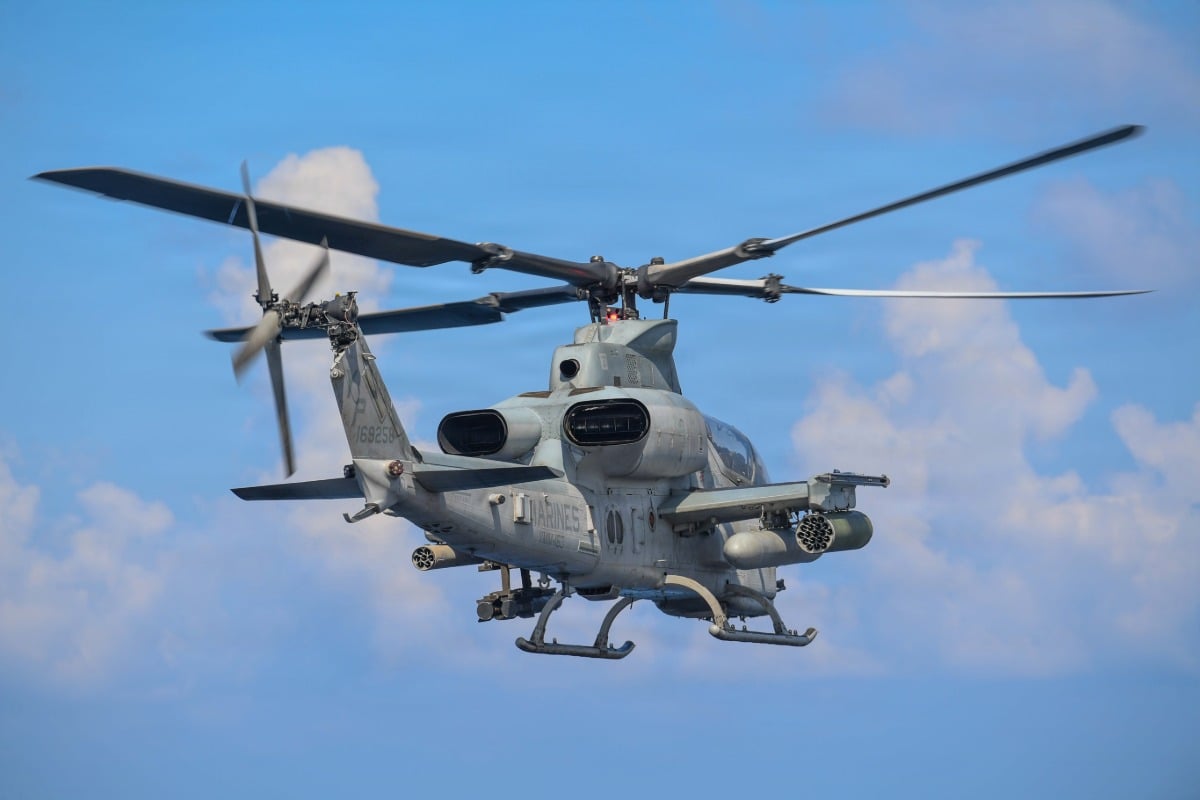
- The Navy awarded Bell Textron a $33,642,332 contract for SPINE Phase III kits upgrading Marine Corps AH-1Z and UH-1Y helicopters.
- The contract covers nine A-kits, two D-kits and dozens of electrical components, with work expected to finish in July 2028.
U.S. Marine Corps attack and utility helicopters are heading into a major upgrade built specifically to carry the next generation of weapons, and the electrical rewiring needed to make that possible just landed a $33.6 million contract.
Naval Air Systems Command handed Bell Textron, the Fort Worth, Texas manufacturer that builds both helicopters, the deal to produce hardware kits for a Marine Corps modernization program called Structural and Power Improvements for Next-Generation Effects, known inside the service by its acronym SPINE.
The AH-1Z Viper attack helicopter and the UH-1Y Venom utility helicopter, the two aircraft this upgrade targets, form the backbone of Marine Corps rotary-wing combat power, flying side by side on missions ranging from close air support to troop transport and sharing more than 84 percent of their parts so mechanics can maintain both aircraft with one shared skill set. SPINE exists because those helicopters, capable as they already are, simply were not built with enough onboard electrical capacity to power the sensors, datalinks and next-generation weapons the Marine Corps now wants to bolt on, and this contract buys the physical kits needed to close that gap, essentially a wiring and structural overhaul dressed up as a weapons program.
The order covers nine so-called A-kits, the structural brackets and wiring bundles installed directly into each airframe, plus two D-kits, sometimes called mission kits, that carry the actual new mission equipment into the cockpit and cabin, and beyond those kits sits a stack of long-lead electrical hardware essential to the whole upgrade: a dozen rotorcraft station control units, a dozen AC generators, a dozen generator control units, a dozen tube assemblies and seven combining gear boxes, each one a piece of the puzzle that lets these helicopters generate, manage and route far more power than their original design ever anticipated when the airframes first entered service decades ago.
Bell has already proven the concept flies in the most literal sense, delivering the Marine Corps its first two fully SPINE-modified aircraft, one Viper and one Venom, in March 2026, and ferrying them from its Amarillo Assembly Center in Texas to Naval Air Station Patuxent River in Maryland for flight testing meant to lock down the final configuration before the upgrade spreads across the wider fleet. This new $33.6 million award for Phase III hardware shows the Marine Corps pushing straight into production kits rather than waiting on that testing to fully close out, a sign of real urgency behind getting more electrical power into these cockpits sooner rather than later. SPINE itself grew out of a narrower earlier effort called the Structural Improvement Electrical Power Upgrade, rebranded and widened once the Marine Corps realized the underlying structural and electrical work needed to support an entire menu of future weapons and sensors, not just one add-on system bolted to an existing airframe.
The payoff, once SPINE reaches the full Marine Corps fleet, is a Viper and Venom that can carry kinetic long-range munitions, precision weapons that strike far beyond the reach of the guns and short-range rockets these helicopters fly with today, plus what the Marine Corps calls air launched effects, small drones or expendable systems a helicopter can release mid-flight to scout ahead, jam enemy sensors or strike a target on their own without risking the crewed aircraft itself. SPINE also opens the door to non-kinetic capabilities built around electronic warfare rather than explosives, pushing these Marine Corps helicopters well past their traditional job of close air support and troop escort and into a broader, more networked role on the modern battlefield.
This particular contract fans manufacturing work out across a genuinely national footprint, with Fort Worth, Texas carrying the largest share at 56.7 percent, Amarillo, Texas contributing 7.7 percent, Tempe, Arizona at 4.5 percent, and smaller slices split among facilities in Oklahoma, California, Florida, Michigan, Illinois and Ohio, while 11.7 percent of the work happens at sites outside the continental United States. The Navy structured the award as a blend of fixed-price incentive, firm-fixed-price and cost-plus-fixed-fee terms, letting the government share cost risk with Bell on the portions of the work that are well understood while capping its own exposure elsewhere. Fiscal year 2025 and fiscal year 2026 Navy aircraft procurement funds cover the bill, with roughly $20 million pulled from last year’s budget and about $13.7 million from this year’s, and the Navy awarded the deal without competition since Bell remains the sole manufacturer of both helicopter types the Marine Corps flies.
Bell expects to finish this round of work by July 2028, though the contract itself stays quiet on how many more Viper and Venom airframes beyond these initial kits will eventually get the SPINE treatment, or exactly when the full Marine Corps fleet might carry it. What the company has committed to is supporting these helicopters clear through the 2040s under the Marine Corps Aviation Plan, which means the electrical backbone this contract is building today will likely still be carrying whatever weapons the Marine Corps dreams up two decades from now, long after these aircraft first earned their reputation flying alongside Marines in combat.