

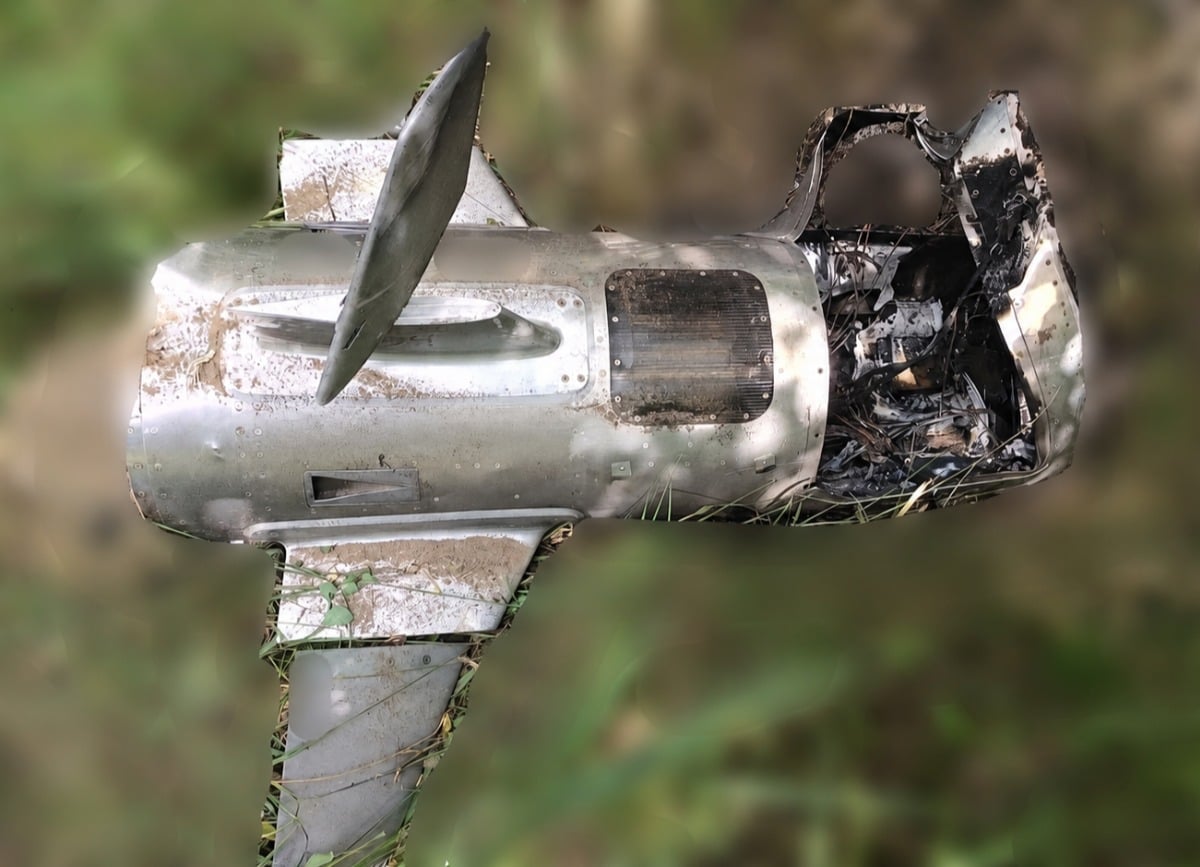
- Images shared in Russian social media show wreckage presumed to be from a Destinus Ruta Block 1 cruise missile, unconfirmed by official sources.
- Destinus announced in June 2026 it had produced its 1,000th T150 turbojet engine, the propulsion system used in the Ruta Block 1 and Block 2 missile family.
Photos of scorched, twisted wreckage now circulating from Russian sources may be the first physical proof that a Dutch-built cruise missile has actually been used in combat.
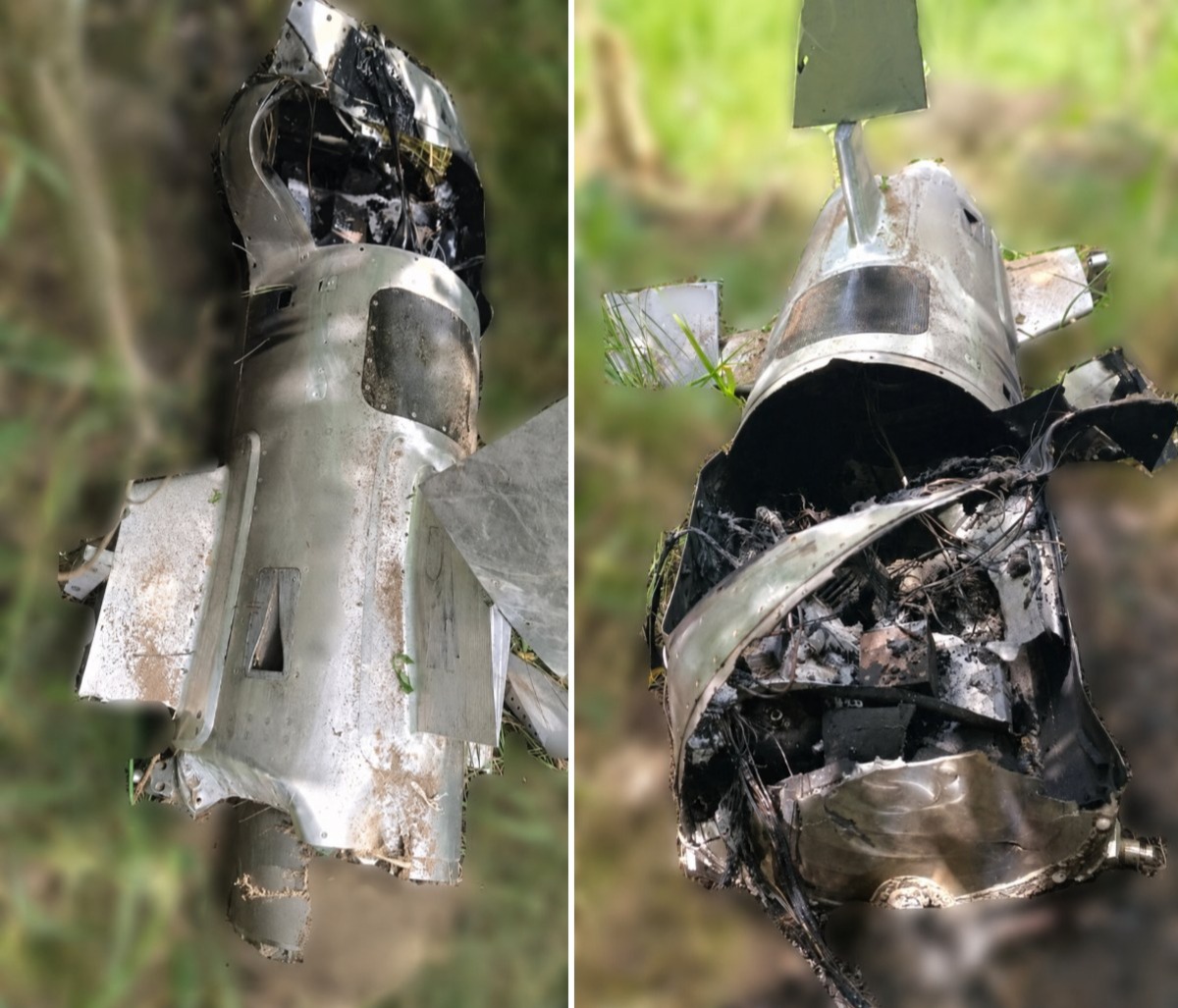
Images shared by the open-source tracking account on Telegram show what is presumed to be the tail section of a Ruta Block 1 cruise missile, built by the European defense company Destinus, according to the account’s own characterization of the wreckage. If the identification holds, it would mark the first visual confirmation of the missile’s combat use against Russia, a milestone that has remained murky despite Destinus first unveiling the Ruta Block 1 back in 2024.
Destinus revealed the missile two years ago with a stated range of up to 300 km (186 miles) and a payload capacity of 150 kg (330 lb), powered by the company’s own in-house T150 turbojet engine producing 150 kgf (1,500 N) of thrust, but how many of these missiles Ukraine has actually fired, and how often, has stayed unclear even as reporting has periodically described the weapon as already in service. Some media noted as recently as this year that the missile’s serial production status remained unresolved despite the passage of time since its unveiling, a gap this wreckage, if the identification is accurate, would help close.
Destinus announced in June 2026 that it had completed its 1,000th T150 turbojet engine, the same engine that powers both the Block 1 and the newer, longer-range Block 2 variant, describing the milestone as evidence that Europe can now produce cruise-missile-class propulsion at industrial scale rather than relying on limited handmade batches.
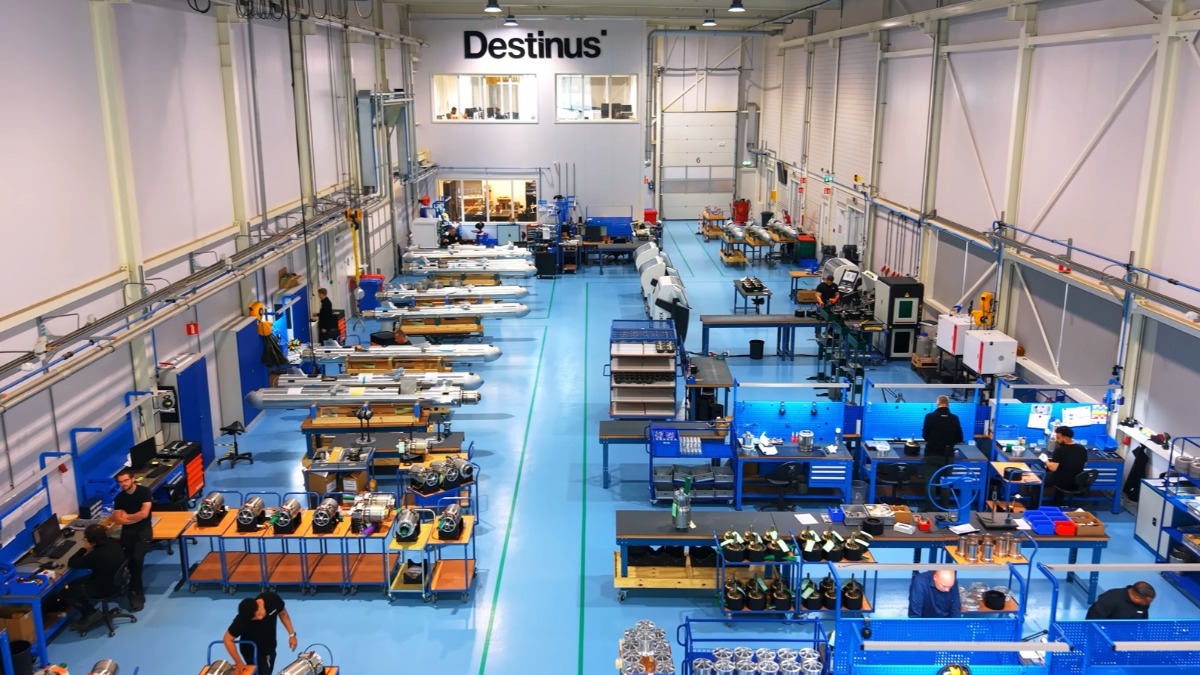
The company builds the engine entirely in-house at a facility in Hengelo, Netherlands, and has said Ruta Block 1 has already reached serial production, even as it has declined to disclose specific production rates. The Netherlands has separately committed to funding and delivering 700 Ruta missiles to Ukraine, and Ukrainian Digital Transformation Minister Mykhailo Fedorov toured a Destinus production facility in the Netherlands in June, describing the missile as a critically important technology that directly strengthens Ukraine’s medium-range strike strategy by targeting Russian military supply lines.
Separate reporting has already described Ruta Block 1 as combat-proven and in active service with Ukraine’s Defense Forces, language used by Ukrainian outlet Defense Express in coverage of the missile’s Block 2 successor earlier this year. That distinction matters here. Being described in reporting as operationally deployed is not the same thing as having physical wreckage publicly surface and get identified, and the photos now circulating from Russian sources would represent the kind of hard, visual evidence that turns a reported capability into a documented one, assuming Russian and Ukrainian analysts ultimately agree on what the wreckage actually is.
Ruta Block 1 sits at the base of a missile family Destinus has expanded rapidly since the original variant’s debut. The company unveiled Ruta Block 2 in January 2026, a substantially redesigned version with foldable wings and control surfaces, an in-line booster, and a sealed canister launch architecture that lets the missile be stored, transported and fired from mobile ground or maritime platforms rather than an open launcher. Block 2 extends the missile’s range past 700 km (435 miles) with a heavier 250 kg (550 lb) payload, and completed a successful flight test in April 2026 validating its new launch system, developed with support from Ukraine’s Brave1 defense innovation platform. Destinus has since gone further still, announcing Ruta Block 3 with a stated range of 2,000 km (1,243 miles) powered by a next-generation T220 engine still in development, illustrating how quickly the company has scaled its ambitions since Block 1 first flew.
Destinus CEO Mikhail Kokorich has framed that expansion explicitly around industrial capacity rather than showcasing a handful of exquisite weapons, telling reporters that Europe’s decisive advantage in a prolonged conflict comes from the ability to produce, replenish and evolve precision weapons at scale rather than simply proving a design works once. Destinus has said it is now producing more than 2,000 cruise-missile systems annually across its Ruta family through a joint venture with German defense manufacturer Rheinmetall, a partnership aimed at expanding European production capacity for exactly this class of long-range strike weapon.
Neither Destinus, the Ukrainian government, nor Russian officials have issued a statement confirming the debris shown in the images actually belongs to a Ruta Block 1, and the identification currently rests entirely on the open-source account that first shared the photos alongside its own presumption about what the wreckage is.