

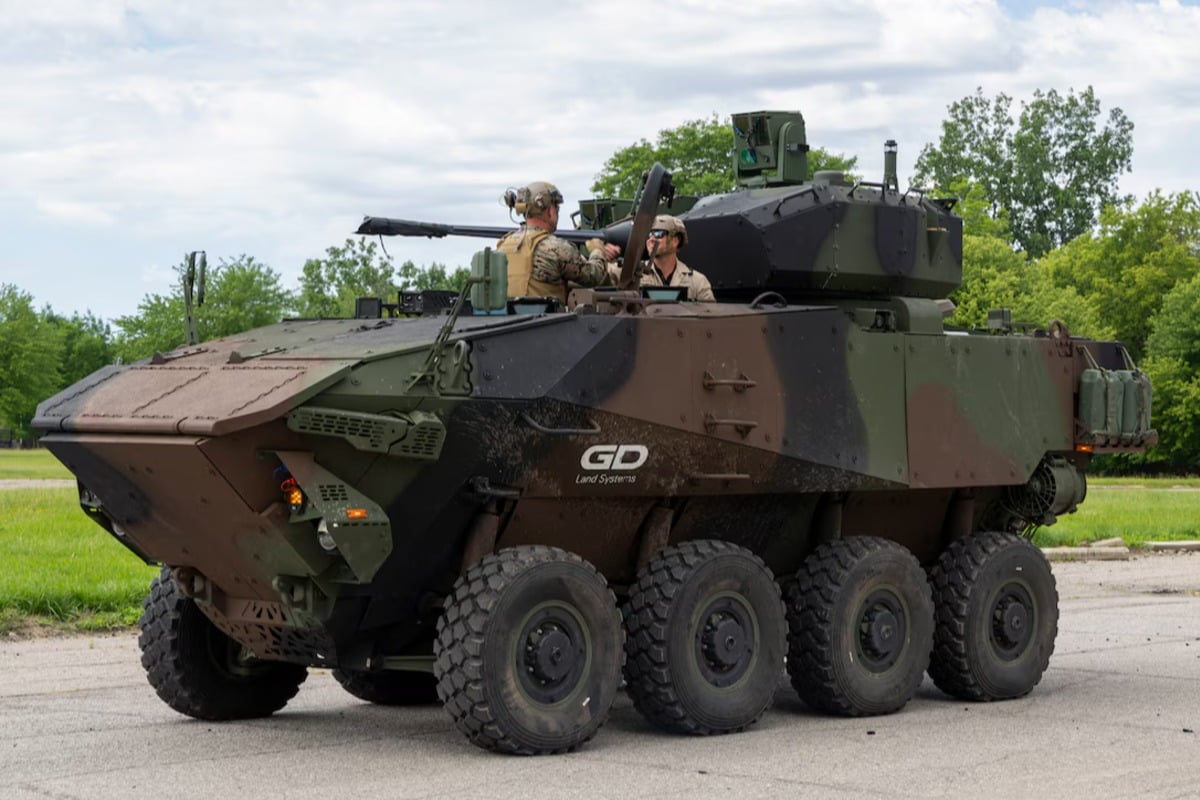
- The U.S. Marine Corps held a Touchpoint event last month letting Light Armored Reconnaissance Marines test drive the Advanced Reconnaissance Vehicle.
- The ARV is designed to replace the LAV-25, in service since 1983, ahead of its planned retirement by the mid-2030s.
The U.S. Marine Corps’ Program Manager Light Armored Vehicles held what the service calls a Marine Touchpoint event last month for the Advanced Reconnaissance Vehicle, letting Light Armored Reconnaissance Marines get hands-on time with the new vehicle, including a test drive, months before the program reaches its next major design review.
The Advanced Reconnaissance Vehicle, known throughout the program as the ARV, is the Marine Corps’ effort to replace the LAV-25, an eight-wheeled armored vehicle that has served as the backbone of Marine reconnaissance units since 1983 and is scheduled to leave service by the mid-2030s. Rather than building a single vehicle, the Marine Corps has structured the ARV as a family of related variants sharing a common chassis, with the two most developed configurations being the ARV Command, Control, Communications and Computers/Unmanned Aircraft Systems variant, built around networked sensors, communications gear, and the ability to control drones directly from the vehicle, and the ARV-30, which adds a 30 millimeter (1.2 inch) automatic cannon along with anti-armor capability for units that need to fight rather than simply observe and report.
Marine Corps officials have described the ARV as intentionally lighter and smaller than the Amphibious Combat Vehicle, the Corps’ larger troop carrier, specifically so reconnaissance units can move faster and operate with a lower profile across varied terrain rather than trading speed for the heavier armor a frontline assault vehicle needs.
General Dynamics Land Systems and Textron Systems have spent the past several years competing to build the winning ARV design, with the Marine Corps evaluating prototypes from both companies, alongside an earlier submission from BAE Systems, through rounds of testing that have included land and water mobility trials, blast and kinetic protection tests, and cyber and electromagnetic interference assessments. Textron separately partnered with Elbit Systems of America to integrate the company’s IronVision system into its ARV prototype, a 360-degree situational awareness suite built to give the crew a clearer picture of the battlefield around the vehicle than traditional periscopes or vision blocks would allow.
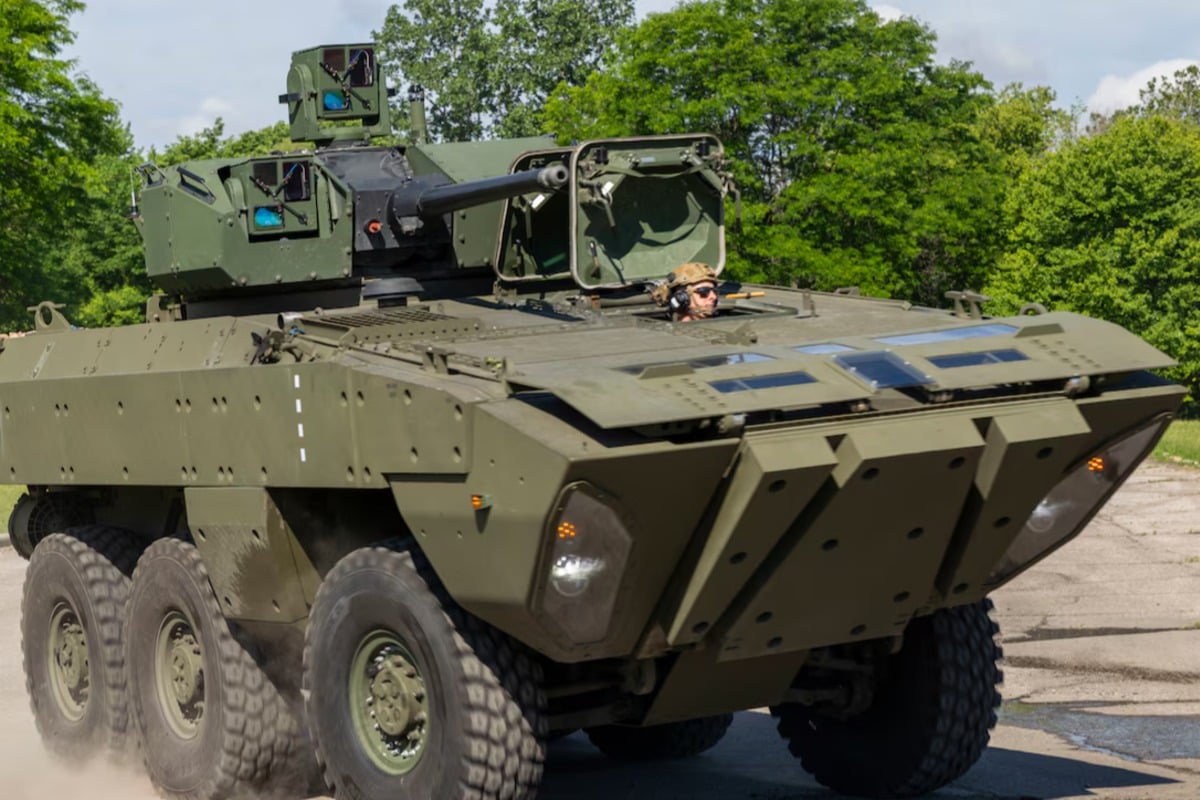
A Marine Touchpoint event like the one held last month serves a specific purpose in how the Marine Corps develops new equipment, deliberately placing an early or mid-stage prototype directly into the hands of the Marines who will actually operate it in the field rather than relying solely on engineers, program managers, and contractor test pilots to judge whether a design actually works. Program Manager Light Armored Vehicles said the event was designed to capture what it called high-pedigree, actionable feedback from experienced Light Armored Reconnaissance Marines, feedback the program intends to use specifically to reduce risk before the ARV reaches its next major design review and to potentially influence design changes while alterations remain relatively cheap and straightforward to make.
That kind of early feedback loop matters more for the ARV than it might for a simpler piece of equipment, given how directly the vehicle is tied to a broader transformation already underway across the Marine Corps’ reconnaissance forces. Lt. Gen. Karsten Heckl, the Marine Corps’ deputy commandant for combat development and integration, told National Defense Magazine in 2023 that the service envisions the eventual ARV as considerably more than a straightforward LAV replacement, describing it as a family of systems meant to give Marines greater reconnaissance capability, particularly along coastlines and other littoral zones central to the Corps’ modernization strategy known as Force Design 2030. Heckl specifically noted that Marine Corps planners are looking at everything from ultralight vehicles up through light armored platforms as candidates for this role, with small unmanned aircraft systems and loitering munitions potentially launching directly from whichever platform the Corps ultimately selects, giving a single reconnaissance vehicle the ability to both gather intelligence and strike a target without waiting for a separate strike asset to arrive.
The Office of Naval Research has separately funded ARV-focused science and technology research as part of the Department of the Navy’s Future Naval Capabilities program, an effort specifically designed to identify promising new technologies and fast-track the most mature ones directly into formal acquisition programs once research proves them viable, underscoring how much of the ARV’s eventual capability set is still actively being refined even as prototype vehicles reach the hands of Marines in the field.
None of this guarantees the ARV reaches Marine Corps units on any specific timeline, and the program has already spent years moving through competing prototype rounds before reaching this stage of direct troop evaluation. What last month’s Touchpoint event does confirm is that the Marine Corps is deliberately building feedback from the Marines who will actually crew this vehicle into the design process itself, a bet that catching problems now, while a chassis modification or a sensor placement issue can still be fixed on paper, will save considerably more time and money than discovering the same flaw after the vehicle has already entered full production.