

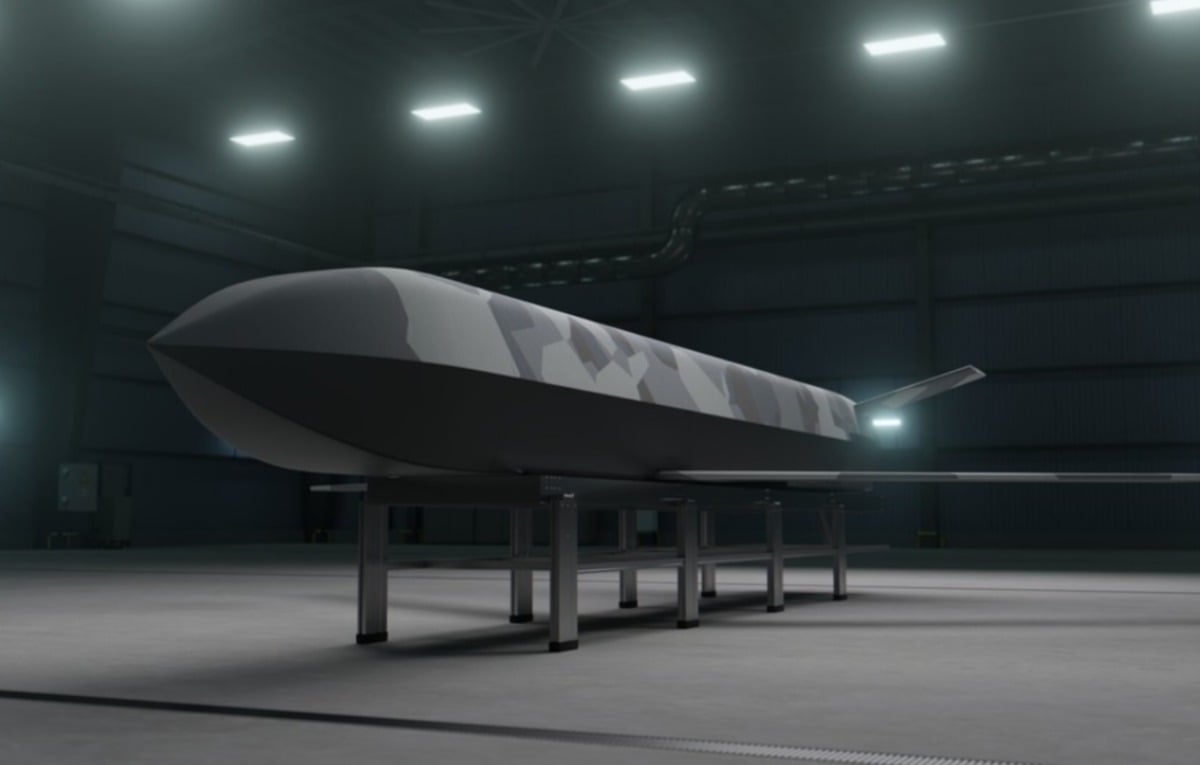
- BAE Systems FalconWorks and Lockheed Martin Skunk Works unveiled Blizzard, a modular uncrewed aircraft for electronic warfare and attack missions.
- Blizzard offers multiple launch options including air drop, ground launch, maritime launch, and release from wide-body logistics aircraft.
BAE Systems announced that its FalconWorks advanced projects division has partnered with Lockheed Martin’s legendary Skunk Works to develop Blizzard, a modular, uncrewed aircraft built to carry out electronic warfare and attack missions, with the option to launch it from the ground, the air, the sea, or the back of a large military transport plane.
FalconWorks and Skunk Works have each built decades-long reputations as the secretive research divisions responsible for their parent companies’ most advanced aircraft programs, the kind of labs that historically develop cutting-edge prototypes largely out of public view until a design is ready to reveal. The two divisions rarely collaborate directly, which makes this partnership notable on its own, and Blizzard represents the first concrete product to emerge from a broader strategic partnership BAE Systems and Lockheed Martin announced in September 2025 at the DSEI defense exhibition in London, an agreement specifically aimed at pooling both companies’ decades of experience building uncrewed autonomous aircraft.
Electronic warfare refers to using radio signals to jam, deceive, or disrupt an enemy’s radar and communications systems, effectively blinding or confusing the sensors and networks that a modern military relies on to detect incoming threats. Pairing that jamming capability with an actual attack function lets Blizzard do more than just create confusion, since the aircraft can also strike targets directly once it has degraded an enemy’s ability to see or respond to the threat. BAE Systems described Blizzard as designed to deliver a range of effects while operating either independently or as part of a collective group of aircraft working together, letting multiple Blizzard units coordinate their electronic warfare and strike capabilities against a single target to create what the company calls an operational advantage over adversary systems.
David Holmes, Managing Director of BAE Systems’ FalconWorks business, framed the partnership as a way to move faster than either company could manage working alone.
“Through our collaboration with Lockheed Martin, we’re delivering disruptive capabilities that can make a real difference to our military customers at pace, enabling them to confront the operational requirements of today’s battlefield,” Holmes said.
Blizzard fits into a growing category of relatively affordable, expendable uncrewed systems designed to fly alongside expensive crewed fighter jets, absorbing risk and adding what defense planners increasingly call combat mass, the ability to field enough aircraft that losing a few in combat doesn’t cripple an entire mission, without requiring every additional aircraft to carry the multimillion-dollar price tag and years-long training pipeline that comes with a crewed fighter jet.
BAE Systems said the initial version of Blizzard will be built with modularity and adaptability at its core, letting the same basic airframe get reconfigured for different missions rather than requiring an entirely separate aircraft design for each new operational requirement. That flexibility extends directly to how the aircraft actually gets into the fight, with the company confirming multiple launch options including air drop from a carrier aircraft, ground launch, launch from ships at sea, and release from a wide-body logistics aircraft, the kind of large military transport plane typically used to move cargo and personnel rather than weapons.
Speaking to journalists at the Farnborough International Airshow on the program’s public unveiling, Anthony Gregory, FalconWorks’ business development and strategy director, described Blizzard’s underlying purpose as helping other aircraft and weapon systems accomplish their own missions by decoying and suppressing the most dangerous enemy threats first, rather than functioning as a standalone strike weapon in isolation. Aviation Week reported that while Blizzard’s airframe traces some design lineage to Skunk Works’ existing Common Multi-Mission Truck family of uncrewed vehicles, the companies describe the current effort as a genuinely joint design built with components and engineering input from both the UK and the United States rather than one company’s existing platform simply rebranded under a partnership. The two companies are also exploring palletized release options from established transport aircraft including the Airbus A400M and the Lockheed Martin C-130 Hercules, giving air forces a way to deploy Blizzard from planes they already operate rather than requiring an entirely new dedicated launch platform.
Blizzard is expected to complement rather than replace other emerging electronic warfare drones already entering service, including the Royal Air Force’s Storm Shroud system, an uncrewed electronic warfare platform built on Tekever’s AR3 airframe, giving British and allied forces multiple overlapping options for degrading enemy air defenses depending on the specific mission at hand. Aviation Week reported that BAE Systems and Lockheed Martin are targeting 2028 for the program’s next major milestone, though neither company has disclosed a firm timeline for when Blizzard might actually reach frontline squadrons.
Two defense giants rarely let their most secretive engineering teams work in the same room, let alone on the same aircraft, and that alone signals how seriously both companies are taking the shift toward cheaper, expendable uncrewed systems working alongside traditional fighter jets.