

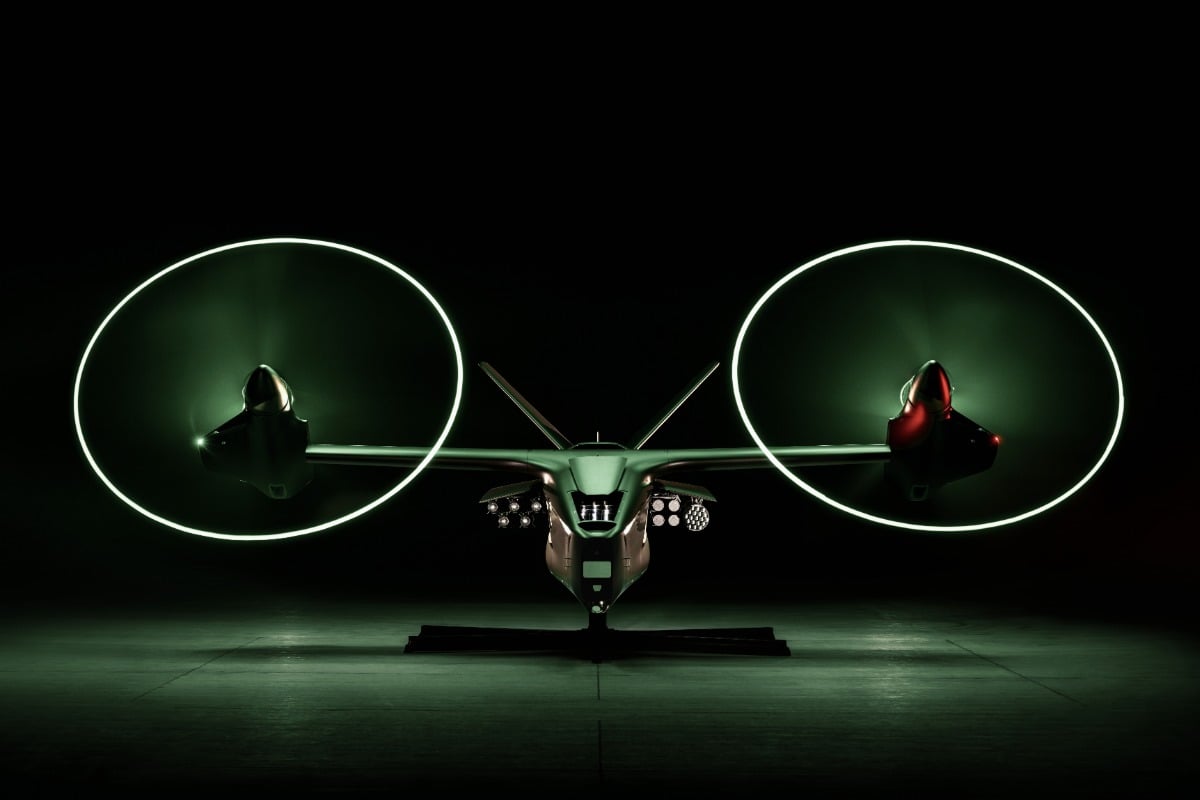
- Anduril unveiled Thunder, a Group 5 autonomous attack rotorcraft designed to team with crewed helicopters like the Apache.
- Thunder was co-developed with Archer Aviation using a tiltrotor design, with first flight planned for 2027.
Anduril just unveiled a helicopter-killer’s replacement: a pilotless attack aircraft built specifically because attack helicopters have become too dangerous to fly.
The defense technology company announced Thunder, an autonomous attack rotorcraft designed to fly alongside crewed helicopters like the Apache, absorbing the risk that increasingly cheap drones, loitering munitions, and persistent surveillance systems have turned into a death sentence for traditional rotary-wing aircraft operating near the front line.
Attack helicopters have long served as the backbone of ground maneuver warfare, providing fast-moving firepower that can outpace tanks and strike targets infantry alone couldn’t reach, but Russia and Ukraine have both lost dozens of helicopters to a combination of shoulder-fired missiles, loitering munitions, and cheap first-person-view drones capable of tracking and destroying a multimillion-dollar aircraft for a fraction of its cost. Anduril’s own framing describes the modern near-surface battlefield, the layer of airspace just above ground level where helicopters typically operate, as having become a robotic kill zone, one where speed and firepower alone no longer guarantee a crew’s survival.
Thunder is classified as a Group 5 unmanned aircraft system, the Pentagon’s designation for drones weighing more than 1,320 pounds (599 kilograms), putting it in the same weight class as some of the military’s larger reconnaissance and strike drones rather than the small quadcopters that dominate headlines from Ukraine. Rather than replacing crewed attack helicopters outright, Anduril designed Thunder to team directly with them, flying as what the company calls a trusted autonomous wingman that shares the combat load, absorbs the most dangerous parts of a mission, and lets human pilots stay farther from the threats most likely to kill them.
Anduril built Thunder using a tiltrotor configuration, an aircraft design that rotates its rotors between a helicopter-like vertical position for takeoff and landing and an airplane-like forward position for efficient cruising flight, a combination that gives Thunder vertical takeoff capability without sacrificing the speed and range of a fixed-wing aircraft. That design lets Thunder operate from austere locations without a runway while still covering far greater distances than a traditional helicopter, addressing what the company describes as a new geometry of battlefield maneuver in which long-range weapons and vast operating theaters keep pushing attack aviation farther from friendly staging areas. A series hybrid-electric powertrain powers the aircraft, and Anduril’s Optimum-Speed Tiltrotor technology varies rotor speed across different phases of flight specifically to reduce fuel burn during cruise and cut down the aircraft’s acoustic signature during the low-altitude approaches that make helicopters most vulnerable to detection.
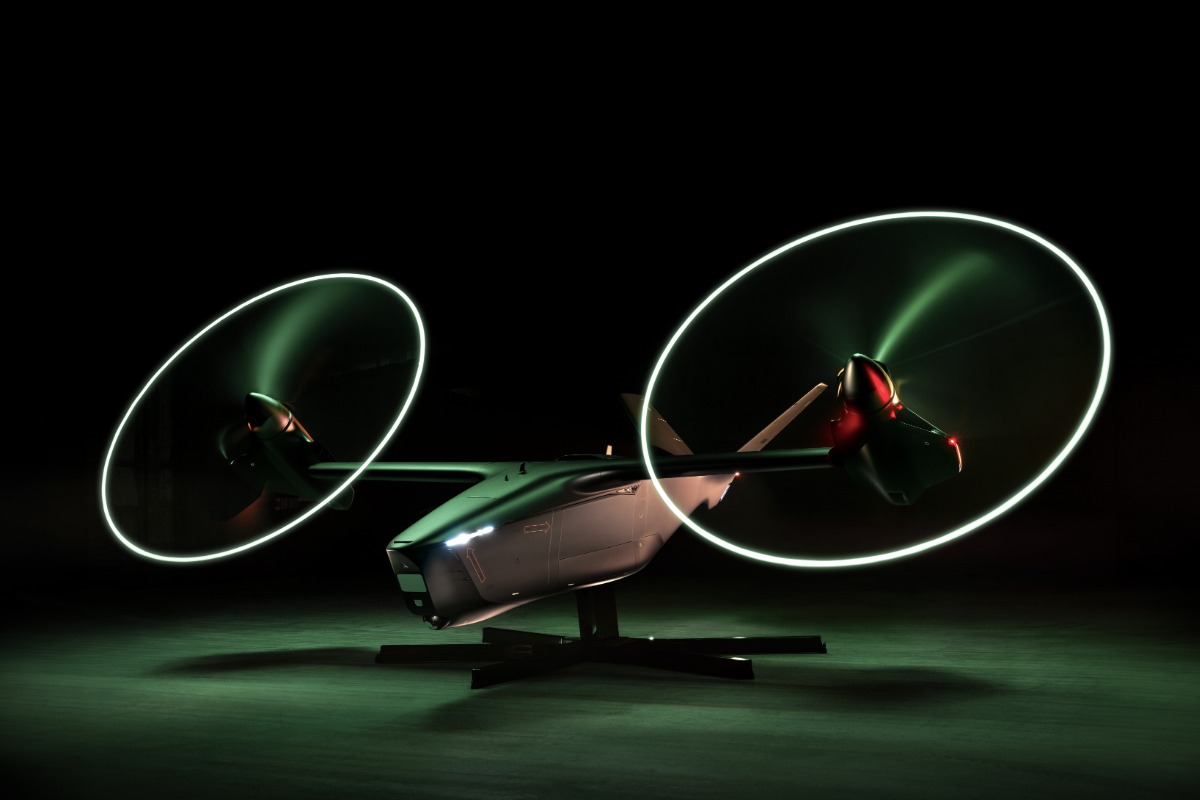
Anduril developed the platform in partnership with Archer Aviation, the California-based electric aircraft company already supplying its electric Midnight aircraft to the U.S. Air Force, using what the companies describe as a dual-use design that lets defense and commercial VTOL development share the same underlying technology. Archer separately announced an exclusive partnership in December 2025 with Karem Aircraft, a rotorcraft company whose tiltrotor technology has already been evaluated by the U.S. Army, giving the joint Thunder program access to military-validated rotor and tiltrotor engineering rather than starting entirely from an unproven commercial design.
Anduril designed Thunder around what it calls affordable mass, the ability to field enough aircraft cheaply enough that losing one in combat doesn’t cripple an entire unit’s combat power the way losing an $18 million crewed Apache would. The aircraft’s modular payload bays can carry ten air-to-ground missiles such as the Hellfire or Joint Air-to-Ground Missile, sixteen air-launched effects like the Altius-600, or seventy-six 70-millimeter (2.75-inch) rockets in its main bay, plus an additional twelve counter-drone interceptors in a separate nose-mounted module, giving a single aircraft the flexibility to switch between missile carrier, drone-launching mothership, or force-protection platform depending on what a specific sortie requires. Anduril’s own framing suggests that teaming three Thunder aircraft with a single crewed Apache could triple a Combat Aviation Brigade’s available munitions on a single sortie without putting additional pilots at risk, a claim the company has not yet independently demonstrated in an operational unit.
Every Thunder aircraft runs on Anduril’s Lattice for Mission Autonomy software, the same autonomy platform underpinning several of the company’s other unmanned systems, which handles formation flying, collision avoidance, and mission tasking without requiring a human operator to fly the aircraft with a traditional stick and rudder. That software layer also fuses sensor data from every aircraft in a formation into a single shared tactical picture, letting Thunder detect and track terrain, obstacles, and threats even when GPS signals, visibility, or communications links are degraded or jammed entirely, a capability increasingly critical given how routinely both Russia and Ukraine now jam GPS signals across contested airspace.
Anduril says it has already completed multiple test flights using full-scale surrogate aircraft standing in for the final Thunder design, with the company targeting Thunder’s actual first flight sometime in 2027.