

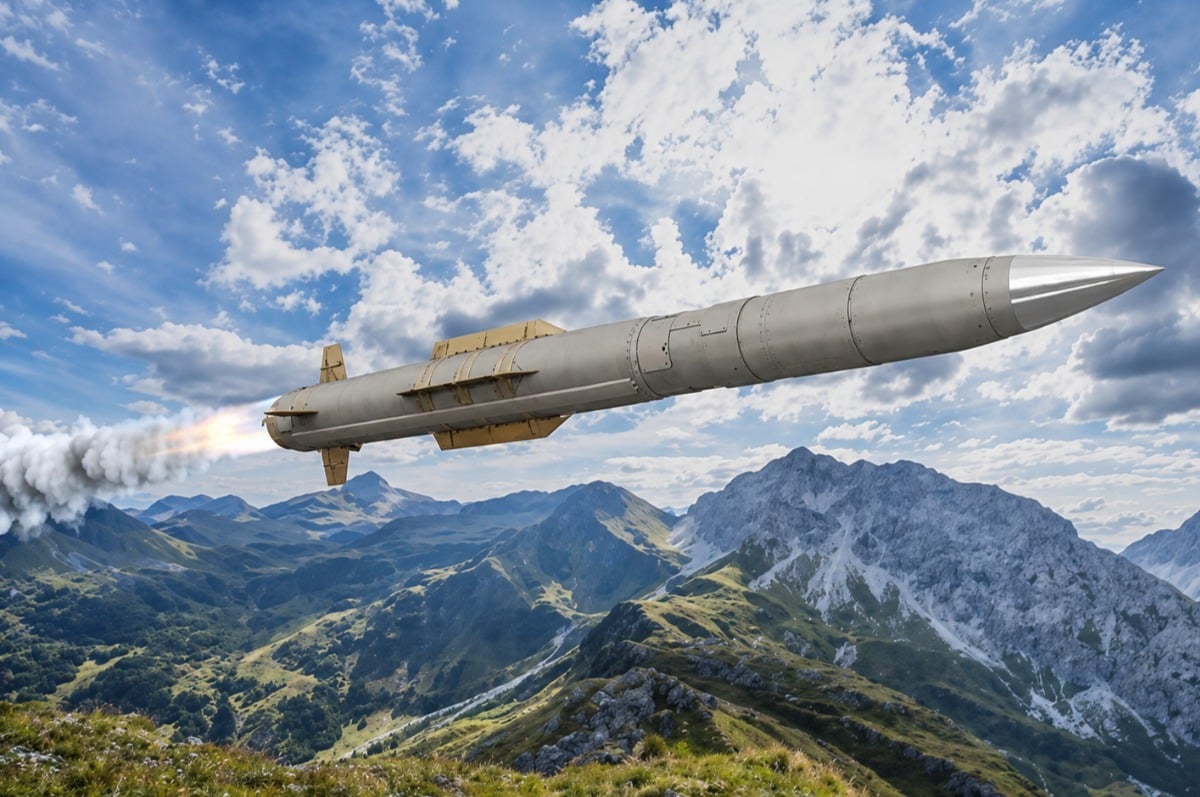
- Lockheed Martin unveiled the PAC-3 ACE interceptor at Farnborough, priced at less than half the cost of the roughly $4 million PAC-3 MSE.
- The company expects initial production within 36 months, developed jointly with American and European industry partners.
Lockheed Martin unveiled a new, cheaper version of its Patriot air defense interceptor at the Farnborough International Airshow, announcing that the PAC-3 Adapted Capability Effector, known as PAC-3 ACE, will cost less than half as much per unit as the missile it’s designed to complement, the PAC-3 MSE, which runs roughly $4 million per round according to U.S. Army budget documents.
The Patriot system has served as the backbone of American and allied air defense for decades, using ground-based radar to detect incoming aircraft, cruise missiles, and short-range ballistic missiles before launching an interceptor to physically collide with and destroy the threat before it reaches its target.
The PAC-3 MSE variant currently in service represents the most advanced version of that interceptor, but its price tag and the time it takes factories to build replacement rounds have become a genuine strategic liability as adversaries increasingly launch cheap drones and missiles by the dozen specifically to overwhelm expensive defenses through sheer volume. That imbalance played out starkly during this year’s American military campaign against Iran, when U.S. forces expended more than 1,000 Patriot interceptors but received only a fraction of that number back in replacement rounds, according to an analysis by the Center for Strategic and International Studies, exposing exactly the kind of magazine-depth problem PAC-3 ACE is designed to address.
Lockheed Martin built the new interceptor on the existing PAC-3 fire control system, the electronics and software that already guide the more expensive MSE variant, and designed it to plug directly into both the Patriot weapon system and the Integrated Battle Command System, the digital command network that lets Patriot batteries share targeting data with other air defense systems across a battlefield. That shared architecture matters because it means PAC-3 ACE isn’t a separate weapon system requiring its own training pipeline and logistics chain, but rather a lower-cost round that slots into infrastructure crews already know how to operate, a design choice the company says will let the interceptor move from announcement to initial production within roughly 36 months, a notably fast timeline for a major missile defense program.
Tim Cahill, president of Lockheed Martin Missiles and Fire Control, framed the new interceptor as a direct response to what allied militaries have been asking for.
“American and allied warfighters need a solution that is battle-tested and budget-smart, and PAC-3 ACE delivers exactly that by building on the unrivaled performance of the PAC-3 MSE,” Cahill said. “As we look to partner with our allies, we can further enhance resiliency and ensure our forces can swiftly counter emerging threats today and tomorrow.”
Lockheed Martin has not disclosed PAC-3 ACE’s exact target price or the specific engineering changes that separate it from the pricier MSE variant, leaving open questions about exactly where the company found room to cut costs without compromising the interceptor’s reliability. What the company has confirmed is that it plans to develop and manufacture PAC-3 ACE jointly with American and European industry partners rather than building it entirely in-house, an approach intended to strengthen the broader defense industrial base on both sides of the Atlantic while giving allied nations a shared, interoperable interceptor that multiple countries can produce and stockpile rather than depending entirely on a single American supply chain during a crisis.
That European partnership push fits a pattern Lockheed Martin has leaned into repeatedly in recent weeks. The company announced a memorandum of understanding with the German firm Rheinmetall on July 7 to produce the Army Tactical Missile System domestically within Germany, part of a broader European push to build more of its own precision munitions rather than relying solely on imports from American factories that are already stretched thin supplying Ukraine and rebuilding depleted U.S. stockpiles simultaneously.