

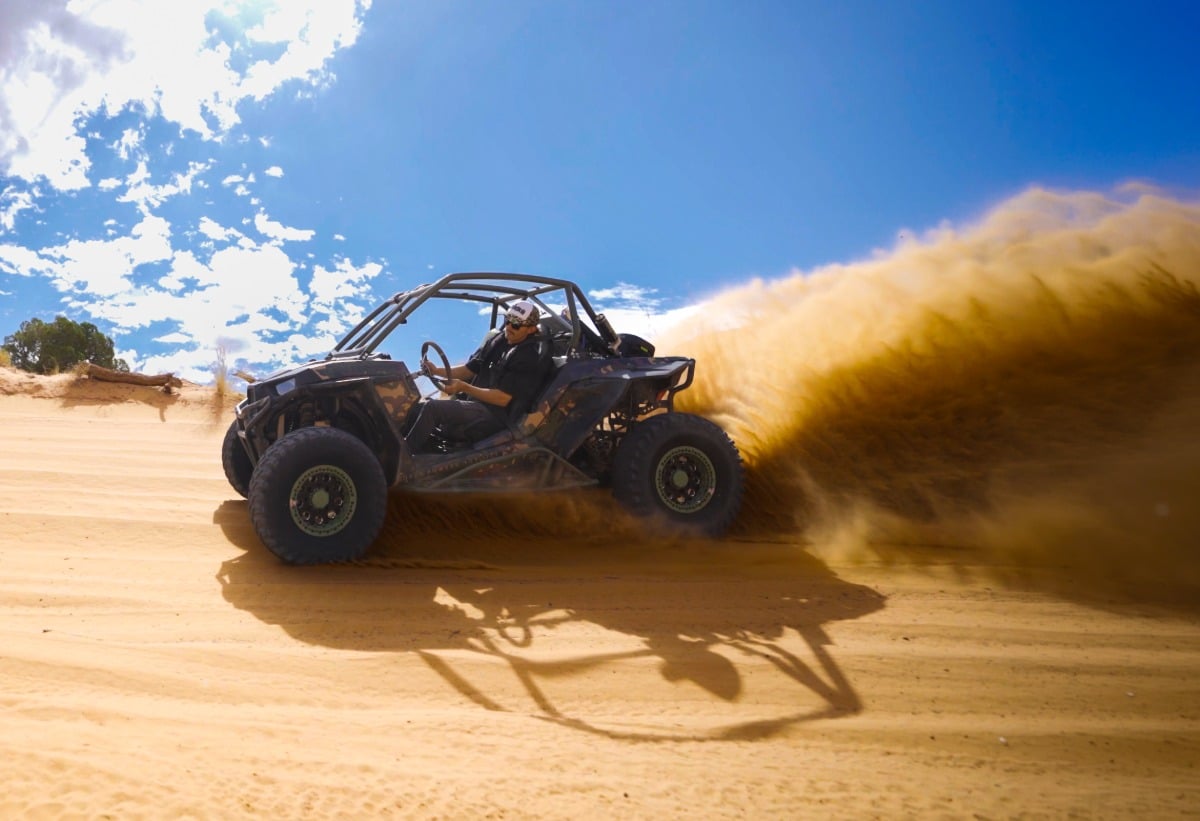
- Super Powers Mobility demonstrated its Energized Vehicle Kit to special operations forces at demos in Nevada and Utah.
- The company says its kit exports up to 30 kilowatts of continuous power from a battery weighing 120 pounds (54.4 kilograms).
Super Powers Mobility, known as SPM, said it recently demonstrated its Energized Vehicle Kit, or EVK, to special operations forces at two separate demos in Nevada and Utah, showcasing a battery and power system built to bolt onto existing light tactical all-terrain vehicles, the small, rugged off-road trucks commonly known by the acronym LTATV that special operations units rely on for fast, low-profile movement across difficult terrain.
The vehicles at the center of the demonstration are variants of the Polaris MRZR, a platform that has become the default light tactical vehicle for U.S. Special Operations Command and allied forces around the world, prized for its ability to fit inside helicopters and move quietly across terrain that would stop a full-size truck. SPM’s kit comes in two configurations built around the same core idea of extracting more usable electrical power from a small vehicle without sacrificing its off-road capability. The first configuration, which SPM calls EVK-Augmented, keeps the vehicle’s existing diesel engine intact and simply adds a 470-volt, 10-kilowatt-hour battery pack weighing only 120 pounds (54.4 kilograms), giving the MRZR Alpha the ability to export electricity silently at standard voltages of 24, 48, 120, or 240 volts without needing to idle the combustion engine at all.
That silent power export matters more than it might sound to someone unfamiliar with how special operations teams actually operate in the field. Radios, sensors, night vision equipment, electronic warfare gear, and other battlefield electronics all need a steady, reliable power source, and the traditional solution has been either running a vehicle’s engine continuously, which burns fuel and creates noise and heat signatures that can give away a team’s position, or hauling a separate portable generator, the kind of equipment the military commonly refers to as an MEP set, short for Mobile Electric Power.
SPM claims its battery packs deliver roughly six times the power density of a traditional MEP generator, according to the company, a figure that has not been independently verified but that speaks directly to the tradeoff every dismounted or vehicle-mounted team faces between carrying enough power generation capacity and keeping their overall load light enough to stay mobile.
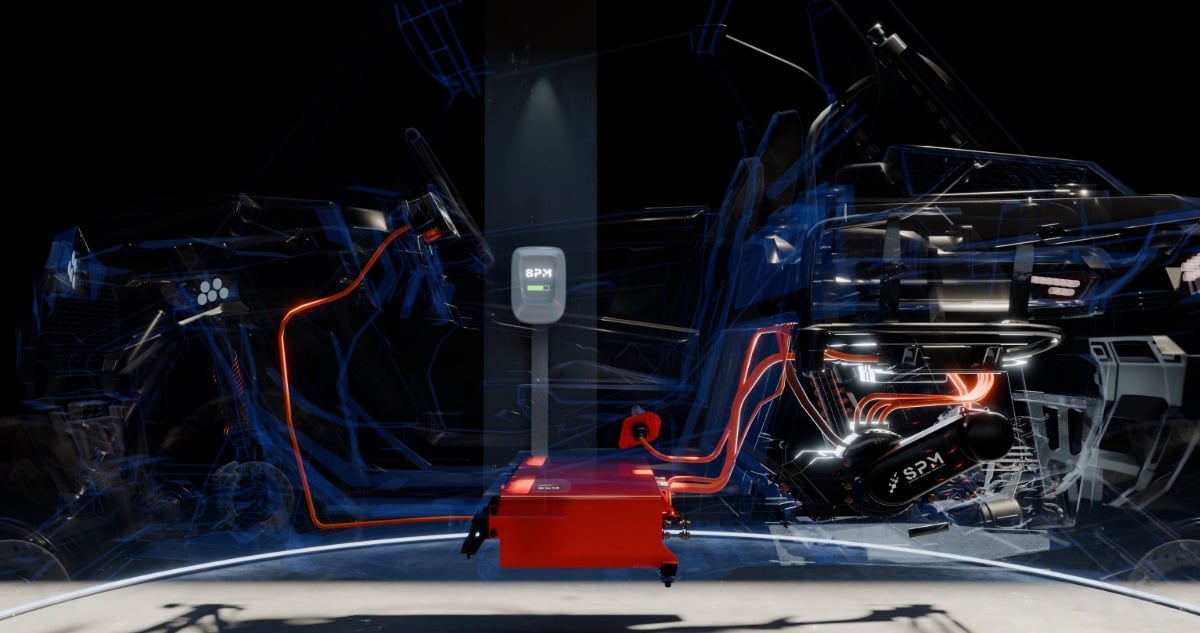
According to SPM, the augmented configuration can deliver up to 30 kilowatts of continuous power export and handle bursts as high as 100 kilowatts for short periods, numbers that dwarf the exportable power options Polaris itself has previously built into factory MRZR variants, which Defense News reported in 2024 topped out around 5 kilowatts for a built-in system and just 1 kilowatt for a comparable bolt-on kit designed for existing vehicles. The company also says the battery packs support hot-swapping, meaning a depleted battery can be pulled and replaced with a charged one without powering down the vehicle’s systems entirely, a feature that would let a unit keep exporting power indefinitely as long as fresh batteries keep arriving through the supply chain.
SPM’s second configuration goes further, replacing the combustion engine entirely rather than simply supplementing it. That version, tested on the MRZR D4, swaps in a 20-kilowatt-hour battery pack as a direct, field-installable bolt-in replacement for the diesel powertrain, and the company says a similar conversion applied to the civilian Polaris RZR XP1000 uses a smaller 10-kilowatt-hour pack. According to SPM, the fully electric configuration delivers the same power export capability as the augmented version while adding a reduced thermal signature, since there is no engine block generating heat that infrared sensors could detect, along with what the company describes as autonomous operation capability and silent mobility rated at 165 horsepower and 160 pound-feet of torque (217 newton-meters), figures that, if accurate, would put the electric powertrain’s output roughly in line with or ahead of the gas-powered MRZR variants it replaces.
That combination of silence and sustained off-grid power output fits directly into a broader shift the U.S. military and its special operations community have been pushing for years. A 2023 assessment published by the defense publication European Security and Defence noted that U.S. Special Operations Command has spent considerable effort developing hybrid-electric and fully electric concept vehicles specifically because reduced acoustic and thermal signatures let small teams operate closer to adversaries without being detected, while also solving the practical problem of powering an ever-growing pile of electronics that modern dismounted and mounted operators now carry into the field. SPM is positioning its kit as a faster, cheaper path toward that same goal, since retrofitting an existing MRZR fleet with a bolt-on battery kit avoids the multi-year procurement and testing timeline that typically comes with fielding an entirely new purpose-built vehicle.