

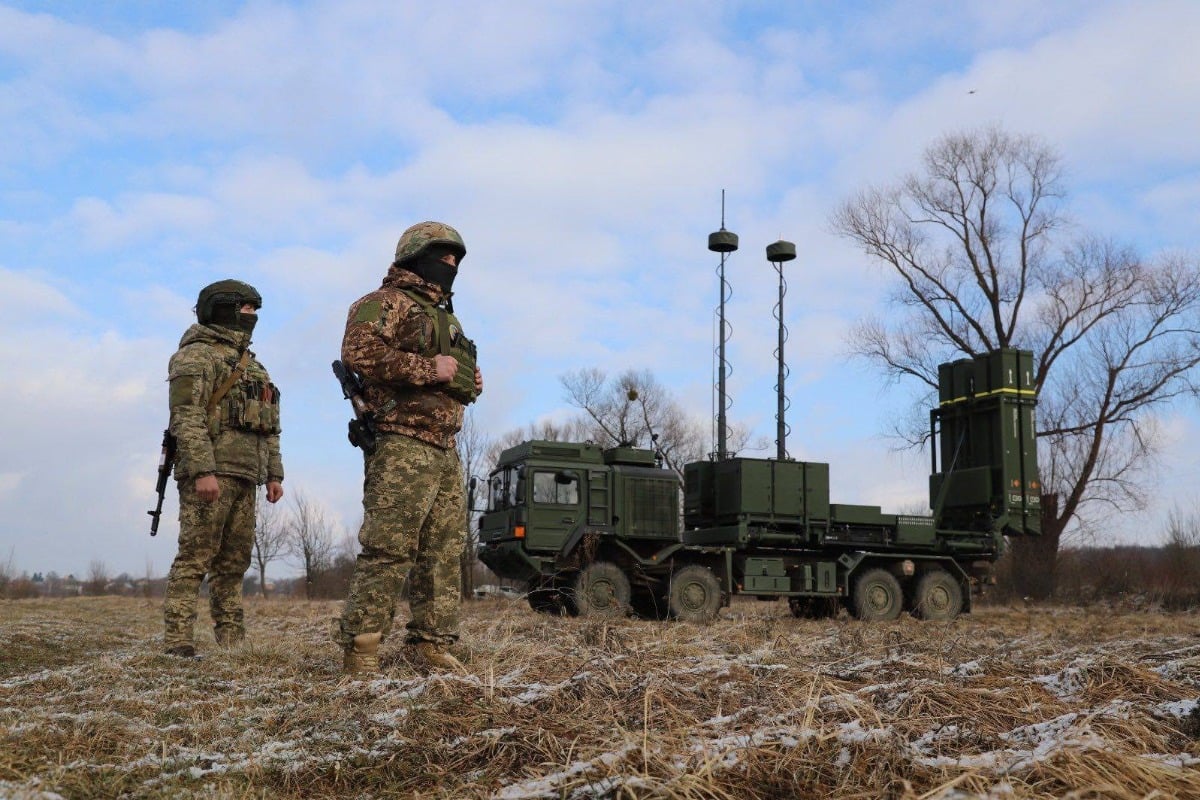
- Germany approved roughly $15.85 billion in arms export licenses during the first half of 2026, according to preliminary government figures released Wednesday.
- Ukraine remained the top recipient with approvals worth approximately $2.88 billion, ahead of the United States, Netherlands, and Czech Republic.
Germany approved more weapons for export in six months than most countries manage in years, and the country that received the single biggest share of that approval, once again, is not a NATO member at all. It’s Ukraine.
Germany’s Federal Ministry for Economic Affairs and Climate Action, the government agency responsible for reviewing and approving foreign arms sales, released preliminary figures Wednesday showing it authorized roughly $15.85 billion worth of arms export licenses during the first half of 2026, and Ukraine topped the list of recipients for what industry watchers say is now a well-established pattern rather than a one-time surge. The ministry approved exports intended for Ukraine worth approximately $2.88 billion, more than any other single country on the list, continuing a trend that has held steady since Russia’s full-scale invasion began in February 2022 and upended decades of German reluctance to arm nations involved in active conflicts.
An export license, in plain terms, is government permission for a German company to actually sell and ship weapons or military equipment abroad, something Berlin controls tightly given the country’s history and its coalition government’s stated commitment to keeping tabs on where German-made arms end up. Of the total approved this period, roughly $10.97 billion covered what the German government legally classifies as Kriegswaffen, or weapons of war, a stricter category that includes combat aircraft, tanks, and munitions and requires an extra layer of government sign-off beyond standard export rules, while the remaining $4.91 billion covered other military equipment such as vehicles, optics, and support systems that carry fewer legal restrictions.
Nearly $10.17 billion in approvals, close to two-thirds of the six-month total, went to fellow European Union and NATO members along with countries the German government treats as NATO-equivalent allies, namely Japan, Switzerland, Australia, and New Zealand. German officials describe that concentration as a direct reflection of NATO’s own defense spending targets, which have pushed member nations to buy more weapons, more often, from allied suppliers as the alliance works to rebuild stockpiles depleted by years of supporting Ukraine and by renewed concern over Russian intentions elsewhere in Europe.
To speed that process along, Germany relies on a mechanism called General Licenses, a streamlined approval track that applies to shipments bound for the EU, NATO, and NATO-equivalent countries, letting exporters skip the individual, case-by-case review that every other arms sale requires. Instead of waiting for approval on each shipment, companies operating under a General License can deliver immediately and simply report the value of what they sold afterward, a system the ministry says exists specifically to move weapons to close allies faster while still keeping records of what left the country. About $1.26 billion of the total approved this period flowed through that faster track.
Beyond Europe and its closest allies, the ministry approved roughly $5.6 billion in exports to what it calls third countries, a category covering every nation outside the EU and NATO, and Ukraine alone accounts for nearly half of that broader figure once again. Adding Ukraine to the EU, NATO, and NATO-equivalent total along with South Korea and Singapore, two countries Germany treats similarly to allied nations for export purposes, brings the combined share to about $13.25 billion, or roughly 84 percent of everything approved during the first half of the year, leaving a comparatively small slice of German arms exports headed to countries outside that trusted circle.
Of the $5.6 billion in third-country approvals, about $3.31 billion went to nations the Organisation for Economic Co-operation and Development classifies as developing economies, and Ukraine’s share within that smaller group runs even higher, accounting for roughly 85 percent of it. The ranking of individual recipient countries beyond Ukraine reads like a map of NATO’s eastern flank and its closest partners: the United States received approvals worth about $1.88 billion, the Netherlands roughly $1.49 billion, the Czech Republic close to $1.41 billion, and Lithuania about $1.38 billion, with Israel rounding out the top five at roughly $913 million, a figure the ministry notes is driven largely by a single major maritime defense project and continued cooperation between German and Israeli firms supporting the country’s own armed forces.
Licenses for guns and gun components totaled a comparatively modest $137.4 million for the half year, and almost all of it, about 97 percent, went to EU, NATO, and NATO-equivalent countries rather than the broader mix of nations that show up in the larger weapons categories, suggesting Germany keeps an especially tight grip on where its small arms end up compared with heavier military hardware.