

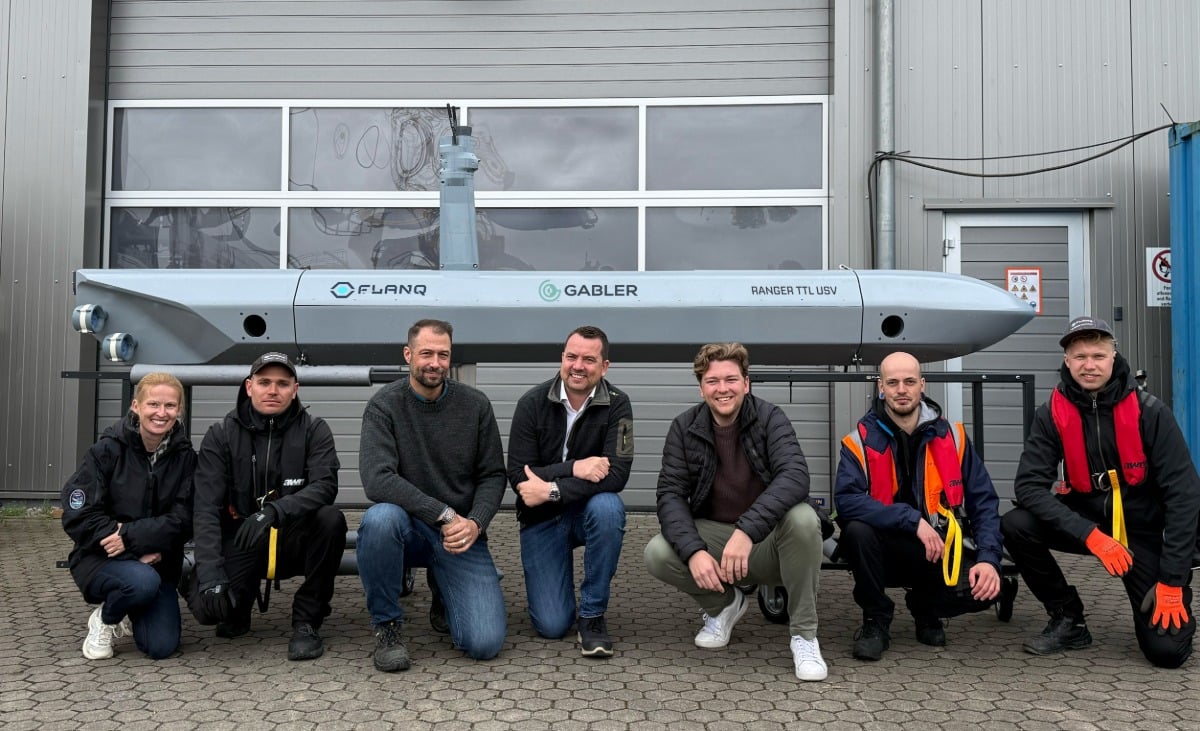
- GABLER and FLANQ completed Sea Acceptance Testing in June 2026 for their Ranger torpedo-tube-launched uncrewed surface vessel.
- The 4.5-meter Ranger launches from a standard 21-inch torpedo tube and autonomously surfaces to conduct intelligence and reconnaissance missions.
Two German defense companies just proved a submarine can fire a scout instead of a torpedo, completing sea trials of an uncrewed boat small enough to launch from a standard torpedo tube and surface on its own to spy on an enemy without ever putting the submarine itself at risk.
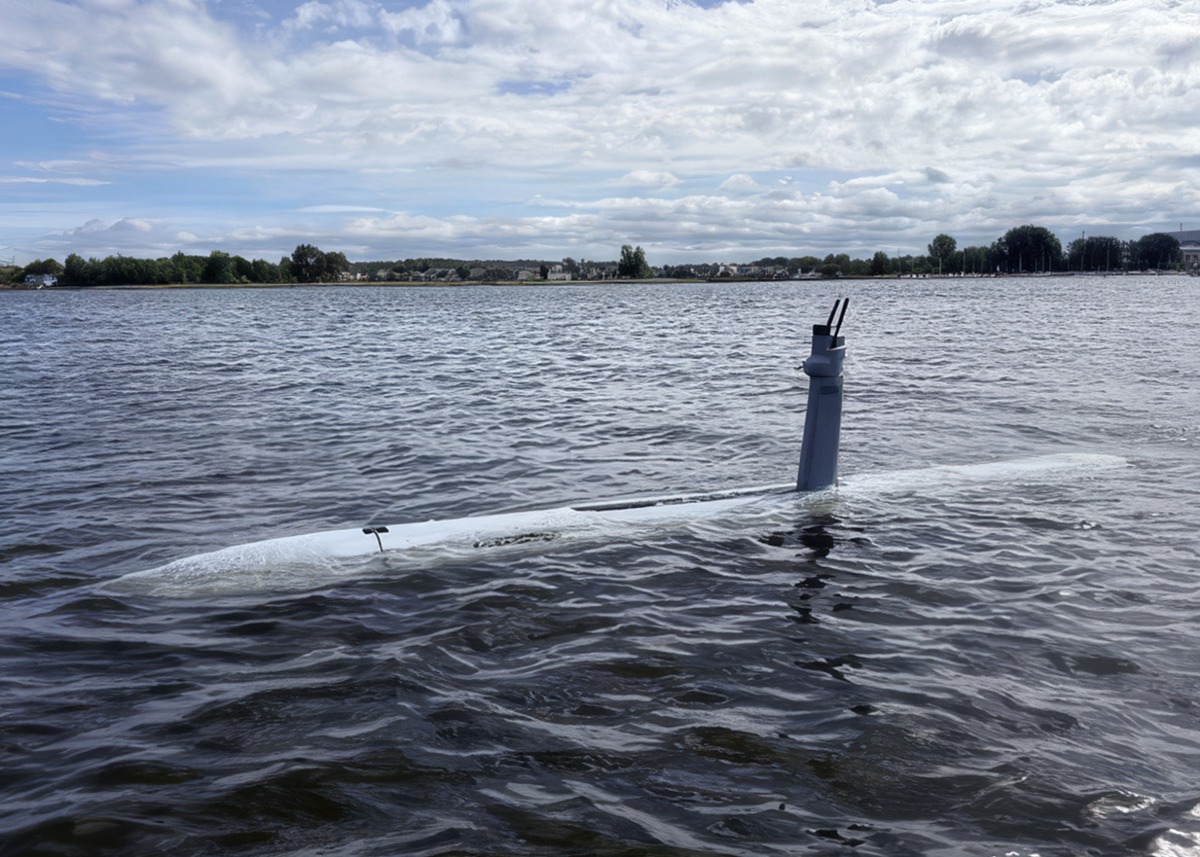
GABLER, a German firm known for building submarine masts and other mission-critical submarine components, and FLANQ, a German defense technology company specializing in autonomous maritime systems, announced July 14 that they had completed the Sea Acceptance Test for their jointly developed Torpedo-Tube-Launched Uncrewed Surface Vessel, or TTL USV, a demonstrator vehicle the companies call Ranger. The test, conducted in June, verified the vessel’s seaworthiness and validated how its key technologies performed once it actually hit open water, marking the companies’ first major milestone since they revealed concept designs for the system less than a year earlier at a German naval industry workshop in September 2025.
Ranger measures 4.5 meters (14.8 feet) long and is rated to survive submarine depths of 300 meters (984 feet), dimensions chosen specifically so the vessel fits inside a standard 21-inch (533mm) torpedo tube, the same launch system nearly every modern attack submarine already carries. Once fired from the tube, the vessel autonomously rises to the surface, unfolds a retractable keel and sensor mast that stay tucked away during the underwater launch sequence, and begins operating on an electric drivetrain quiet enough not to immediately give away a nearby submarine’s position. The vehicle’s payload bay is mission-configurable, meaning naval customers can swap in different sensor packages depending on whether a mission calls for electronic surveillance, visual reconnaissance, or another intelligence-gathering role, and GABLER says a strike-capable variant called Strike, built for one-way attack missions rather than reusable reconnaissance, will also become available as the program matures.
“Successfully completing the SAT marks another important milestone in the development of our TTL USV programme,” said Felix David, TTL USV Project Lead at GABLER.
“The tests confirmed the maturity of the vehicle at this stage of development while demonstrating the excellent progress achieved by the joint team,” David said.
A submarine’s greatest asset is that adversaries generally do not know where it is, but launching a periscope or surfacing to get a better look at surface activity risks giving away exactly that position, forcing commanders to choose between gathering better intelligence and preserving the stealth that makes a submarine valuable in the first place. A reusable, disposable surface drone that a submarine can fire and forget solves that tradeoff directly, letting the mothership stay deep and undetected while the surface vessel does the exposed work of watching, listening, or, with the Strike variant, striking a target within range.
“FLANQ’s strength lies in developing new and novel operational capabilities for European defence at pace,” said Jannik Sauer, Chief Technology Officer, FLANQ.
“Together with our partner GABLER, we’re combining commercial-off-the-shelf technologies and operational know-how to create solutions aligned to future maritime missions. June’s successful SAT shows how conventional naval platforms, and next-generation autonomy can be brought together to create entirely new capabilities for domain advantage,” Sauer said.
The Defence Blog first reported on GABLER’s entry into the uncrewed surface vessel market when the company unveiled Ranger and its strike-focused sibling as concept designs in September 2025, at which point the vehicles existed only as unveiled specifications rather than tested hardware. The jump from concept unveiling to a completed Sea Acceptance Test in roughly ten months reflects an unusually fast development pace for a naval program of this type, though it is worth noting the companies had already assembled a full-scale prototype by the time of that initial unveiling, meaning the SAT represents validation of hardware already under construction rather than a design finalized from scratch during the intervening months.
For navies operating on constrained budgets, a system like Ranger offers a meaningful capability upgrade without the far larger expense of building dedicated uncrewed surface vessel motherships or modifying existing submarine hulls to accommodate new launch systems.