

- The U.S. Army awarded DRS Network & Imaging Systems a $55.7 million contract on July 6, 2026, for Improved Bradley Acquisition Subsystem engineering services.
- Work will be performed in Melbourne, Florida, with an estimated completion date of September 30, 2029.
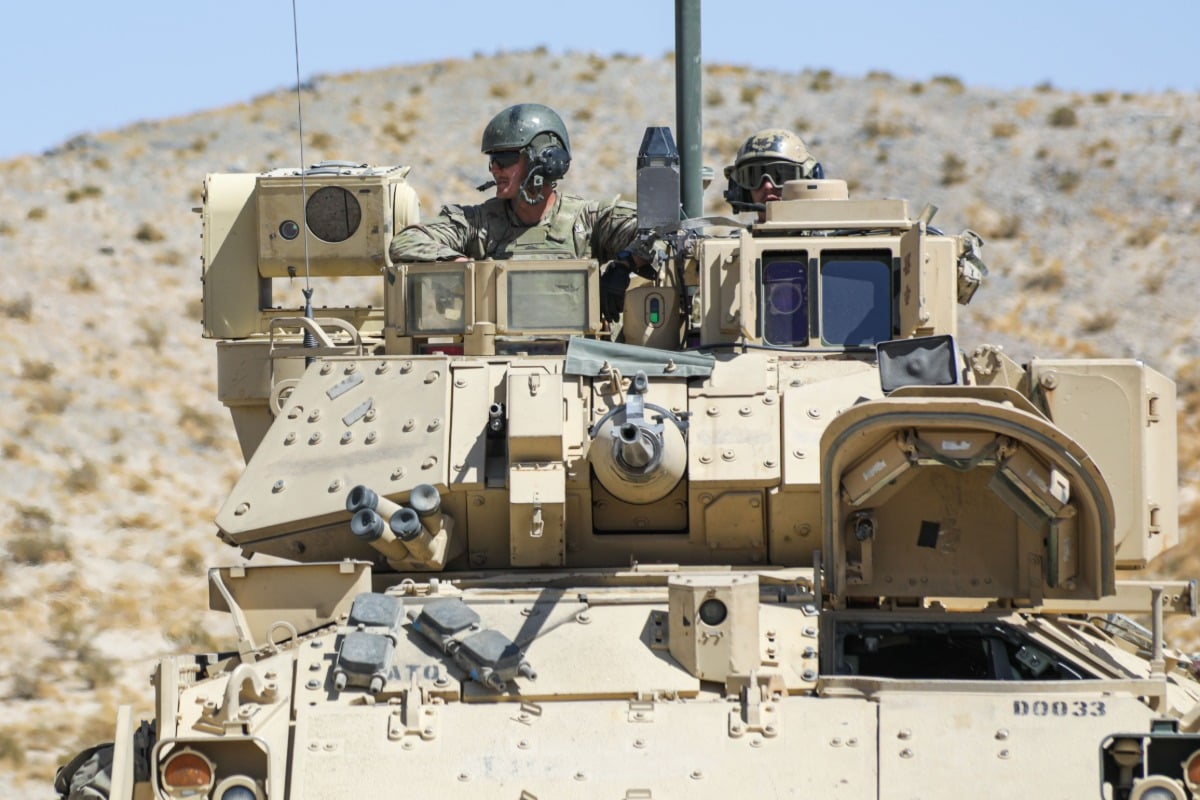
A soldier crewing an Army Bradley Fighting Vehicle spots a target through swirling dust or pitch darkness using a sighting system built decades ago, and the Army just committed nearly $56 million to keep engineers refining that system for years to come. DRS Network & Imaging Systems, a subsidiary of Leonardo DRS based in Melbourne, Florida, won a $55.7 million Army contract for engineering services supporting the Improved Bradley Acquisition Subsystem, known throughout the Army by its acronym IBAS, the targeting and sighting package that lets Bradley crews spot, identify, and engage enemy vehicles from a safe distance.
The Bradley serves as the Army’s primary infantry fighting vehicle, a tracked, armored troop carrier armed with a 25mm automatic cannon and TOW anti-tank missiles, built to transport soldiers into combat while also engaging enemy armor and fortified positions along the way. None of that firepower matters if the crew cannot actually see and identify what they are shooting at, which is exactly the gap IBAS was designed to close when the Army first fielded it more than two decades ago as a replacement for the Bradley’s original TOW 2 targeting system.
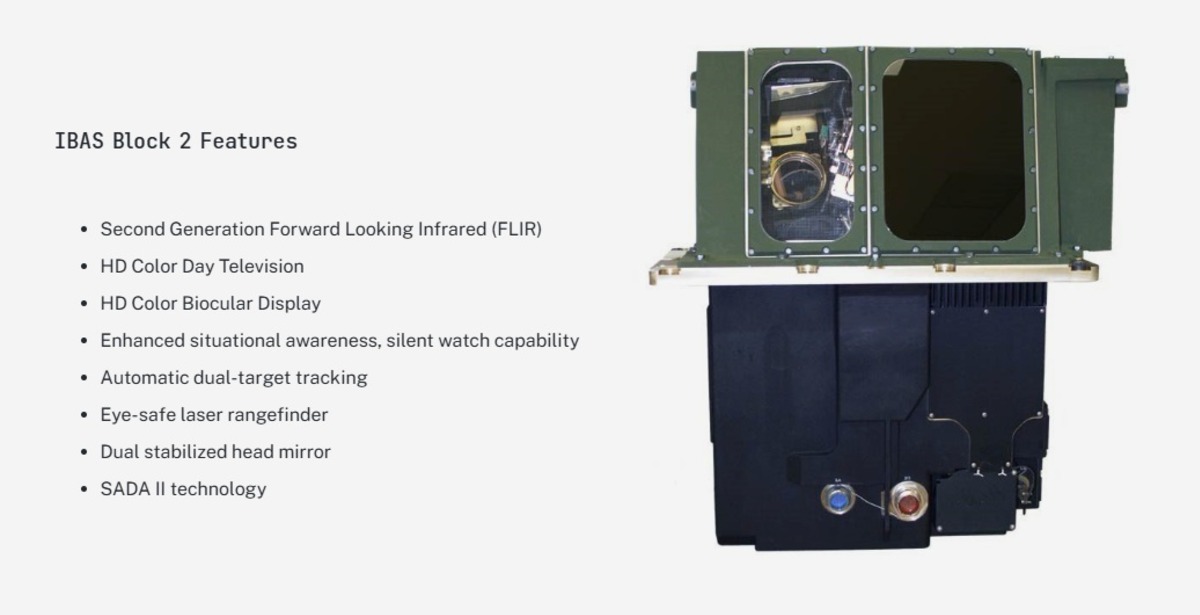
The system includes a second-generation forward-looking infrared camera, commonly called FLIR, which detects heat signatures to let crews see clearly in total darkness or through smoke and dust that would blind the naked eye, alongside a day television camera for standard daylight viewing, direct view optics, a dual target tracker capable of following two threats simultaneously, and an eye-safe laser rangefinder that measures distance to a target without risking harm to nearby personnel or friendly optics. A stabilized head mirror assembly keeps the sight steady even as the Bradley bounces across rough terrain, letting gunners maintain a locked view on a target while the vehicle is moving rather than needing to stop to aim accurately. When the Army first fielded this Generation II FLIR technology in the early 2000s, official testing found it increased target detection range by 78 percent at night and 56 percent during the day compared to the older first-generation sights used during Operation Desert Storm, while improving target identification accuracy by well over 200 percent at night, numbers that translate directly into crews spotting threats sooner and with far greater confidence about what they are actually looking at before deciding whether to engage.
The Army has continued refining IBAS well beyond its original early-2000s design, most recently through an upgrade called IBAS Block 2, which swapped the system’s older black-and-white thermal display for high-definition color imagery, giving crews a considerably easier time distinguishing objects on a cluttered, chaotic battlefield than grainy monochrome video ever allowed. Block 2 also introduced a new diode-pumped laser rangefinder built for extended range performance with greater accuracy and improved power efficiency compared to earlier laser technology, incremental but meaningful improvements that keep a sighting system originally designed in the late 1990s relevant against modern threats decades later.
This week’s contract falls under what the Army calls engineering services, a broad category covering the ongoing technical work needed to sustain, troubleshoot, and improve a fielded weapons system rather than funding entirely new production or a fresh generation of hardware. DRS Network & Imaging Systems won the award after the Army solicited bids over the internet and received exactly one, a pattern consistent with a program where DRS, through its various corporate names and reorganizations over the past two decades, has served as the Army’s primary IBAS contractor since the system’s earliest low-rate production contracts in 2000. Work under the new agreement will take place at the company’s Melbourne, Florida facility, with an estimated completion date of September 30, 2029, giving DRS roughly three years to carry out the engineering support work covered under the award.
Notably, the Army’s contract announcement specifies that no funds were actually obligated at the time of award, meaning the $55.7 million figure represents a ceiling ready for outreach rather than money committed and spent immediately. That structure is fairly common for engineering services and indefinite-delivery contract vehicles, where the government establishes an approved framework and maximum dollar amount upfront, then obligates actual funding incrementally as specific task orders get issued against the contract over its multiyear life, giving the Army flexibility to fund only the specific engineering work it actually needs as requirements develop rather than committing the full amount before knowing exactly what tasks will come up.
The Bradley remains one of the Army’s most heavily used armored vehicles, having served in every major American ground conflict since the 1991 Gulf War, and its crews depend on accurate, long-range target identification to survive engagements against enemy armor that may be equally or better armed. A targeting system that degrades or falls behind evolving battlefield conditions does not just create an inconvenience for maintenance crews, it can force a Bradley crew to close distance with an enemy vehicle simply to positively identify a target, exposing the vehicle and its occupants to exactly the kind of close-range engagement modern sighting technology exists to prevent.