

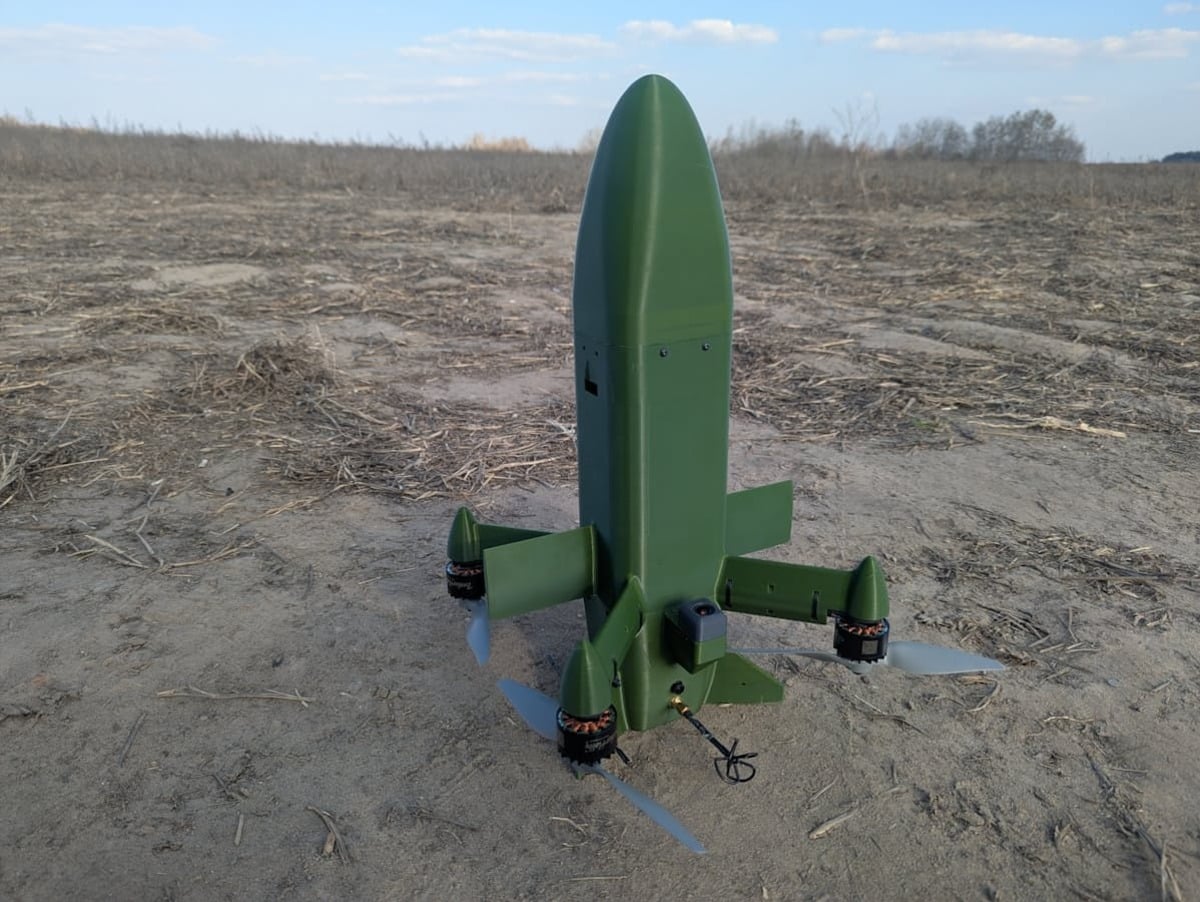
- Japan's ATLA received interceptor drone proposals from 38 companies, Defense Minister Shinjiro Koizumi confirmed on July 3, 2026.
- The agency plans to sign a procurement contract in late August 2026 and deliver systems to the military by September.
Thirty-eight companies have told Japan’s government they can build a drone that shoots down other drones, and the country’s defense chief wants one flying within weeks rather than years.
Defense Minister Shinjiro Koizumi disclosed the figure at a press conference following a cabinet meeting on July 3, 2026, confirming that the Acquisition, Technology and Logistics Agency, the Japanese defense ministry’s procurement arm known as ATLA, had received proposals from 38 firms for its interceptor drone acquisition program. Koizumi framed the effort as an urgent response to a threat category Japan’s military has never had to seriously plan against before.
“We need to efficiently counter threats from the sky. Interceptor drones are one promising option,” Koizumi said.
An interceptor drone functions differently from the reconnaissance and strike drones that have dominated headlines from the war in Ukraine, since its entire purpose is to detect, chase down, and physically destroy an incoming hostile drone before it reaches its target, essentially fighting one unmanned aircraft with another rather than relying solely on expensive surface-to-air missiles or fighter jets. ATLA’s timeline for turning these 38 proposals into fielded hardware moves unusually fast by defense procurement standards, with the agency planning to sign a procurement contract in late August once demonstration testing wraps up, followed by delivery to the Ground Self-Defense Force as soon as September, a schedule Koizumi’s ministry has designed specifically to get the system into service in the shortest possible window rather than following a multiyear development cycle.
Koizumi tied the urgency directly to North Korea’s expanding arsenal during the same press conference, pointing to Pyongyang’s continued investment in conventional military capability alongside its nuclear and missile programs.
“North Korea is also focusing on strengthening conventional forces, including drone development. This is a more serious and more imminent threat to Japan’s security than ever before,” Koizumi said.
That warning fits into a broader pattern of Japanese officials citing North Korea’s drone ambitions as a rising concern, even as the interceptor program itself was designed with a different, more distant threat in mind. ATLA spent June gathering technical input from companies specifically focused on countering long-range attack drones modeled on Iran’s Shahed-136, the same loitering munition that has become one of the defining weapons of Russia’s war against Ukraine and that Iran itself launched at Israel during their recent conflict, with some of those aircraft flying roughly 1,100 miles (1,770 kilometers) from Tehran to Tel Aviv. That range matters enormously to Japanese planners because a similarly long-range drone launched from North Korea or elsewhere in Northeast Asia could reach Japanese territory, a scenario that has pushed Tokyo to treat interceptor drones as a near-term operational requirement rather than a future research project.
The push also reflects growing concern within Japan’s defense establishment about the reliability of American-supplied interceptor missiles following a recent U.S. military campaign against Iran. A 38-day American operation earlier this year strained U.S. missile stockpiles severely enough that the Center for Strategic and International Studies warned of a near-term munitions shortage, raising questions about whether deliveries of Tomahawk cruise missiles Japan has ordered from the United States could face delays. Both U.S. Secretary of War Pete Hegseth and Koizumi have publicly denied any Tomahawk delivery problem, but Koizumi has separately said his ministry plans to develop more of its own domestic missile systems regardless, a hedge against relying too heavily on any single foreign supplier during a crisis. That hedging strategy runs alongside Operation Supercharge, a separate joint manufacturing arrangement under which the United States and Japan are now co-producing SM-6 and SM-3 interceptor missiles, giving Tokyo a second track toward reducing its dependence on missiles built entirely on American production lines even as it pushes interceptor drones forward as a cheaper, faster-to-field complement to that missile shield.
Koizumi’s personal engagement with the drone industry has been visible well before this week’s announcement. The defense minister visited the Prodrone research facility in Nagoya on May 20, 2026, touring the company’s unmanned aircraft operations as part of a broader effort by his ministry to court domestic manufacturers ahead of exactly this kind of large-scale procurement push, a visit that signaled the interceptor drone program was moving from internal planning toward an active industry solicitation well before Koizumi confirmed the 38 proposals this week.
Japanese industry has already begun moving on interceptor drones ahead of this specific solicitation. Tokyo-based Terra Drone Corporation tested two interceptor models, the rocket-propelled, short-range Terra A1 and the fixed-wing, long-range Terra A2, directly in Ukraine between April and May 2026, using the country’s active combat environment to validate designs before bringing them home. That testing helped the company secure what it describes as Japan’s first defense contract specifically for interceptor drones, a 300-unit order from ATLA with delivery required by September 30, 2026, a timeline that lines up closely with the broader interceptor program’s own September fielding target. ATLA has said publicly that it wants interceptor drone systems installed near radar stations, military bases, and naval vessels by 2027, part of a defense budget that allocated roughly 277.3 billion yen (about $1.9 billion) toward strengthening Japan’s unmanned systems capabilities in the draft fiscal 2026 budget alone.
None of the 38 companies that submitted proposals have been named publicly, and ATLA has not disclosed how many contracts it ultimately expects to award or what portion of the interceptor fleet will come from domestic firms versus companies with combat-tested designs already proven abroad. What Koizumi’s announcement does confirm is that Japan now views drone-on-drone warfare as urgent enough to compress a procurement process that would normally stretch across years into a matter of weeks, betting that speed matters more than certainty when the threat sitting just across the water keeps adding new ways to reach Japanese soil.