

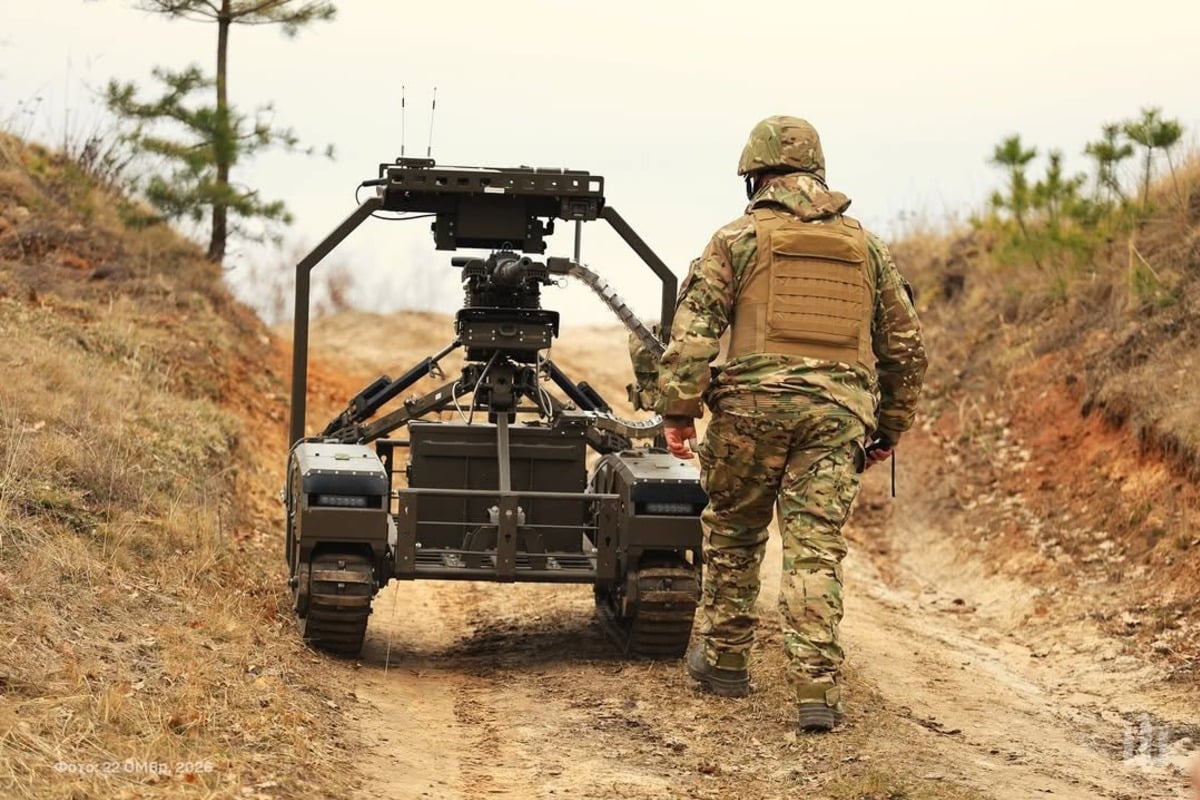
- KONGSBERG and Ukraine's DevDroid signed a Memorandum of Understanding on June 30, 2026, in Kyiv during the Ukraine Recovery Conference.
- The agreement covers cooperation on producing existing and developing new remotely operated robotic combat systems for Ukraine and international markets.
A Norwegian defense giant just bet on Ukraine’s homegrown robot army, with KONGSBERG, one of Europe’s largest defense manufacturers, and Ukrainian robotics company DevDroid signing a Memorandum of Understanding on June 30, 2026, in Kyiv that lays groundwork for large-scale, long-term cooperation to produce existing systems and develop new remotely operated combat robots together.
The agreement was signed during the Ukraine Recovery Conference, an annual gathering where Ukrainian and international officials and companies hammer out investment and industrial deals aimed at rebuilding the country and strengthening its defense sector, and it puts a Western industrial heavyweight directly behind a young Ukrainian firm whose machines have already destroyed enemy armor in real combat.
DevDroid builds tracked, remotely operated ground robots designed to hold defensive positions, support offensive pushes, conduct reconnaissance, carry out evacuations, and run other combat missions without putting a soldier’s body in the blast radius, and its track record already sets it apart from most robotics startups still working through prototypes. Its Droid TW 12.7, a robotic platform armed with a remotely fired Browning M2 heavy machine gun chambered in 12.7 mm (0.5 in), holds a notable distinction in the short history of ground robot warfare, since Ukraine’s military says the system carried out the first documented case of a ground robot destroying an enemy armored vehicle, an MT-LB troop carrier, while the vehicle’s crew was inside.
A newer platform, the Droid NW 40, has since passed formal codification by Ukraine’s Ministry of Defense and received a NATO code, clearing it for official supply to Ukrainian forces and adapting it to fire 40 mm (1.57 in) automatic grenade launchers rather than a machine gun, giving operators a different mix of range and area effect depending on the mission. Ukrainian units have already begun combining machines like these in coordinated assaults, with one national guard brigade documenting an operation in Kharkiv Oblast that paired crawling ground robots with flying drones to hit Russian positions without exposing infantry to direct fire.
Explaining why his company chose to partner with a much larger foreign manufacturer, DevDroid CEO Yurii Poritskyi said:
“Ukraine is shaping the future of robotic warfare. Our solutions are tested daily in real combat conditions, and our partnership with KONGSBERG creates opportunities to scale this experience and develop new robotic systems capable of meeting the challenges of the modern battlefield.”
The Norwegian company DevDroid is now paired with has spent decades building remote weapon stations, including the PROTECTOR line that has armed U.S. Army and Marine Corps vehicles since KONGSBERG became the sole CROWS supplier, short for Common Remotely Operated Weapon Station, to the U.S. Army in 2007, and it has already worked on unmanned ground vehicle integration through a prior partnership with Estonia’s Milrem Robotics on the Type-X robotic combat vehicle. KONGSBERG also supplies air defense systems, missile systems, and space technologies to NATO members and partner nations, giving it a manufacturing and export network that a young Ukrainian company could not build on its own in the near term.
Describing the memorandum as a combination of Ukraine’s rapid battlefield-driven innovation with his company’s long industrial experience, Jørgen Bull, KONGSBERG’s Senior Vice President for Land Systems, said:
“The speed of defence technology development in Ukraine today has no equal. This is why partnerships with Ukrainian companies are an important element in building the defence capabilities of the future. Cooperation with DevDroid combines battle-proven solutions with KONGSBERG’s decades of experience in developing advanced defence systems and establishes a foundation for the joint development and production of robotic systems for Ukraine and international markets.”
Neither company has disclosed a contract value, production timeline, or specific new systems that will result from the memorandum, and a memorandum of understanding is a formal statement of intent to work together rather than a binding contract or a guaranteed production order, so the concrete scope of what gets built and where remains to be worked out in follow-on agreements, even as the signing fits a pattern that repeated across the Ukraine Recovery Conference this year, as international manufacturers lined up to attach their names and manufacturing capacity to Ukrainian defense technology tested under fire. Ukrainian robotics company Roboneers announced plans to form a joint venture with Germany’s ARX Robotics that same week, Ukrainian radio maker Himera signed a cooperation agreement with Finland’s Bittium, and drone and counter-drone manufacturer TAF Industries signed a memorandum with Polish defense group PGZ, part of a broader package the Ukrainian government says could help mobilize more than $800 million in investment across drones, counter-drone systems, ground robotics, and related sectors.