

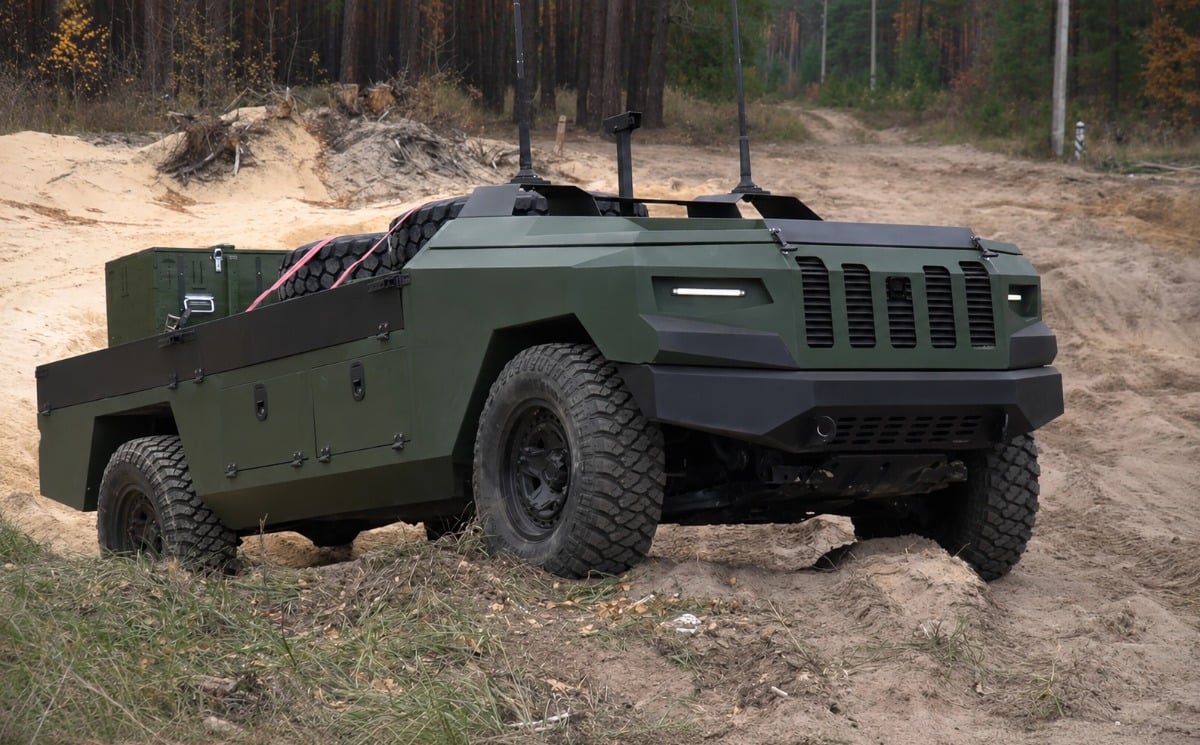
- The 429th Separate Brigade Achilles used the Protector UGV for front-line logistics, surviving an FPV drone strike before being lost to a mine on a later mission.
- The Protector, built by Ukrainian Armor, carries up to 700 kg (1,543 lb) of cargo and operates via encrypted remote control at ranges up to 12 km (7.5 miles).
A Ukrainian robotic ground vehicle took a direct hit from an enemy FPV drone, shrugged off the shrapnel damage, and kept driving until it delivered nearly a ton of supplies to front-line positions, Militarnyi reported.
The same vehicle later struck a mine on the return leg of a subsequent mission and was lost, too damaged to recover. The robot in question is the Protector, a truck-sized unmanned ground vehicle built by Ukrainian Armor, and the unit using it is the 429th Separate Brigade of Unmanned Systems, known as Achilles, one of Ukraine’s dedicated drone warfare formations now applying the same philosophy to ground robotics.
The Protector is not a small reconnaissance drone on wheels; it measures 5.07 m (16.6 ft) in length, 1.9 m (6.2 ft) wide, and 1.09 m (3.6 ft) tall, driven by a 190-horsepower diesel engine and capable of speeds between 50 and 90 km/h (31 to 56 mph) depending on the road surface. Its payload capacity is listed at 700 kg (1,543 lb) by the manufacturer, though soldiers from the 429th Brigade report it routinely carries nearly a full metric ton in practice, a discrepancy that Defense Express noted is common with Ukrainian UGVs operating under battlefield conditions where crews push platforms beyond their rated limits. That payload, loaded with food, ammunition, and equipment, can sustain a front-line unit for a week in a single delivery run, according to the brigade’s own account published by Militarnyi.
Operators control the vehicle through encrypted communications channels with a range of up to 12 km (7.5 miles) in open terrain, dropping to approximately 7 km (4.4 miles) in rough or obstructed terrain, with a Starlink terminal providing an additional communications link. The system integrates into Ukraine’s ICoMWare battlefield situational awareness network, allowing it to operate as a node in a broader command-and-control architecture rather than as a standalone vehicle controlled by a dedicated crew. Run-flat tires, which allow the vehicle to continue moving even after sustaining damage to the wheel itself, are standard equipment, a design choice that proved relevant during the FPV strike described by the 429th Brigade.
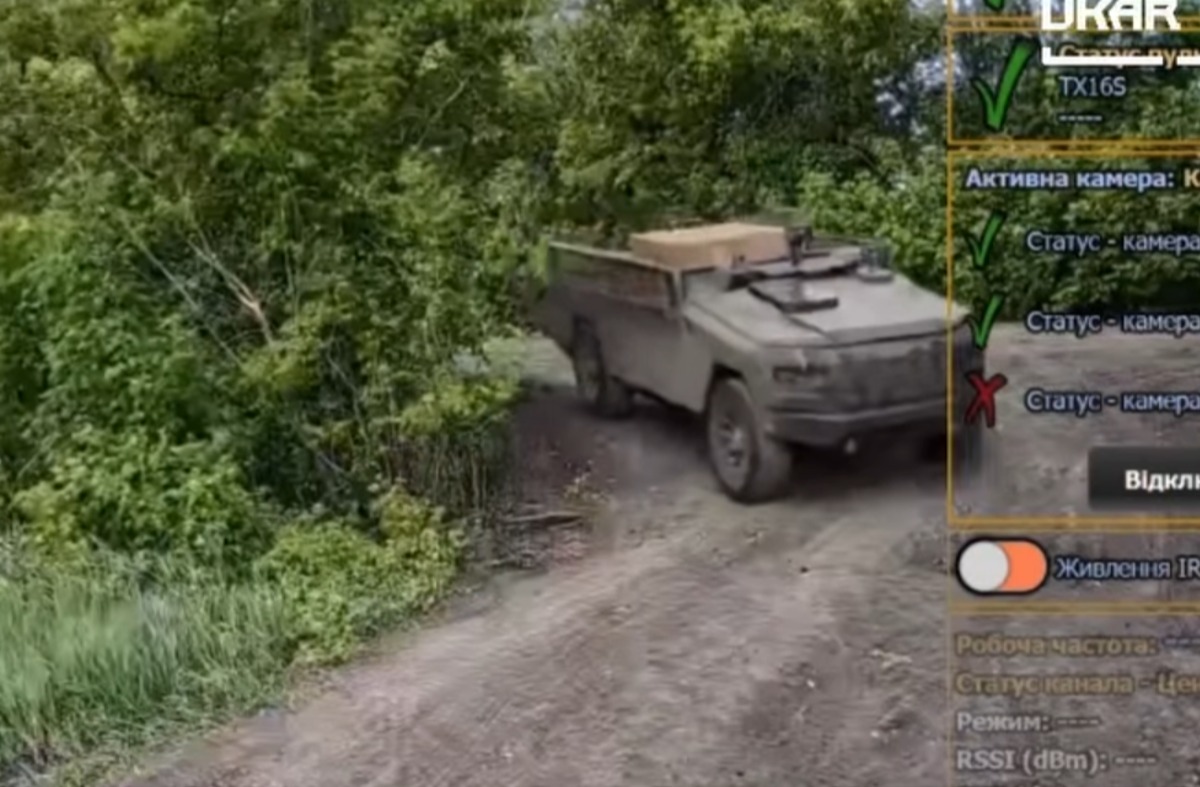
Ukrainian Armor first presented the Protector publicly at the MSPO defense exhibition in Kielce, Poland, in September 2024, and the Ministry of Defense of Ukraine formally codified the platform for operational use in June 2025. The vehicle’s operational debut marks a significant step in Ukraine’s ground robotics program, which has accelerated sharply since the full-scale Russian invasion demonstrated that any exposed vehicle or crew on the front line quickly attracts lethal drone attention. Ukrainian Deputy Defense Minister Valery Churkin, speaking at the time of the codification announcement, described the deployment of platforms like the Protector as “a new branch of development of ground robotic complexes,” emphasizing the importance of getting autonomous systems closer to front-line positions to reduce risk to soldiers.
In February 2026, Ukrainian Armor CEO Vladyslav Belbas confirmed that the company had signed a framework contract with Ukraine’s Defense Procurement Agency, the government body that manages military equipment purchasing under the Ministry of Defense, for serial supply of the Protector. The vehicle became available for order through Ukraine’s DOT-Chain and Brave1 Market defense procurement platforms in January 2026, listed at approximately 3.9 million hryvnias per unit in an undisclosed configuration. Production is reported at a rate of up to 50 units per month, according to Defense Express, though Ukrainian Armor has not publicly confirmed current output figures, and the total number of vehicles deployed remains unknown.
Beyond its logistics role, Ukrainian Armor is evolving the Protector into a combat platform in parallel with its operational fielding. In November 2025, the company completed live-fire tests of the Protector fitted with the Tavria-12.7 remotely controlled weapon station, a turret mounting a 12.7 mm (0.5 inch) Browning M2 heavy machine gun with a digital fire control system capable of tracking both ground and aerial targets, including drones. Ukrainian Armor needed fewer than two months to complete the integration from engineering concept to live-fire demonstration, a development pace that would be remarkable under peacetime conditions and is even more striking given that it was accomplished while the base vehicle was already entering front-line service.