

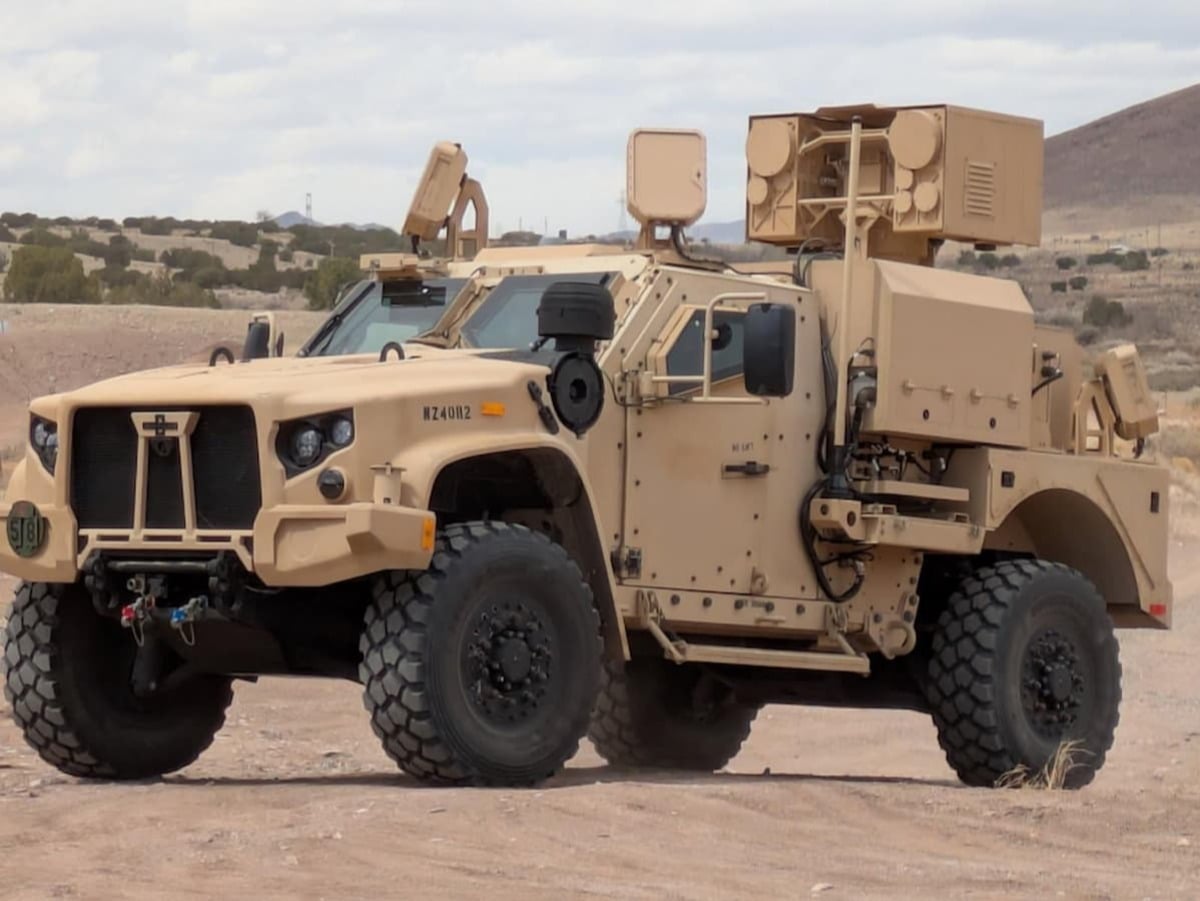
- Defense Secretary Pete Hegseth and Undersecretary Emil Michael watched five directed energy systems fire live at White Sands Missile Range, New Mexico, on June 23, 2026.
- Systems demonstrated included laser weapons from AV, nLight, and Lockheed Martin ranging from 20 kilowatts to 300 kilowatts, plus two high-power microwave systems from Epirus and Raytheon.
The U.S. Defense Secretary Pete Hegseth personally watched American laser weapons and high-power microwave systems destroy targets at the U.S. Army’s White Sands Missile Range in New Mexico on June 23, 2026, in what Laser Wars, the defense technology publication that broke the story, described as the first publicly known instance of a sitting U.S. defense secretary observing a live directed energy weapon firing.
The demonstration brought together five distinct systems representing the current frontier of American directed energy development. Hegseth was joined by Emil Michael, the Undersecretary of Defense for Research and Engineering, whose office has been driving a significant expansion of the Pentagon’s directed energy investment.
The systems that fired at White Sands included the Army Multi-Purpose High Energy Laser, known as AMP-HEL, a 20-kilowatt system built on AV’s LOCUST laser weapon; the P5 version of the Army’s 50-kilowatt Directed Energy Maneuver-Short Range Air Defense system from nLight; Lockheed Martin’s 300-kilowatt Indirect Fire Protection Capability-High Energy Laser, nicknamed “Valkyrie”; an Indirect Fire Protection Capability-High Power Microwave system based on the Leonidas platform from Epirus; and what sources described to Laser Wars as a high-power microwave variant of Raytheon’s Coyote interceptor drone, likely the Block 3 Non-Kinetic system. The range of power levels represented, from 20 kilowatts to 300 kilowatts, reflects the Pentagon’s attempt to demonstrate capability across the full spectrum of directed energy applications, from counter-drone defense to the interception of more demanding threats.
A senior Pentagon official described to Laser Wars what the demonstration established. “The White Sands demonstration affirmed the ability of directed energy systems, particularly high-energy lasers, to defeat high-density, highly proliferated threats from a variety of sources and power levels,” the official said. “Scaling directed energy enables our warfighters to fight beyond the limits of magazine capacity and no longer limited by how many bullets are in the chamber.”
That framing goes to the heart of why the Pentagon has accelerated its directed energy investment with unusual urgency. The drone threat that has defined warfare in Ukraine and that American forces encountered during operations against Iranian targets has exposed a fundamental economic problem with conventional air defense: interceptor missiles cost tens of thousands to hundreds of thousands of dollars each, while the drones they destroy often cost a few hundred dollars. Fire enough cheap drones at an air defense battery and you either exhaust its interceptors or force it to expend missiles worth far more than the targets they destroy. A laser weapon with a cost-per-shot measured in dollars of electricity, and a magazine limited only by the power supply feeding it, inverts that economic equation entirely. It is the most compelling argument directed energy advocates have ever had, and the drone proliferation that Ukraine demonstrated has made that argument impossible to ignore.
Michael, who has been pushing the Pentagon’s directed energy agenda with more visible urgency than his predecessors, addressed the institutional obstacles that have prevented American laser weapons from moving past the endless prototype cycle that has characterized the field for decades. “We have dramatically increased investment in scaling directed energy technologies, signaling to our manufacturing partners that the War Department is focused on delivering rapid solutions to the warfighter,” Michael said in a statement to Laser Wars. “We are directly tackling manufacturability, reliability and integration, areas that have challenged transition under previous administrations.”
Hegseth signaled his own commitment to closing the gap between promising prototypes and deployed weapons in written testimony submitted to the House Armed Services Committee in late April, stating that the Pentagon intends to buy “tens to hundreds” of directed energy weapons in the coming years as a “strong and consistent demand signal” to an industrial base currently set up to produce only a limited number of prototypes. That statement, reported by Laser Wars, is the most senior and explicit acknowledgment yet that the core obstacle to fielding laser weapons at scale is not the technology itself but the institutional inertia and procurement structures that have repeatedly consigned promising directed energy systems to what defense insiders call the valley of death, the gap between successful research and development and actual procurement that kills more American weapons programs than any technical failure.
The program that will determine whether this time is genuinely different from the previous cycles of directed energy enthusiasm is the Enduring High Energy Laser, or E-HEL, a modular 30-kilowatt counter-drone laser system the Army is pursuing on what Laser Wars describes as an unusually aggressive acquisition timeline, with the first prototype expected in the second quarter of fiscal year 2026 and production units slated for delivery by the end of fiscal year 2027. The Army plans to produce and rapidly field up to 24 E-HEL systems over five years, a production ambition that would have seemed implausibly optimistic for a directed energy program just a few years ago. Two of the systems that fired at White Sands, the AMP-HEL and the P5 DE-MSHORAD, represent competing contenders for the E-HEL contract, giving Tuesday’s demonstration a procurement dimension alongside its symbolic one.
The LOCUST laser weapon, built by AV and the basis for the AMP-HEL system, carries the strongest operational resume of any system in the American directed energy inventory. First deployed overseas in 2022 and integrated onto Infantry Squad Vehicles and Joint Light Tactical Vehicles, it achieved the U.S. military’s first acknowledged laser kill, destroying a drone near the southern border with Mexico in February 2026, though the target was identified as a friendly asset, an incident that illustrated both the system’s lethality and the identification challenges that directed energy weapons share with any defensive system engaging fast-moving targets. LOCUST also destroyed multiple drones from the flight deck of the aircraft carrier USS George HW Bush in October 2025, demonstrating shipboard operability, and Army Secretary Dan Driscoll fired the system himself at White Sands in May 2026, using an Xbox controller as the interface, a detail that captures something important about where directed energy user interface design has arrived. AV unveiled an upgraded LOCUST variant targeting the E-HEL competition in August 2025, and with its vehicle integration and shipboard operation already demonstrated, Laser Wars describes it as the current frontrunner for the E-HEL contract.
The demonstration’s broader connection to the Golden Dome domestic missile defense initiative adds a strategic dimension that extends well beyond counter-drone applications. The Pentagon’s fiscal year 2027 budget request contains $452 million in dedicated directed energy research and development for Golden Dome, more than triple the previous year’s enacted level, according to Laser Wars. The Army and Navy jointly plan to spend $676 million over five years under the Joint Laser Weapon System effort to develop a containerized 150-kilowatt laser weapon capable of defeating incoming cruise missiles as part of the Golden Dome architecture. Michael told Congress in May that a commitment was made to the President to include directed energy in a Golden Dome demonstration by summer 2028.
Two of the five systems that fired at White Sands, the Lockheed Martin Valkyrie and the Epirus Leonidas-based microwave system, are unlikely to advance into production programs, according to reporting by Laser Wars citing Congressional Research Service and Army official statements. The Army does not plan to transition the IFPC-HEL to a program of record and will use its single prototype to inform the JLWS development effort. No further procurement of the Epirus Leonidas prototypes is planned at this time, according to Army officials cited in the CRS report. Their presence at White Sands appears to represent a final operational validation before those programs feed their lessons into the next generation of systems rather than continuing as independent programs.