

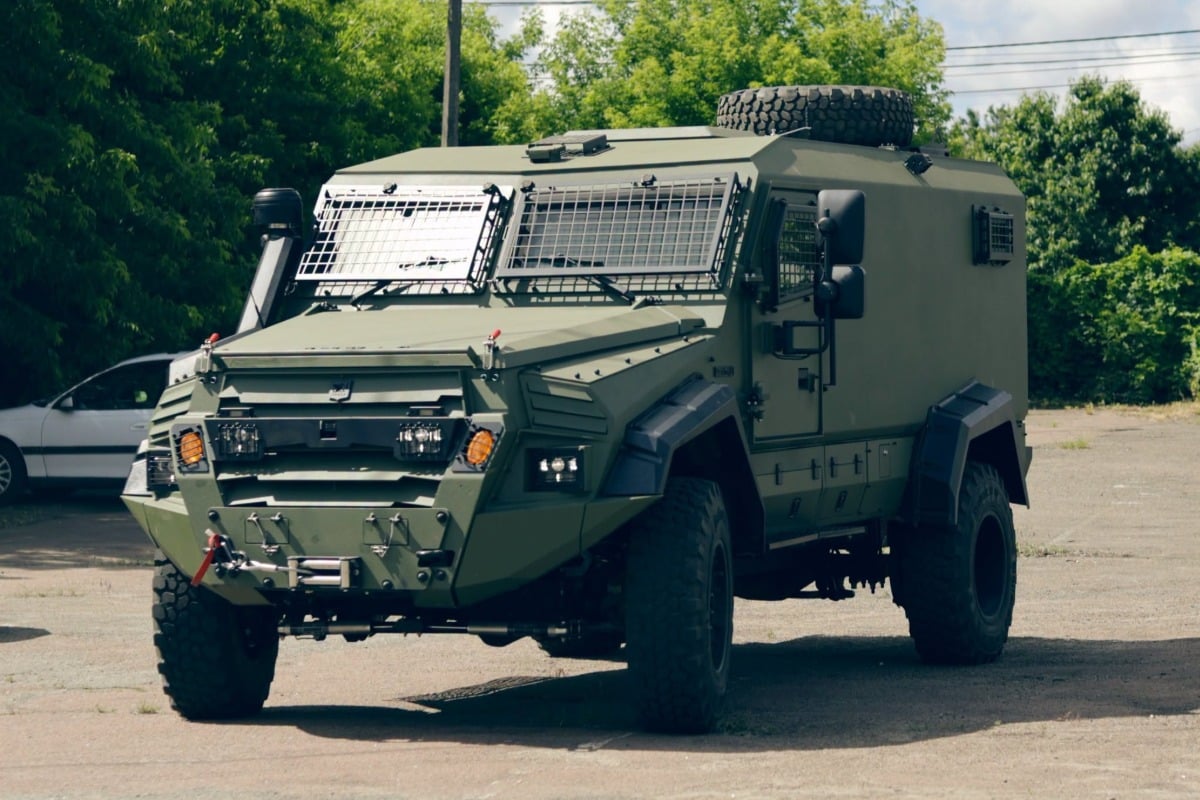
- Ukraine received 13 INKAS Sentry AMEV armored medical evacuation vehicles funded through UNITED24 donor contributions and delivered to military medics.
- The BR6-rated vehicles carry up to three patients and two medics, withstand 6 kg mine blasts, and have a range of 600 km (373 miles).
Ukraine has received a fresh batch of Canadian-built armored medical evacuation vehicles purchased through donations to the UNITED24 fundraising platform, with 13 INKAS Sentry AMEV units handed over to military medics operating on the front lines.
The Sentry AMEV sits on a Ford F-550 Heavy Duty chassis and is built from the ground up for one purpose: pulling wounded soldiers out of the most dangerous ground in eastern Ukraine and keeping them alive long enough to reach surgical care. The 2026 model year vehicle measures 6,096 mm long, 2,306 mm wide, and 2,840 mm tall (240 in × 91 in × 112 in), rides on a 3,690 mm (145 in) wheelbase, and runs a 6.7-liter diesel V8 producing 330 horsepower at 2,600 rpm, channeled through a 10-speed automatic transmission to all four wheels. Fuel capacity sits at 151 liters (40 US gallons), giving the vehicle a cited range of up to 600 km (373 miles) before needing to refuel — a critical figure when evacuation routes in the Donbas can stretch across shredded road networks far from rear-area supply points.
The armor package earns a BR6 classification and meets NATO’s STANAG 4569 Level 2 ballistic standard, which means the vehicle’s protection envelope handles 7.62×39 mm armor-piercing incendiary ammunition of the BZ type — the round most commonly associated with Soviet-era and Russian-manufactured weapons that continue to dominate the battlefield in Ukraine. Against blast threats, the vehicle is certified to STANAG 4569 Level 2a, surviving pressure-activated anti-tank mine detonations with an explosive mass of up to 6 kg (13.2 lb) under any wheel. Fragmentation protection extends to 155 mm (6.1 in) artillery shell fragments at a distance of 80 m (262 ft), a specification that reflects the reality Ukrainian medics face: the front lines in Zaporizhzhia, Donetsk, and Kherson oblasts remain among the most heavily shelled terrain in the world.
One feature INKAS highlights is a proprietary overlap system at the door seams, designed to prevent rounds from penetrating through the gap between door and frame — a vulnerability that has historically been a weak point in lightly armored vehicles and one that can matter in the chaos of picking up casualties under fire.
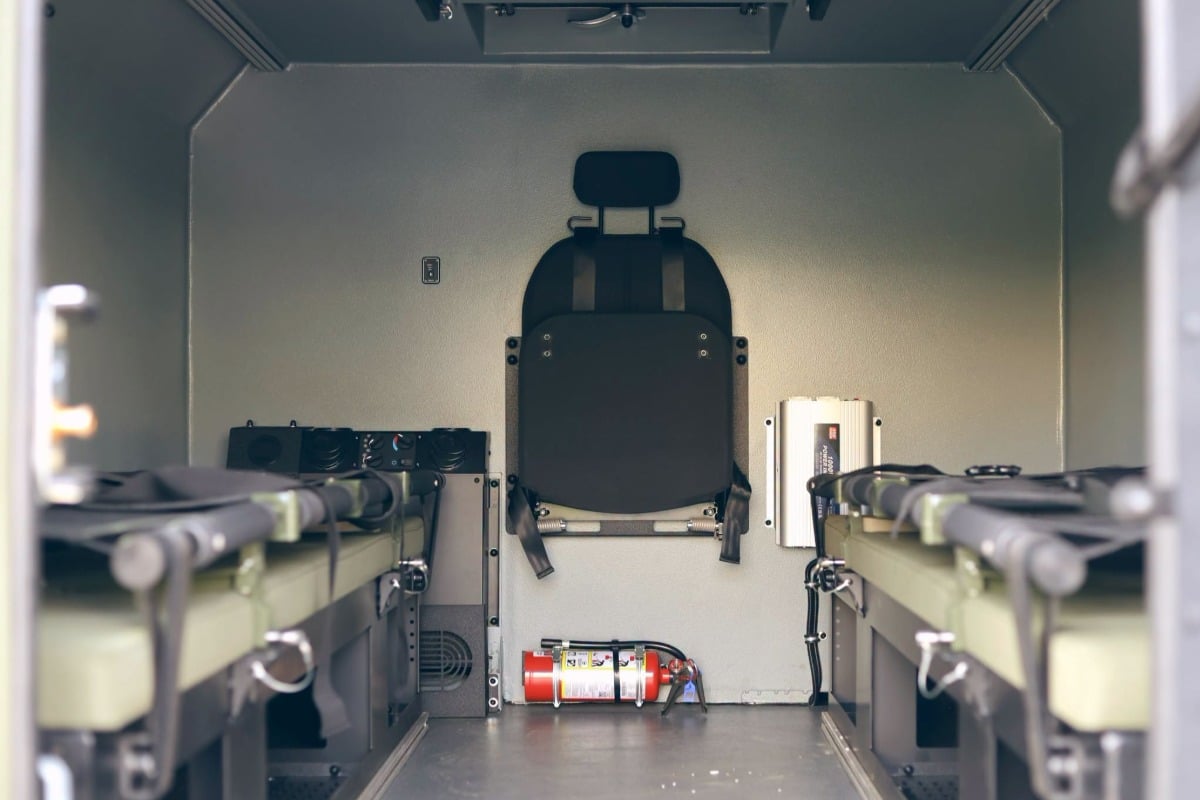
Internally, the medical compartment is configured to carry two medical personnel alongside up to three patients, including stretcher cases. INKAS describes the layout as fully equipped with battlefield trauma and first-aid supplies, with a modular patient transport system, storage compartments, and a wash basin fed by an onboard water tank. The cabin’s ergonomics are designed to allow active emergency treatment while the vehicle is moving, not just transport — a distinction that makes a measurable difference in survival rates for penetrating trauma victims, where stopping hemorrhage within minutes of wounding determines outcomes. The vehicle also carries additional insulation and ventilation systems to maintain a stable interior climate across the temperature extremes that Ukrainian conditions demand, from winter campaigns where ambient temperatures drop well below −20°C (−4°F) in the east to summer operations above 35°C (95°F).
INKAS Armored Vehicle Manufacturing is a Toronto-based company that has supplied armored vehicles to military and law enforcement customers across more than 100 countries. The Sentry platform forms the core of its tactical and protective fleet, with variants adapted for personnel transport, command roles, and medical evacuation. The AMEV configuration is the medical-specific build, and each armor plate in the protection package is laboratory-certified not only by INKAS but independently verified by third-party testing facilities as required under applicable law — a compliance standard that carries weight in procurement contexts where battlefield performance accountability matters.
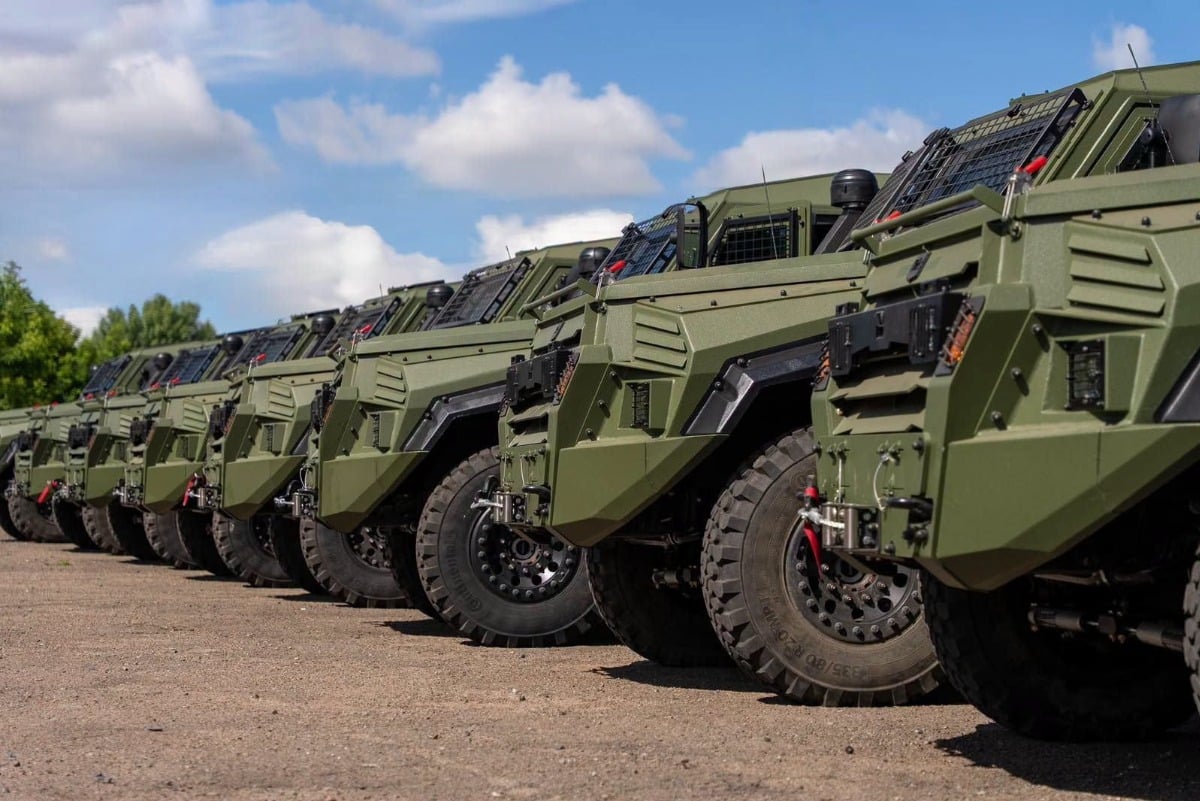
The UNITED24 platform, established by Ukrainian President Volodymyr Zelensky in May 2022, has served as the primary public fundraising channel for international donors seeking to direct contributions toward specific Ukrainian defense and humanitarian needs. Medical evacuation capability has emerged as one of the most consistent priority categories on the platform, reflecting lessons learned across more than two years of high-intensity warfare: the speed and survivability of tactical casualty evacuation is one of the most directly measurable drivers of combat power sustainment. Ukraine’s military medical system has documented significant improvements in wounded-in-action survival rates since 2022, in part due to expanded availability of armored evacuation platforms that allow medics to work closer to the point of injury and spend less time waiting for lulls in fire before moving casualties.