

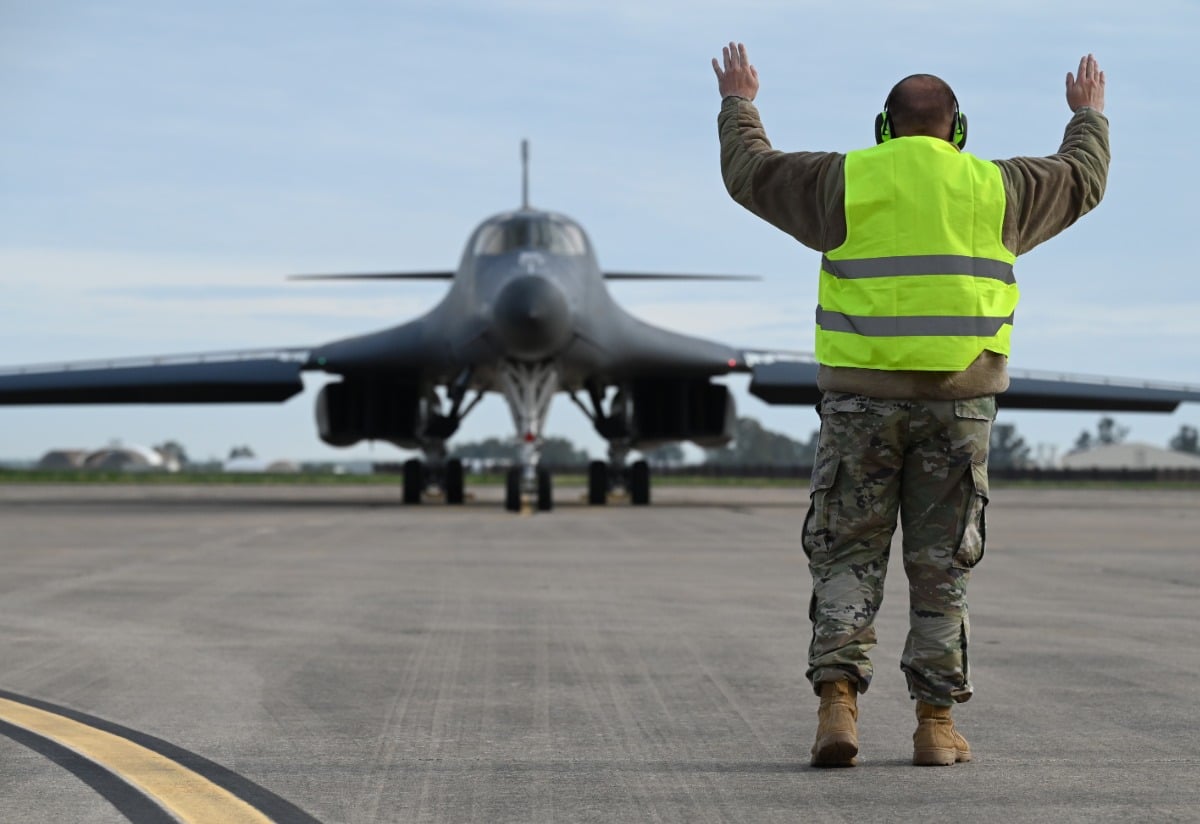
- The U.S. Air Force awarded $400 million in construction contracts to seven Spanish firms on June 12, 2026 for maintenance and improvements at Morón Air Base through June 2036.
- Spain barred U.S. use of Morón Air Base for Iran operations in early March 2026, forcing 15 KC-135 tankers to relocate to Germany and France.
The United States Air Force has awarded $400 million in construction contracts to seven Spanish companies to maintain and improve Morón Air Base, a strategically critical installation in southern Spain, even as the base sits at the center of one of the most significant diplomatic ruptures between Washington and a NATO ally in recent memory.
The contracts, awarded on June 12, 2026, cover a decade of design, construction, maintenance, repair, and renovation work through June 2036, providing the physical infrastructure backbone for American military operations in Europe, Africa, and the Mediterranean region.
Morón Air Base is located at Morón de la Frontera, Sevilla, Spain, roughly 55 km (34 miles) southeast of Seville, offering rapid access to the Strait of Gibraltar, the narrow passage connecting the Atlantic Ocean to the Mediterranean Sea, making it an ideal hub for projecting air power toward the Middle East, North Africa, and the eastern Mediterranean. The base has served as one of America’s most important forward staging points in Europe for decades, hosting refueling tankers, special operations aircraft, and serving as a transit hub for forces moving between the continental United States and forward deployed locations. The 496th Air Base Squadron at Morón Air Base is listed as the contracting activity for the award.
The construction contracts were awarded competitively, with thirteen companies submitting bids, and split among seven winners: Eiffage Infraestructuras SAU, UTE Programa, Sociedad Espanola de Montajes Industriales SA, Elecnor Servicios y Proyectos SAU, JJEX Construction JV LLC, Dragados Sociedad Anonima, and Cox T&I SL, all based in Seville. The structure is an indefinite delivery, indefinite quantity multiple-award contract, a procurement framework that sets a maximum ceiling and allows the government to issue specific construction task orders as requirements are identified over the contract’s ten-year life. Only $35,000 was obligated at the time of award, with the bulk of spending to follow through individual task orders.
The timing of this award arrives in direct context with a serious and very public diplomatic confrontation between Washington and Madrid over the base’s role in the Iran conflict. When U.S. and Israeli forces launched strikes against Iran on February 28, 2026, under Operation Epic Fury, Spain said in early March that Rota and Morón could not be used for attacks on Iran, and later extended the restriction to Spanish airspace for aircraft involved in the Iran war. The Pentagon had stationed at least 15 KC-135 Stratotanker aerial refueling aircraft at Rota and Morón ahead of the operation, initially intended as a show of force to pressure Iran during concurrent negotiations. When Spain vetoed their use for refueling combat aircraft in flight, all 15 tankers departed Spain during the weekend of February 28 and March 1, relocating to bases in Germany and France.
FlightRadar24 showed nine tankers departing Morón on March 1, 2026, toward Germany, while Reuters reported that two flights departed from Rota toward southern France and four other flights departed Rota with routes not shown in the tracking data. Spanish Defense Minister Margarita Robles publicly confirmed the restriction, leaving no ambiguity about Madrid’s position.
“Neither the bases are authorized, nor, of course, is the use of Spanish airspace authorized for any actions related to the war in Iran,” Robles stated, as reported by Fox News.
The shift forced longer mission profiles on U.S. aircraft, with flight routes extended by roughly 25 to 35 percent, directly increasing fuel consumption by approximately 20 to 30 percent per sortie and requiring 30 to 50 percent more tanker aircraft to sustain the same strike tempo, according to Army Recognition’s analysis of the rerouting impact. President Donald Trump responded by threatening a full trade embargo against Spain, while Spanish Prime Minister Pedro Sánchez described the American and Israeli strikes as “reckless” and “illegal,” and announced that Spain had rejected every flight plan connected to the Iran operation, including those of refueling aircraft.
The confrontation exposed a structural tension that exists throughout the U.S. basing network in Europe: American installations built on allied soil operate under bilateral agreements that give host nations the right to restrict their use, and those restrictions can be invoked at politically inconvenient moments. Morón and Rota remain under Spanish sovereignty despite decades of American investment and a continuous U.S. military presence, and Spain demonstrated in early 2026 that it is willing to withhold that authorization even under significant pressure from Washington.
The $400 million construction commitment awarded this week does not resolve that tension, but it does signal that the United States intends to maintain and improve its footprint at Morón regardless of the diplomatic turbulence earlier this year. Military infrastructure investment on this scale, covering ten years of construction and maintenance across a full range of facility types, represents a long-term institutional commitment that transcends any single political crisis between allies. The physical plant of a base capable of hosting strategic operations requires continuous investment, and allowing it to deteriorate would impose operational costs far greater than any temporary political disagreement.
Whether the relationship between Washington and Madrid has been permanently altered by the Iran dispute, or whether it will settle back into the functional if sometimes uncomfortable partnership that has characterized the alliance for decades, the runways, hangars, fuel systems, and facilities at Morón will need maintenance regardless of which government sits in either capital. The seven Spanish construction companies now under contract will be doing that work for the next ten years.