

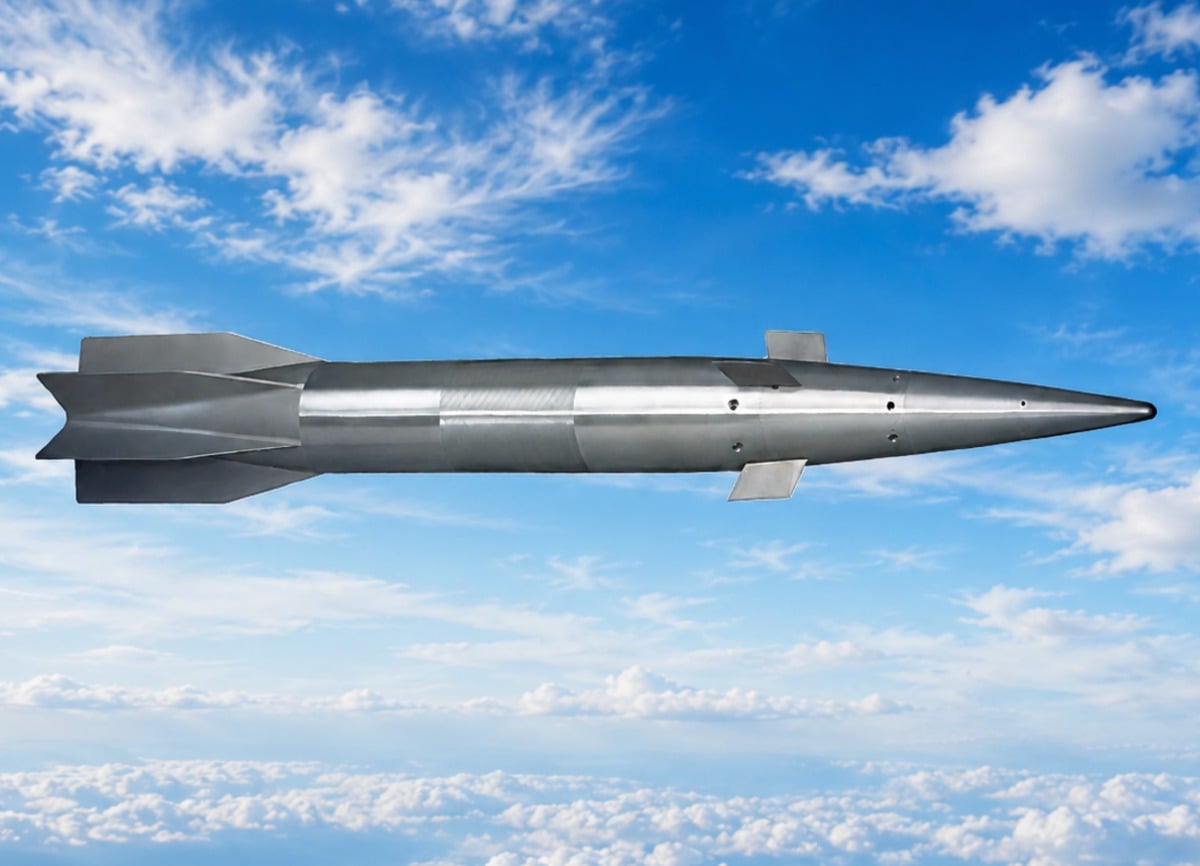
- General Dynamics Ordnance and Tactical Systems won a U.S. Army contract for a next-generation extended-range artillery projectile derived from the Vulcano 155 Guided Long Range system.
- The Vulcano-derived munition reaches up to 70 km range with GPS and Semi-Active Laser guidance, and is already in service with Germany, Italy, and other partner nations.
The U.S. Army has selected a European-pedigreed precision artillery shell capable of hitting targets 70 kilometers away, awarding General Dynamics Ordnance and Tactical Systems a contract to develop an American version of a munition already in service with Germany, Italy, and other allied nations.
General Dynamics Ordnance and Tactical Systems, a business unit of General Dynamics, announced the contract award for the Army’s next-generation extended range artillery projectile, a precision-guided 155 mm munition derived from the Vulcano 155 Guided Long Range system developed by a European industrial consortium.
The contract was awarded through the National Armaments Consortium, and the program will see GDOTS work alongside German defense company Diehl Defence and Italian electronics firm Leonardo Electronics to adapt an existing production design for U.S. Army requirements and transition manufacturing to American facilities.
The Vulcano 155 is not a new or unproven concept. Germany and Italy have already fielded the system with their own artillery forces, and the munition has been developed over more than a decade through a collaboration between Diehl and Leonardo. That existing operational baseline is central to the Army’s calculus in selecting a derivative of this round rather than funding a clean-sheet development program. A newly designed extended-range artillery projectile with no production history would take years to develop, qualify, and manufacture at scale. A munition that already works, already has qualified production lines, and already carries combat-relevant validation from allied militaries offers a substantially faster path to capability.
What makes Vulcano technically significant is the combination of range, precision, and multi-mode guidance packed into a standard 155 mm artillery shell. Conventional unguided 155 mm rounds, the type that forms the bulk of Western artillery ammunition inventories, reach maximum ranges of approximately 24 to 30 km (15 to 19 miles) depending on propellant charge and barrel length. Extended-range base bleed rounds, which use a small gas generator at the base of the projectile to reduce drag, push that out to around 40 km (25 miles). Vulcano reaches up to 70 km (43 miles) through advanced aerodynamic design, essentially building a guided glide bomb into a shell casing that fits a standard 155 mm howitzer. That range figure is operationally transformative: a battery of howitzers that can engage targets 70 km away can cover a vastly larger area of the battlefield, hold more enemy assets at risk, and do so from positions far enough back to complicate counterbattery targeting.
Precision at that range requires sophisticated guidance. Vulcano uses GPS guidance for midcourse flight and a Semi-Active Laser terminal seeker for final approach, a dual-mode architecture that allows the projectile to navigate to the target area autonomously and then home onto a laser spot being designated by a forward observer, an aircraft, or another ground platform. The SAL seeker capability is what enables engagement of moving targets, since a GPS-only munition can only strike a fixed coordinate while a laser-guided terminal phase can track a vehicle in motion during the final seconds of flight. GDOTS also notes that both the SAL seeker variant and a separate Far-Infrared seeker variant, which adds the ability to engage naval targets, can maintain precision in GPS-contested environments where Russian or other adversary jamming might degrade satellite navigation signals.
The Army’s interest in long-range precision fires has been a central modernization priority for several years, driven by the assessment that any future high-intensity conflict will be contested at ranges and with precision that Cold War-era artillery planning did not envision. Russia’s use of long-range artillery and precision rockets in Ukraine, combined with the demonstrated vulnerability of rear-area logistics and command nodes to precision strike, has reinforced the Army’s push to extend the range at which its own artillery can engage. The Precision Strike Missile program, which recently completed a key propulsion test for its extended-range Increment 4 variant, addresses the upper end of that range requirement. Precision-guided extended-range 155 mm rounds like the Vulcano derivative address the lower end, giving every artillery battalion organic precision fires at ranges previously reserved for dedicated rocket artillery systems.
“Our approach leverages years of investment and development from our partners, Diehl Defence and Leonardo Electronics, who have successfully delivered the 155mm Vulcano Guided Long Range artillery suite to Germany, Italy, and other partner nations,” said Michael Bate, senior vice president and general manager at GDOTS. “With minor airframe modifications, the team can rapidly deliver a mature solution that meets requirements for range, precision, lethality, and schedule. Transitioning established production lines from Germany and Italy to the United States enables low-risk scaling to quickly deliver long range precision fires capability.”
The transition of production from European to American facilities addresses both industrial base and supply chain considerations that have become increasingly prominent in U.S. defense procurement. Dependence on foreign production for critical munitions creates vulnerability in scenarios where allied industrial capacity is simultaneously strained, as has been visible during the sustained demand generated by support to Ukraine. Establishing domestic production also satisfies congressional and Department of War preferences for American manufacturing in major Army programs.
Gunnar Pappert, executive vice president at Diehl Defence, said his company was pleased to work with GDOTS to evolve the existing system for the U.S. Army. Luca Perazzo, Deputy Managing Director Defense Systems at Leonardo, called the selection a further demonstration of Vulcano’s proven capabilities and expressed pride in contributing to new technological milestones through the program.