

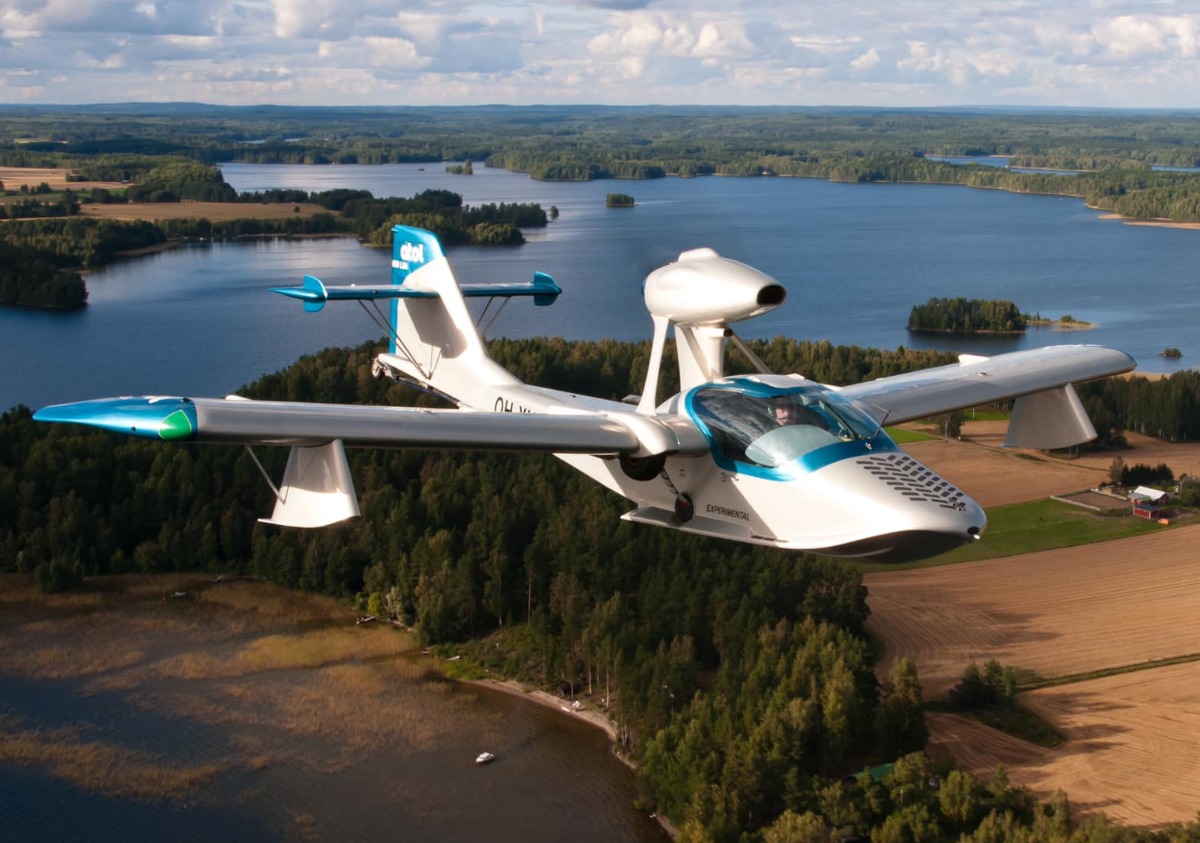
- Sensofusion will conduct the first prototype test flight of its new surveillance aircraft at Jämsä, Finland, within days of June 3, 2026.
- The company's first satellite, Fennec-1, is scheduled to launch aboard a SpaceX Falcon rocket in autumn 2027.
Finland is set to begin manufacturing a new class of affordable surveillance and drone-detection aircraft at the country’s only aircraft factory, with the first prototype test flight scheduled within days, Titta Puurunen of Finnish public broadcaster Yle reported June 3.
The program belongs to Sensofusion, a Finnish defense technology company that employs more than 100 people and has built its reputation on ground-based drone detection and counter-drone systems. This spring the company acquired the aircraft factory in Halli, a small community in the municipality of Jämsä in central Finland, and has since rebranded its aviation and space activities under the name Sensofusion Aerospace. The factory, which has been producing light aircraft for civil and defense purposes since the late 1980s, now has a new mission: turning its existing Atol Aurora light aircraft platform into an affordable airborne intelligence and surveillance system capable of detecting drones at ranges and altitudes that ground-based sensors cannot reach.
Anssi Rekula, Sensofusion’s aviation director who has been running the Jämsä factory for five years, explained the core logic of the program in straightforward terms. “We get the devices higher up and can detect drones much better,” Rekula said.
The aircraft combines the Atol Aurora airframe, a light general aviation plane built at the Jämsä factory, with Sensofusion’s own signals intelligence equipment, a radar system, and an integrated counter-drone suite. Signals intelligence in this context means the ability to detect, identify, and locate radio frequency emissions from drones and other targets, the electronic signatures that unmanned systems inevitably produce when communicating with their operators or navigating via GPS. Installing that capability on a manned aircraft rather than a ground vehicle or a fixed sensor tower dramatically expands the detection range, since altitude gives sensors a much larger line-of-sight footprint across the terrain below. The aircraft can also operate as an unmanned system when required, giving operators the flexibility to fly it with a crew or remotely depending on the mission.
One of the platform’s most practically significant features is its regulatory status. Unlike unmanned drones, which require special permits and face strict airspace restrictions when operating near airports and populated areas, the Atol Aurora qualifies as a general aviation aircraft and can fly in peacetime airspace without the bureaucratic overhead that limits where and when unmanned systems can be deployed. For a counter-drone platform whose entire purpose is to be available quickly and operate flexibly across a wide area, that unrestricted access to normal airspace is a meaningful operational advantage.
Rekula positioned the aircraft explicitly as a cost-effective alternative to existing airborne surveillance platforms.
“This is a cheaper surveillance aircraft than, for example, the AWACS aircraft used around the world,” he said.
The comparison to AWACS, the Airborne Warning and Control System operated by NATO and several allied air forces, sets an ambitious frame of reference. AWACS aircraft, based on the Boeing 707 airframe and equipped with the distinctive rotating radar dome above the fuselage, cost hundreds of millions of dollars each and require large crews and extensive ground support infrastructure. They are strategic assets that major powers operate in limited numbers. Sensofusion is not claiming to replicate that capability, but it is positioning its aircraft as a solution for the large number of smaller militaries and security forces that need airborne surveillance and counter-drone capability but cannot afford or justify AWACS-class systems. The company describes the new aircraft as a million-euro-class investment, a price point that puts it within reach of defense budgets that would never contemplate the cost of a NATO AWACS platform.
Two new aircraft are already under construction at the Jämsä factory. Once prototype test flights are completed and the integration of intelligence equipment into the airframe is validated, Sensofusion intends to move directly toward series production for the global market. The company estimates that the program will create around ten new jobs in Jämsä over the coming years, adding to the 13 full-time employees currently working at the factory. For a small community whose economy revolves around aviation, that employment commitment carries local significance beyond the defense technology story.
Sensofusion’s ambitions do not stop at the atmosphere. The company’s next planned step takes it into orbit. Fennec-1, Sensofusion’s first satellite, is designed to demonstrate the company’s ability to detect faint ground-level signals from space, extending the same signals intelligence logic that drives the airborne platform to a global coverage scale. A second satellite, Fennec-2, is also in planning. Sensofusion CEO Tuomas Rasila described the strategic rationale directly.