


- Reports say U.S. air strikes in Caracas targeted the residence of Venezuela’s defense minister, with AH-1Z Viper attack helicopters filmed operating over the capital.
- The helicopter operations followed earlier strikes on military command centers, as Venezuelan authorities provided no official confirmation and Washington issued no detailed response.
The United States struck the residence of Venezuela’s defense minister during air attacks on Caracas on Friday.
Reports indicated that the home of Vladimir Padrino López, Venezuela’s Minister of Defense, was targeted during the bombing campaign. The strike was reported amid ongoing U.S. air operations over Caracas, where multiple military and government-linked sites have been hit since the start of the attacks.
The attack on the defense minister’s residence follows earlier reported strikes on Venezuelan military command and communications centers in Caracas and surrounding hills. Those facilities serve as central nodes for directing air defense units, internal security forces, and military communications across the capital region. Local reports said the destruction of these sites left Venezuelan forces unable to mount a coordinated response.
Bunker-penetrating munitions were used against hardened command facilities, while rotary-wing aircraft and unmanned systems supported follow-on strikes in the city. No official casualty figures were released, and Venezuelan authorities did not immediately confirm damage to the defense minister’s residence.
Video recorded from the ground showed U.S. AH-1Z Viper attack helicopters (some reports said that it was an MH-60M helicopter) conducting strikes and maneuvering over the city without apparent resistance. The footage, circulated by local media and witnesses, showed the helicopters engaging targets in urban areas, underscoring the reported collapse of organized Venezuelan air defense and command coordination in the capital.
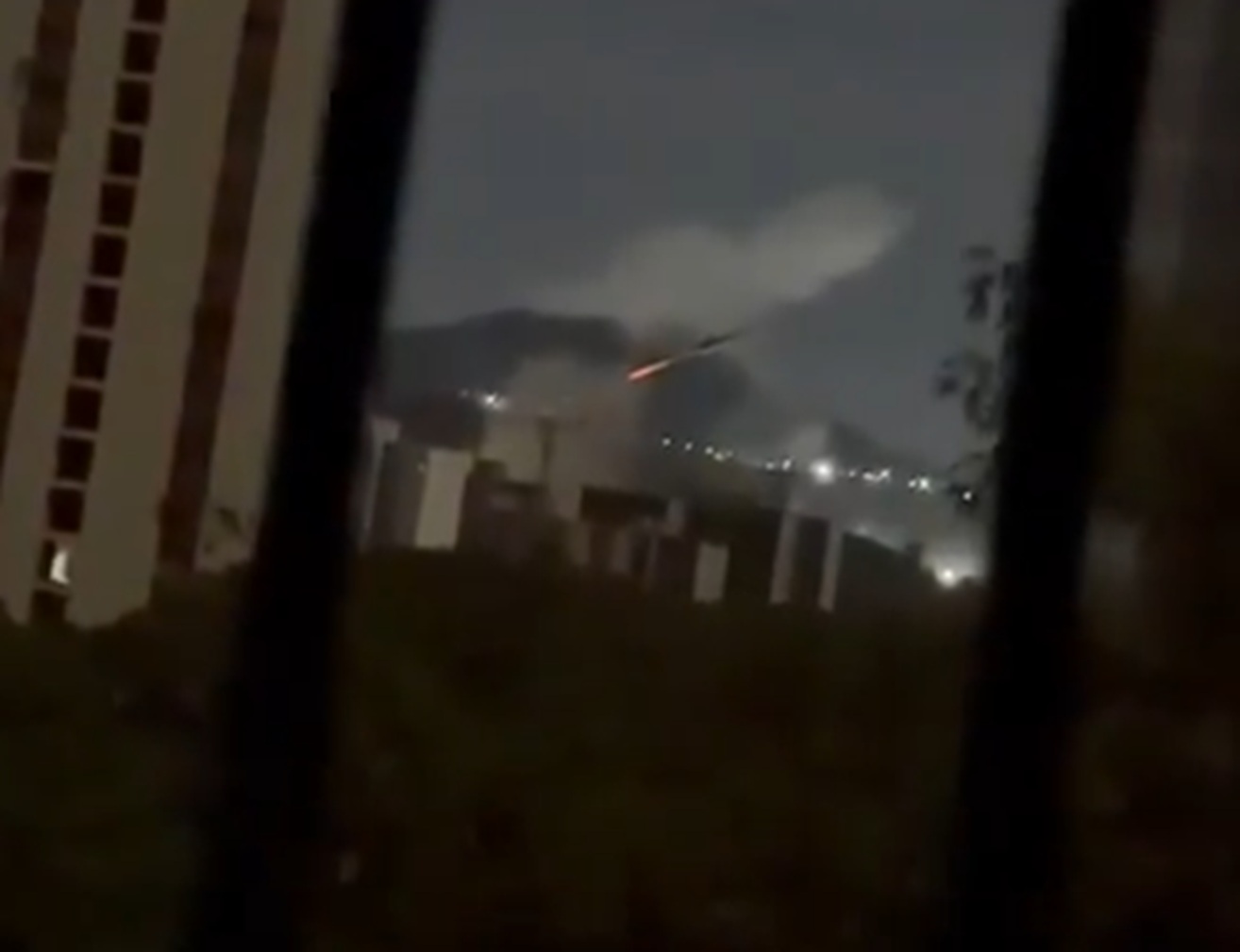
The AH-1Z Viper is a dedicated attack helicopter used by U.S. forces for close air support, armed reconnaissance, and precision strike missions. Its appearance over Caracas suggests U.S. forces were operating in an environment where hostile air defenses were already suppressed, allowing sustained helicopter operations over the capital.
Venezuelan security forces were reported to be increasing patrols, restricting civilian movement, and placing administrative buildings under guard following the strikes. These actions were described as internal security measures after the loss of key military command infrastructure and amid continued U.S. air activity over the city.
President Nicolás Maduro had earlier declared a state of emergency and called for mobilization, urging the population and security forces to respond to what he described as an attack on the country.