


- A Ukrainian unit from the 14th Regiment of Unmanned Systems has converted ultralight aircraft into long-range strike drones.
- The group, known as “Horynych,” has conducted 102 missions, 78 of them successful, targeting Russian military and industrial sites.
An exclusive report by Babel has revealed the operations of a Ukrainian strike unit that converts commercial ultralight aircraft into long-range unmanned combat drones capable of hitting Russian targets hundreds of kilometers away.
The covert unit, part of the 14th Regiment of Ukraine’s Unmanned Systems Forces, has carried out 102 missions, 78 of which were reported as successful.
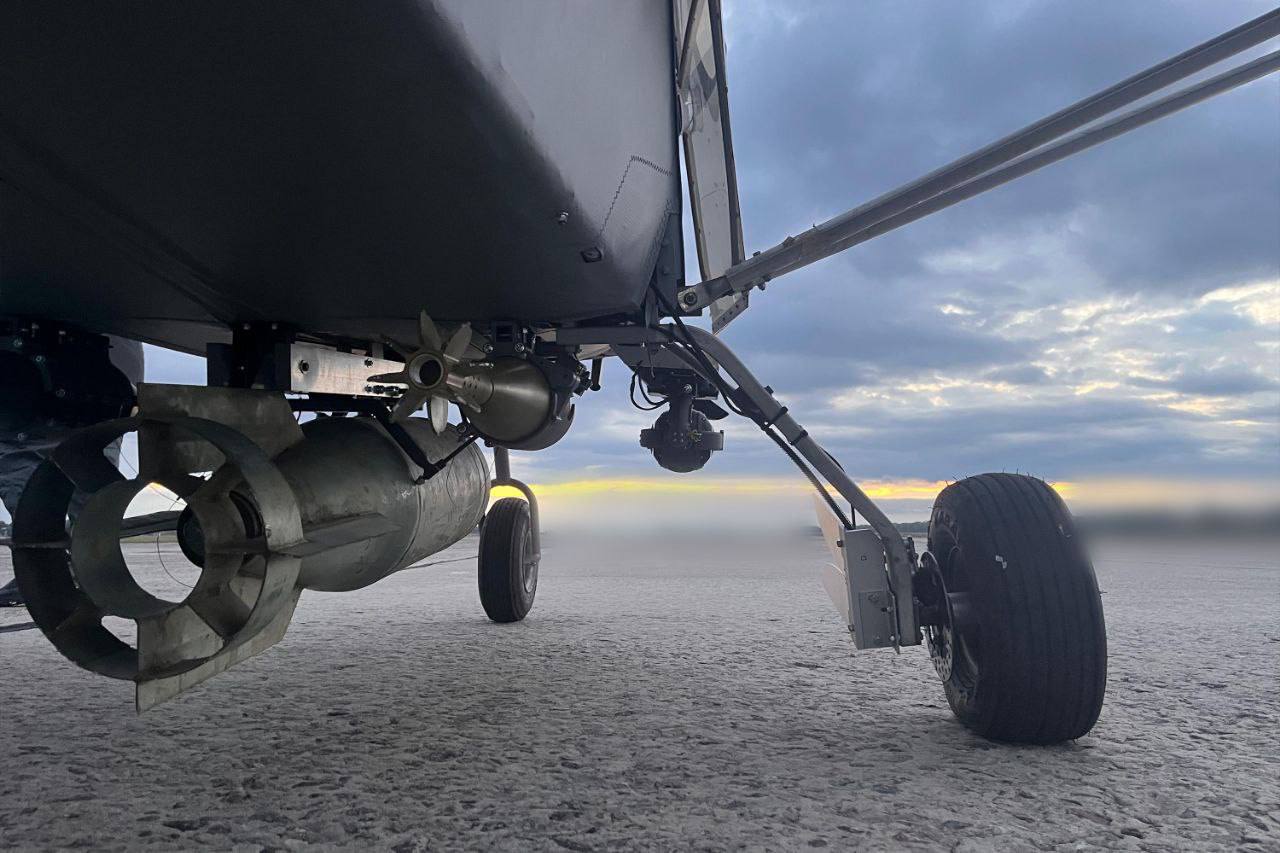
According to Babel, the modified aircraft are equipped with three hardpoints under the fuselage, allowing them to carry a combination of artillery shells and aerial bombs. Each platform typically carries two 120 mm mortar shells and a primary air-dropped weapon — the Soviet-designed OFAB-100-120 high-explosive fragmentation bomb, originally used on aircraft such as the Su-17, Su-25, and MiG-29.
The OFAB-100-120 carries around 40 kilograms of explosive material and is capable of striking industrial and military targets. The aircraft can also be fitted with the larger OFAB-250 bomb, which contains roughly 100 kilograms of explosives and increases the drone’s destructive potential. After releasing its payload, the aircraft itself becomes a final-stage weapon, diving onto the target in a one-way “kamikaze” strike.
The commander of the unit, known by the callsign “Horynych,” told Babel that their strikes have inflicted heavy losses on Russian infrastructure.
“It’s difficult to calculate the total damage because we are not just hitting factories and depots but also disrupting the functioning of Russia’s oil and gas sector,” he said. According to his estimates, the total damage caused by the unit’s operations is between $3 and $5 billion.
The publication noted that the deep-strike team operates almost entirely in secrecy. While the specific number of aircraft in service is undisclosed, the systems are reportedly produced serially using commercially available light SkyRanger aircraft kits that are then modified into drones at undisclosed facilities in Ukraine. These aircraft are designed to fly long distances at low altitude, avoiding radar detection before striking military-industrial targets across Russia.
Russian sources have published footage of several of these attacks, showing small aircraft diving onto factories, oil depots, and defense production sites, including locations linked to the manufacturing of Shahed drones and other military systems. Ukrainian officials have not commented publicly on the footage.

The 14th Regiment of the Unmanned Systems Forces, to which the deep-strike group belongs, is part of a broader expansion of Ukraine’s drone warfare capability. The unit’s operations complement ongoing mass production of one-way attack drones, reconnaissance UAVs, and electronic warfare-resistant platforms currently fielded across Ukraine’s defense front.
The Babel report underscores Ukraine’s growing innovation in asymmetric air operations, using low-cost, adaptable civilian technology to achieve strategic effects deep behind enemy lines. While the aircraft are simple in appearance, their payload configuration and autonomous flight capability make them an increasingly effective tool in Ukraine’s long-range strike campaign against Russian military and energy targets.
Production of these converted aircraft reportedly continues at an industrial scale, representing one of several parallel Ukrainian initiatives to expand long-range unmanned strike capacity using locally engineered or improvised systems.