

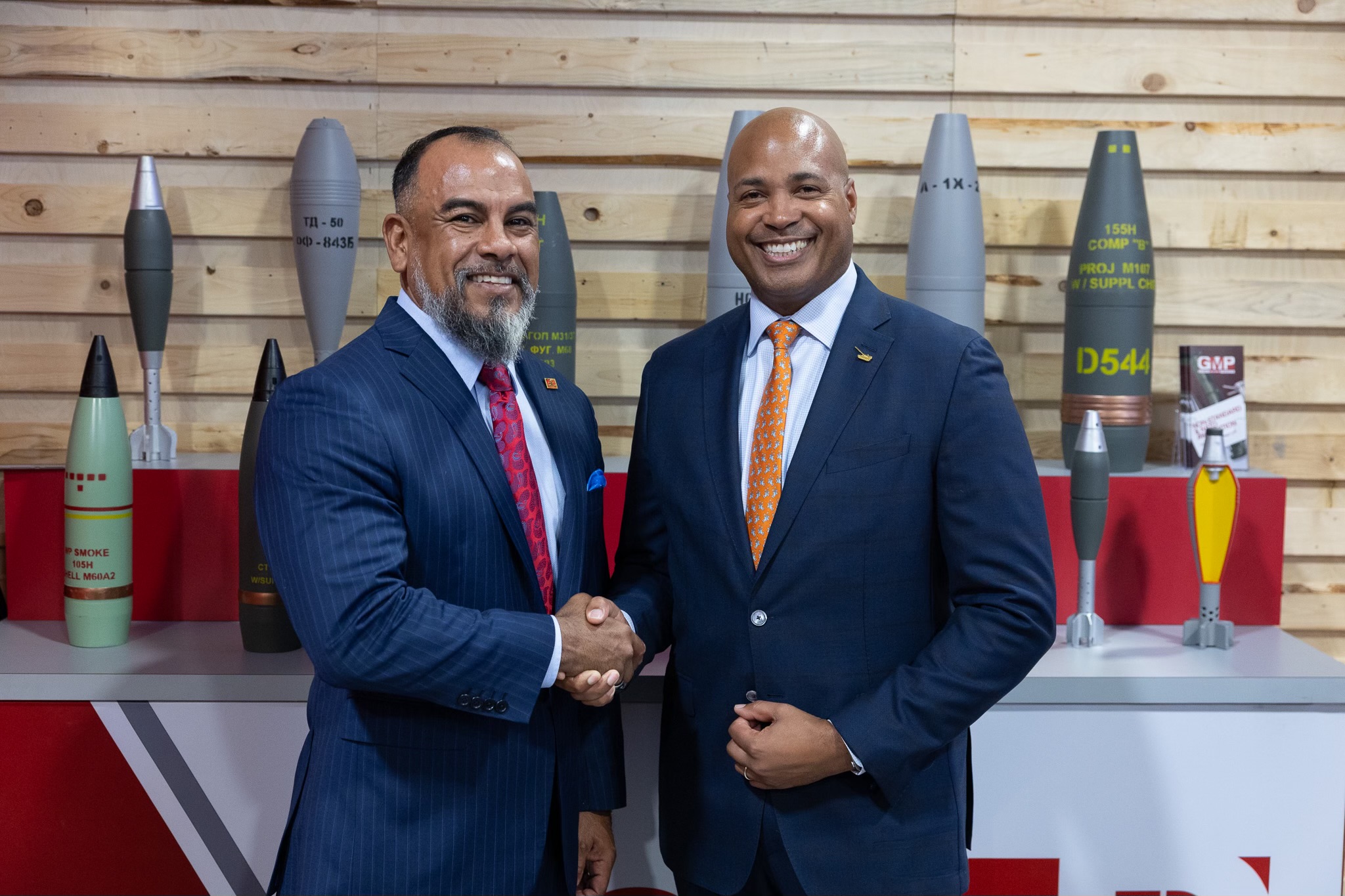
Global Military Products (GMP), a wholly owned subsidiary of Global Ordnance Holdings, has entered into a teaming agreement with South Korea’s Hanwha Aerospace to jointly pursue future U.S. Department of War contracts focused on ammunition and energetics production.
In a statement released Wednesday, GMP said the agreement aims to support the Army’s modernization efforts while reinforcing the resilience of the domestic industrial base.
“This partnership represents a significant step toward strengthening the domestic defense industrial base,” said Jeff Brunozzi, President of Global Ordnance Holdings. “By aligning GMP’s U.S. program management and manufacturing expertise with Hanwha’s advanced energetics and munitions technologies, we are positioned to bring cutting-edge capabilities to the U.S. Army and allied forces.”
The companies plan to develop new energetics, propellants, and ammunition components while working toward scalable manufacturing solutions in the United States. According to GMP, the collaboration will also involve the pursuit of operating contracts that address critical gaps in U.S. production infrastructure.
Hanwha Aerospace, which has expanded its footprint in the U.S. defense sector over the past several years, emphasized the strategic value of the partnership.
“Hanwha is committed to expanding our presence in the U.S. defense market through meaningful industrial partnerships,” said Mike Smith, President and CEO of Hanwha Defense USA. “Together with GMP, we aim to strengthen supply chain resilience and deliver advanced munitions solutions that enhance the readiness and capability of U.S. and allied forces.”
The agreement reflects a growing push within the Pentagon to revitalize and modernize the domestic defense industrial base, particularly in areas where legacy manufacturing infrastructure has struggled to meet current demand. Munitions stockpile levels and the ability to surge production of key systems—such as 155mm artillery shells and tactical energetics—have been identified as long-term readiness concerns by senior defense officials.
GMP said the teaming arrangement is part of a broader strategy to address those gaps through public-private investment and long-term industrial collaboration.
In recent years, Hanwha has positioned itself as a key global supplier of artillery systems, armored vehicles, and advanced munitions. Its partnership with GMP could provide a more direct pipeline for introducing next-generation energetics and ammunition technologies into the U.S. defense ecosystem.
“This is not just about building capacity,” Brunozzi said. “It’s about ensuring the U.S. warfighter has access to the most advanced and reliable munitions technologies available—and doing so with a resilient, domestic production base.”
The companies did not specify a timeline for new facility development or the scope of initial production goals, but said additional details would follow as program requirements evolve.
As the Department of War continues to prioritize industrial base resilience and strategic cooperation with allied defense industries, the GMP–Hanwha agreement appears aimed at positioning both firms as long-term contributors to U.S. and allied munitions readiness.
The announcement comes amid growing pressure to expand munitions output across the NATO alliance. German defense company Rheinmetall has been commissioned to supply a large volume of artillery ammunition to an Eastern European customer under a U.S. government program, underscoring the rising transatlantic demand for heavy munitions driven by ongoing conflict in Ukraine and a broader rearmament push across Europe.
As a subcontractor to Global Military Products (GMP)—a U.S.-based defense supplier awarded a Pentagon contract—Rheinmetall Expal Munitions will deliver 155mm M107 artillery projectiles with M4A2 propellant charges, as well as 105mm M1 shells.