


China has introduced its new generation of unmanned surface vessels (USVs) during the Victory Day parade, highlighting advances in autonomous maritime combat and signaling their future role in contested waters.
According to information presented at the event, the USVs are designed for “covert deployment and blockade, autonomous detection and identification, and networked swarm attacks, providing a decisive advantage in maritime warfare.”
The vessels, operated by the People’s Liberation Army Navy, expand China’s unmanned portfolio from the air and land domains into the sea, adding a capability that Beijing has described as essential for future naval operations.
Chinese state media reported that the system has already completed successful sea trials. Local outlets said the vessels are now being prepared for deployment “in zones of Chinese interest,” a phrase widely understood as a reference to disputed maritime regions where Beijing seeks persistent monitoring and greater control.
The new USVs are presented as multi-role assets, with the ability to conduct reconnaissance, surveillance, and precision strike missions. They are also described as capable of coordinated swarm operations, allowing multiple vessels to share targeting data and overwhelm adversary defenses. Such functions reflect the increasing role of artificial intelligence and autonomous navigation in naval warfare.
By parading the unmanned vessels alongside traditional warships, China emphasized the integration of emerging technologies into its fleet. The vessels are designed for both independent operation and as part of a networked force, supporting manned ships with reconnaissance data or offensive action when required.
Defense analysts note that unmanned surface vessels offer several advantages in contested regions. Their covert deployment and ability to remain at sea for long periods provide persistent surveillance, while their expendable nature reduces risks to personnel. In swarm configurations, USVs could be used to saturate enemy defenses or enforce maritime blockades without committing larger ships.
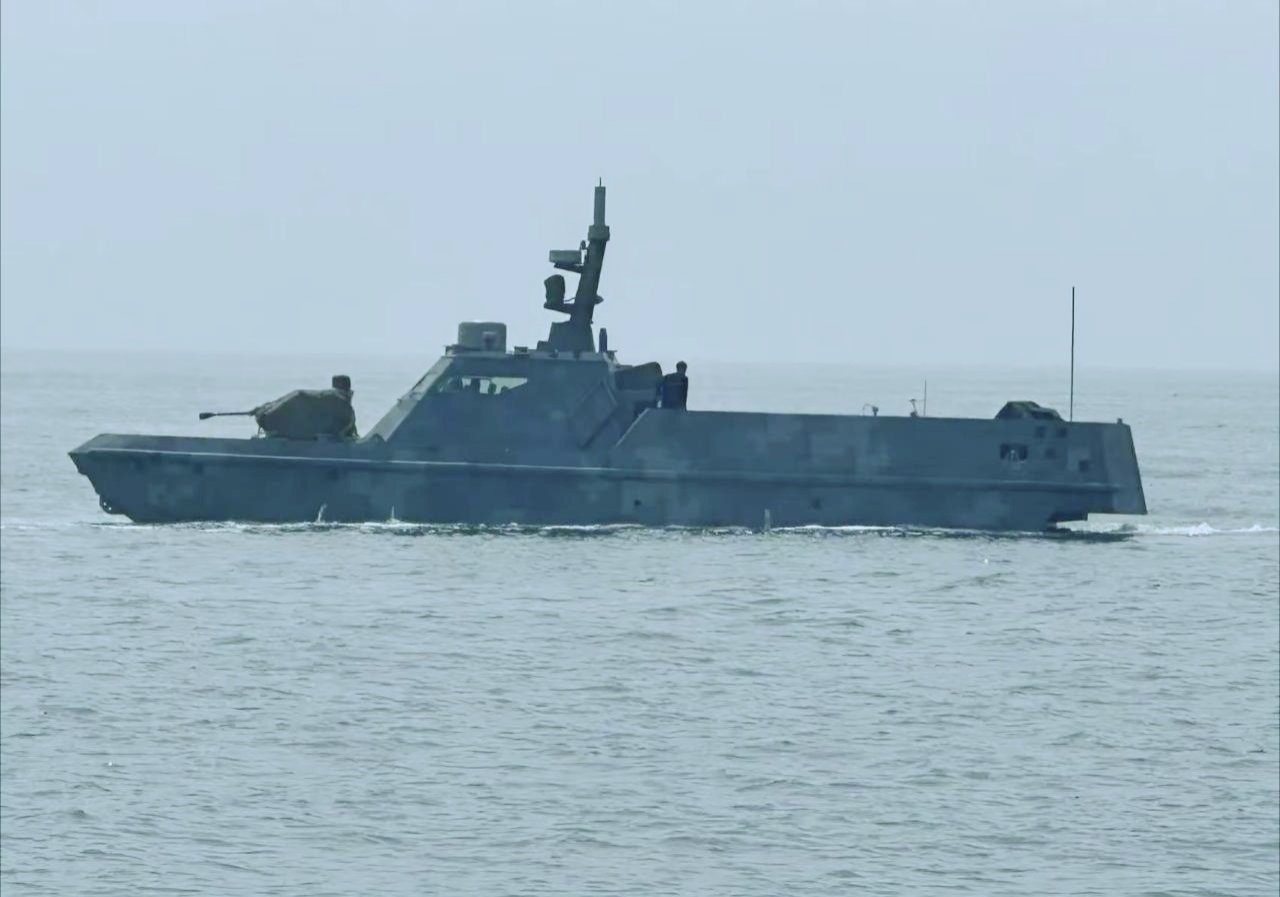
The debut of the USVs comes as China continues to expand its military presence in areas of dispute. By highlighting unmanned platforms in a national parade, Beijing sought to demonstrate both technological progress and strategic intent. The vessels’ role in reconnaissance and blockade operations directly supports China’s long-term goal of maintaining 24/7 monitoring over key maritime approaches.
The emphasis on autonomous coordination also suggests China is preparing for scenarios where unmanned and manned forces operate together.
While full details on production numbers and deployment timelines were not disclosed, the decision to present the USVs publicly indicates they are moving beyond the experimental phase. With testing already completed at sea, the systems appear to be entering the early stages of operational integration.