


Photographs circulating on Chinese social media appear to show what analysts believe may be a new missile defense system known as the HQ-29.
The images, posted on local platforms, captured a six-axle transporter carrying two large missile containers during a rail transfer, prompting speculation about Beijing’s next step in developing long-range air and missile defense.
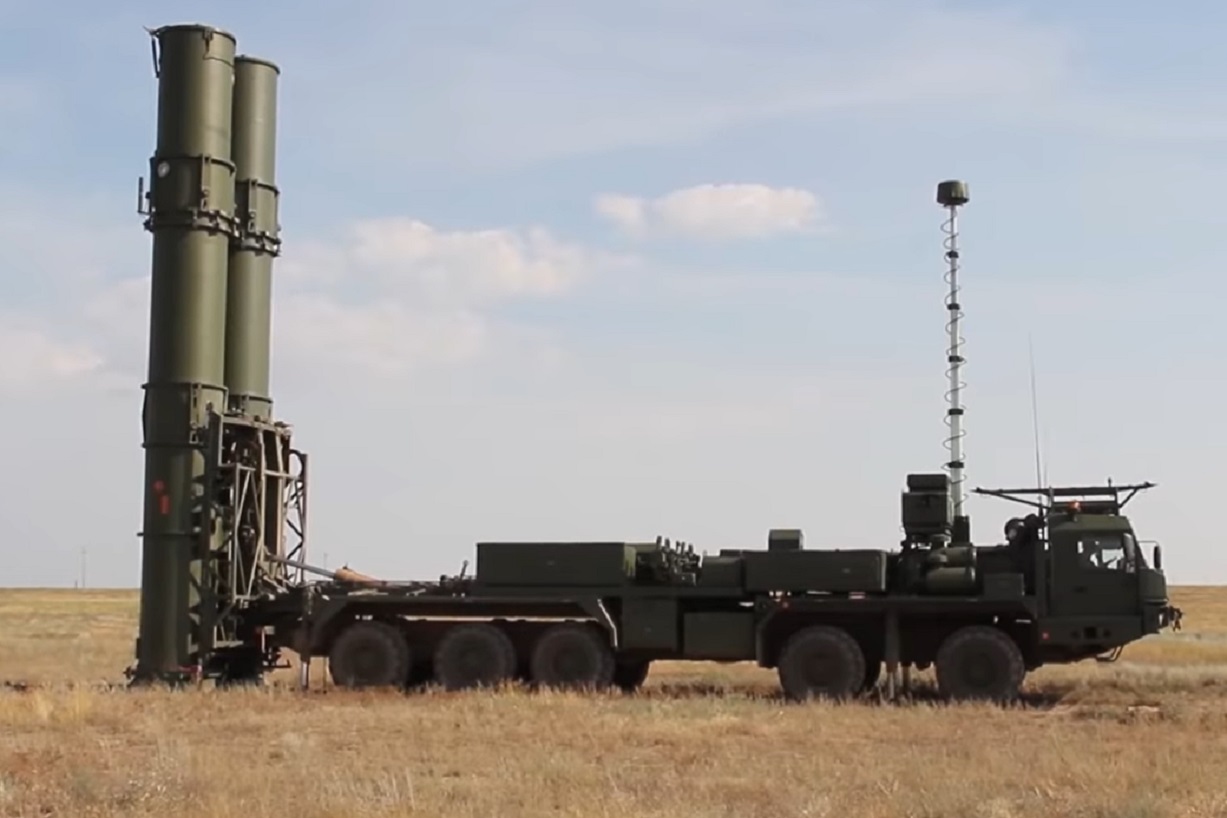
The transporter-mounted launcher is seen carrying two missile canisters, each measuring roughly 1.5 meters (4.9 feet) in diameter. This scale suggests a system much larger and more powerful than current Chinese interceptors. Observers noted that the vehicle resembles transporter-erector-launchers used for both missile transportation and vertical launches, a standard configuration for strategic air defense platforms.
Chinese media described the system as a “double-barreled satellite hunter,” a phrase that points to potential capability against ballistic missiles traveling at very high altitudes, as well as satellites in low Earth orbit. Such wording indicates that the new platform could be designed to intercept targets at ranges above 500 kilometers, a mission set associated with the most advanced global missile defense programs.
The HQ-29 has not been officially confirmed by Beijing. However, the system is widely believed to be more advanced than the HQ-19, China’s current high-altitude interceptor, which relies on kinetic kill technology comparable to the U.S. Terminal High Altitude Area Defense (THAAD). By contrast, the HQ-9 family of systems is primarily tasked with terminal defense at lower altitudes. Analysts argue that the appearance of the HQ-29 would be a logical step forward, bridging the gap between existing Chinese defenses and strategic interceptors such as the American Standard Missile-3 or Russia’s S-500 system.
The platform’s layout and intended role bear striking similarities to Russia’s S-500, which is designed to intercept ballistic missiles in the exoatmosphere. The comparison underscores China’s apparent push to expand beyond terminal missile defense into higher-altitude, midcourse interception capabilities.
The launcher was reportedly seen moving in the direction of Beijing, leading to speculation that the system could be prepared for its first public debut during the September 3 military parade. The parade will commemorate the 80th anniversary of the end of World War II, and Beijing has historically used such events to showcase major advances in military technology.
If unveiled, the HQ-29 would represent an important addition to China’s layered defense network. Unlike shorter-range interceptors designed to counter aircraft or cruise missiles, systems of this class are aimed at neutralizing ballistic missiles before they descend toward their targets. The potential capability to threaten satellites further extends its role into the realm of space denial, reflecting broader trends in China’s military strategy.
Chinese state-linked outlets framed the new system in ambitious terms, pointing to its role as both a missile shield and an anti-satellite weapon. While official confirmation has yet to come, the description of the system as a “hunter” for both missiles and satellites signals Beijing’s intent to pursue capabilities on par with advanced U.S. and Russian programs.
The introduction of such a system would fit into China’s broader effort to expand its strategic deterrent and limit the freedom of action of potential adversaries. The United States, under President Donald Trump, has continued to invest in layered missile defense and space resilience. Washington’s longstanding concern has been the vulnerability of satellites and missile defense networks to new countermeasures from rival powers. Russia, for its part, has moved forward with deployment of the S-500, aimed at both missile defense and space control.
In this context, the suspected HQ-29 highlights Beijing’s determination to demonstrate comparable capability. Its dual-role profile suggests an emphasis not only on defending against ballistic missile threats but also on shaping the strategic environment in space, a domain increasingly central to modern military competition.