


India has developed its first indigenously designed electro-optical tracking system (EOTS) capable of delivering real-time precision tracking of missile launches across land, sea, and air platforms.
The Avenger TSPI system, announced by Tonbo Imaging, is a compact solution engineered to capture automatic time-space-position information (TSPI) during missile and hypersonic projectile launches. The system integrates multiple sensors and is designed for deployment on land vehicles, naval ships, and aircraft.
According to the company, the Avenger TSPI is intended for use in missile launch observation, trajectory prediction, and post-test video forensics.
“This mechanically stabilized EO+IR system delivers real-time, precision tracking for a wide range of applications,” the company said.
The system incorporates a multi-axis gyro-stabilized platform with a multi-spectral sensor suite. Key features include a high-resolution HD daylight camera, a mid-wave infrared (MWIR) thermal imager for day and night operations, and an eye-safe laser rangefinder for accurate distance measurement.
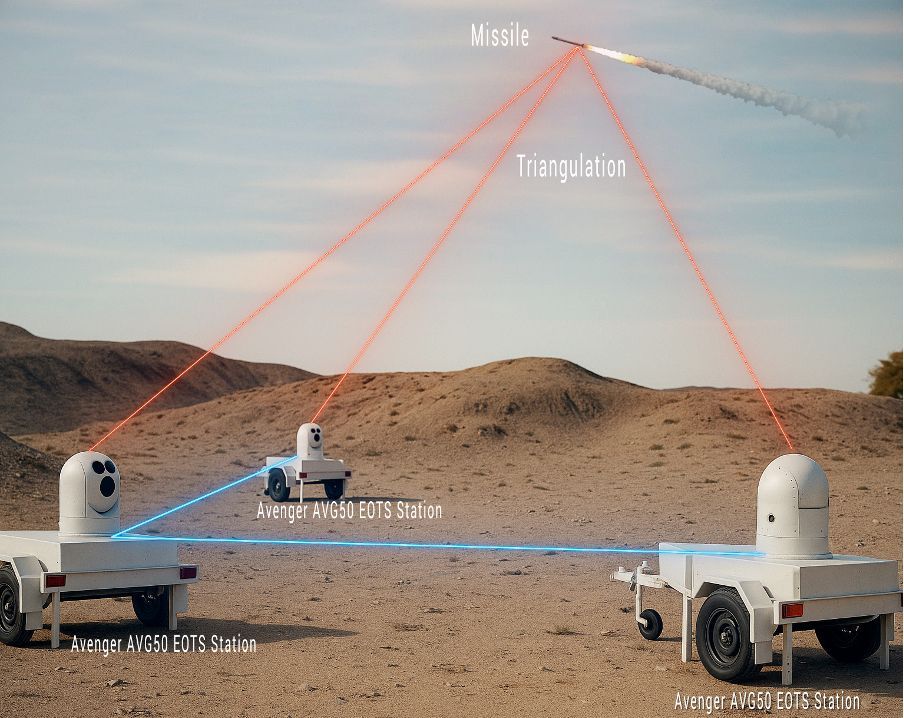
Critically, all sensor outputs are synchronized using IRIG (Inter-Range Instrumentation Group) standards and GPS-based timestamping. This design allows sub-millisecond alignment of video, telemetry, and measurement data, ensuring precise tracking even in dynamic test environments.
The Avenger TSPI is built to support test ranges, tactical demonstrations, and defense research and development activities. Its embedded hardware-based video tracker enables real-time acquisition and reacquisition of fast, maneuvering targets, even in long-range engagements.
“The aerodynamic and weather-hardened enclosure ensures stable operation under high-wind and extreme environmental conditions, with full compliance to military standards,” the company said.
The system’s real-time operating software is designed for low-latency, deterministic performance, supporting critical defense missions where precision tracking is essential. Deployment options include trailer-mounted units for mobile use, as well as shipborne and airborne configurations for greater operational flexibility.
The company said further tests and demonstrations are planned to refine the system’s capabilities for integration into operational defense environments.