

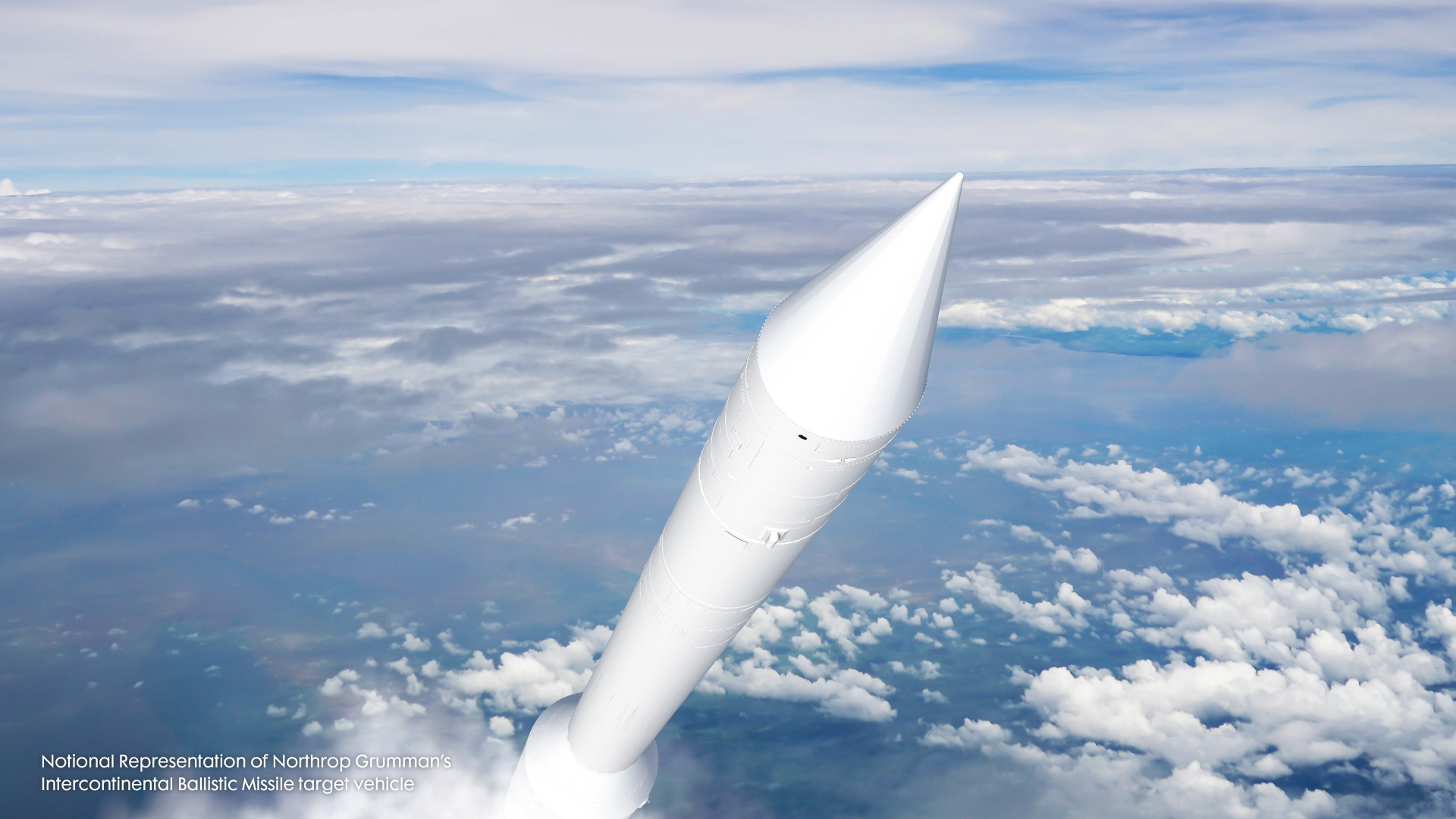
Northrop Grumman Corporation is advancing its role in missile defense with the Modified Ballistic Re-Entry Vehicle-11 (MBRV-11), a project developed to support the Missile Defense Agency’s (MDA) Integrated Master Test Plan (IMTP).
Designed to test the capabilities of the Next Generation Interceptor (NGI), the MBRV-11 is being developed on an expedited timeline, achieving its Critical Design Review (CDR) just 16 months after the contract award.
This milestone, reached in October, highlights the collaboration between Northrop Grumman and the MDA to address urgent defense needs. A combined System Requirements Review (SRR) and Preliminary Design Review (PDR) streamlined the process, enabling the project to meet its accelerated schedule.
“Through executing with speed and building for the future, MBRV-11 is a paradigm shift in the way we partner with MDA to develop new programs,” said Robin Heard, director of targets at Northrop Grumman. “Our deep mission experience enabled us to compress the development timeline by combining the SRR and PDR, begin qualification testing ahead of CDR, and quickly transition into production to meet the customer’s need for an early operational capability.”
The MBRV-11 features a baseline vehicle design and four optional enhancement kits, offering adaptability for various mission requirements. This flexibility allows integration onto Intermediate Range Ballistic Missile (IRBM) and Intercontinental Ballistic Missile (ICBM) platforms, simulating sophisticated threats to test the NGI.
The current contract includes five MBRV-11 vehicles, with the first flight test planned for 2027. Northrop Grumman’s proven hardware and software designs, coupled with its common system architectures, facilitate the aggressive development and production timeline.
The company’s role extends beyond MBRV-11 to include upgrades to IRBM and ICBM target vehicles, further solidifying Northrop Grumman as the end-to-end provider for target systems, including payloads and boost vehicles. These efforts directly support MDA’s IMTP, encompassing ground tests, flight tests, and training exercises.
Since 2011, Northrop Grumman has delivered 25 IRBM and ICBM target vehicles, supporting 10 successful missile defense demonstrations. With its extensive experience in advanced avionics, adaptable vehicle kits, and solid rocket motors, the company has developed a reputation for creating reliable and representative threat systems for missile defense testing.