

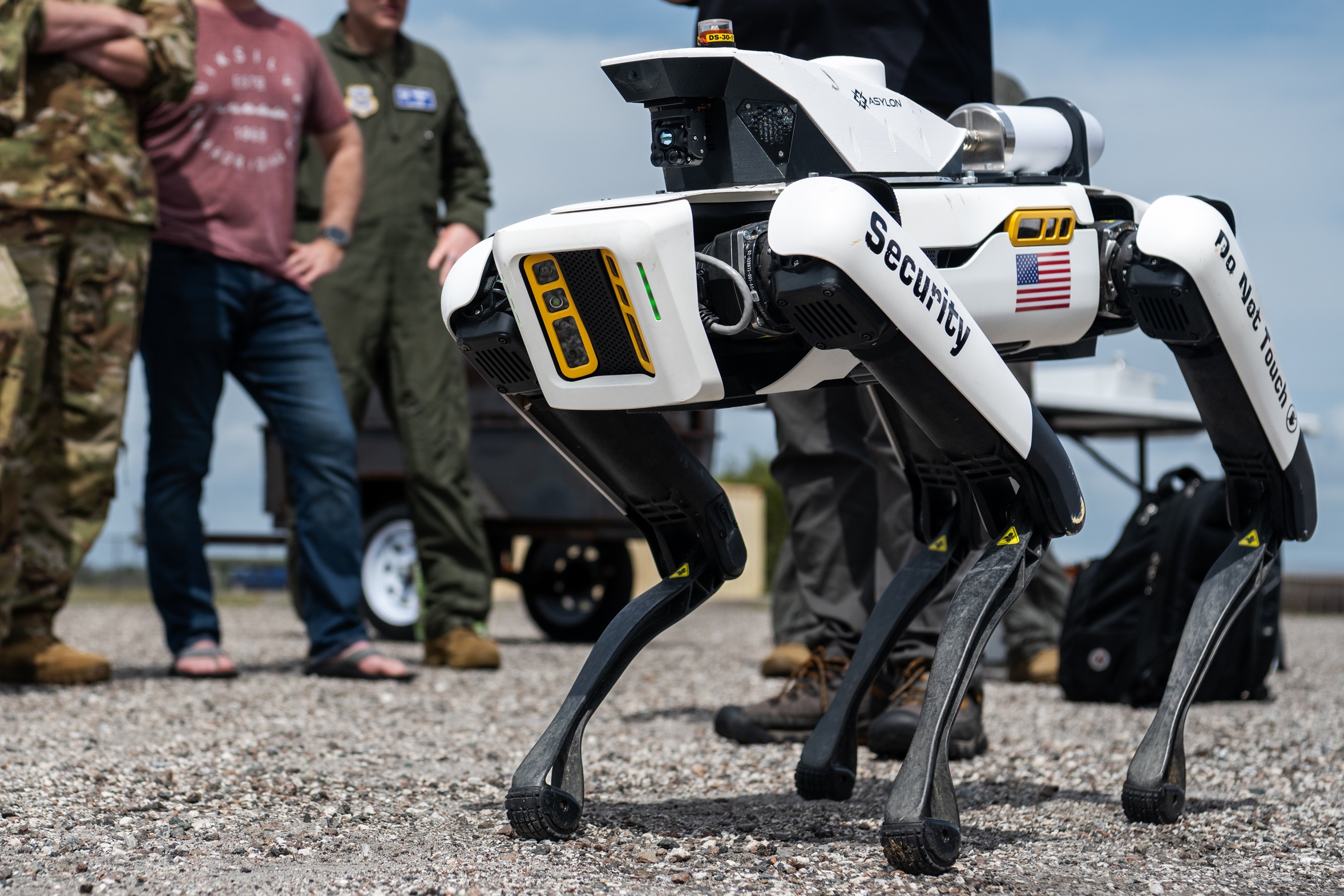
The U.S. Air Force, in collaboration with representatives from Asylon, showcased the capabilities of robotic dogs during the first-ever Synchronized Nuclear Readiness Operations Training (SNORT) at MacDill Air Force Base in Florida.
The demonstration, held on March 6, 2024, highlighted the potential of remotely operated security systems in enhancing emergency response protocols without jeopardizing the safety of human defenders. The robotic dog, developed by Boston Dynamics with additional hardware and software capabilities provided by Asylon, exemplifies the latest advancements in unmanned ground vehicles (UGVs).
Equipped with a suite of sensors, the robotic dog operates in a semi-autonomous mode, enabling it to conduct patrols independently while navigating its surroundings and avoiding obstacles. This autonomous functionality empowers the robot to swiftly respond to emergent situations, providing real-time surveillance and reconnaissance capabilities crucial for nuclear readiness operations.
During the demonstration, observers witnessed the robot’s agility and adaptability as it maneuvered through simulated scenarios, showcasing its ability to effectively patrol and monitor designated areas. While the robotic dog operates autonomously, its functionality is complemented by human control, allowing operators to intervene and guide its actions as needed.
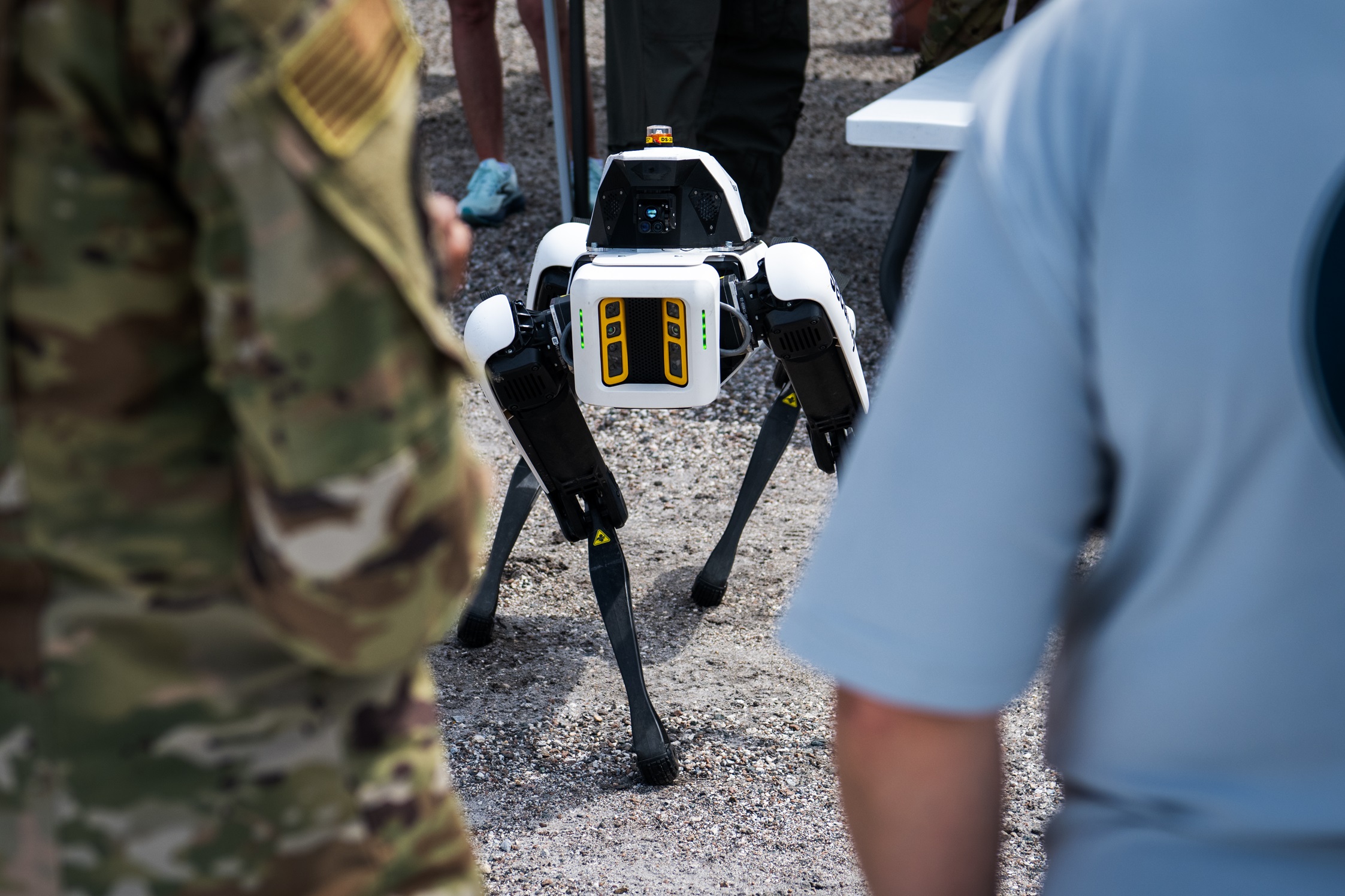
The integration of robotic dogs into defense operations represents a significant step forward in leveraging technology to enhance security protocols and mitigate risks in high-stakes environments. By deploying these advanced UGVs, the U.S. Air Force aims to bolster its readiness posture while minimizing the potential for human error and exposure to hazardous conditions.