

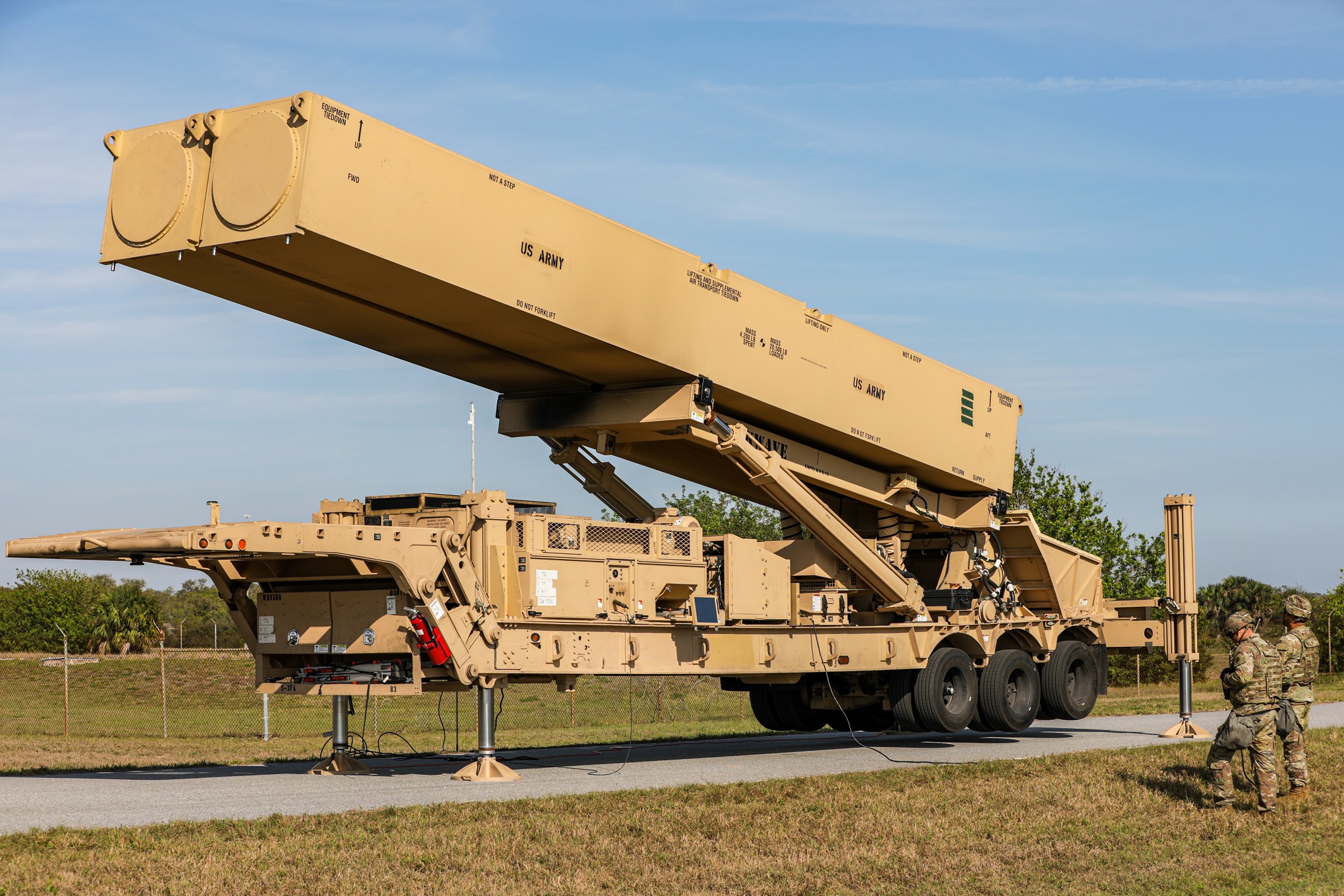
The U.S. Army has announced deploying Long Range Hypersonic Weapons, or LRHW.
The U.S. Army has revealed that the 1st Multi-Domain Task Force (1st MDTF) long-range fires battalion, 5th Battalion, 3rd Field Artillery Regiment (5-3 LRFB), deployed the LRHW system over 3,100 miles from Joint Base Lewis-McChord, Washington to Cape Canaveral, Florida during Thunderbolt Strike, a full rehearsal of expeditionary hypersonic launch capabilities.
The deployment exercised critical command and control linkages between U.S. Indo-Pacific Command, U.S. Strategic Command, U.S. Army Pacific, Army Rapid Capabilities and Critical Technologies Office (RCCTO), and 1st MDTF.
Soldiers of the 5-3 LRFB conducted training and practice drills with the LRHW system in Cape Canaveral.
“Our Soldiers processed real missions, with real data, in real time, to produce real effects to learn lessons and generate readiness. We’re training the way we will fight, and our Soldiers are ready to deploy and employ this critical capability forward,” said Brig. Gen. Bernard Harrington, the 1st MDTF commander.
Thunderbolt Strike marks a new milestone between the 1st MDTF, RCCTO, industry, and numerous Army partners that generated immediate feedback from stakeholders on the complex system.

Col. Ian Humphrey, RCCTO’s hypersonic weapon integration project manager, highlighted 1st MDTF’s rapid progress in building the technical and procedural capacity to integrate the LRHW system’s capabilities into the Defense Department’s Joint Force. “This unit is fully trained and has proven that they can be deployed away from home station and go right into whatever mission they’re given.”
“Thunderbolt Strike proved the power of interagency cooperation to build the multi-domain force of the future,” said Harrington. “The second half of the Army’s year of long-range precision fires will continue to represent groundbreaking strides toward integrated deterrence in the Pacific.”
“Our first battery of Long-Range Hypersonic Weapons is training with their ground equipment at JBLM, and by this fall we will have our first battery of Long-Range Hypersonic Weapons, and that element will be part of our 1st Multi-Domain Task Force,” Wormuth said recently in an article in Defense Daily.