

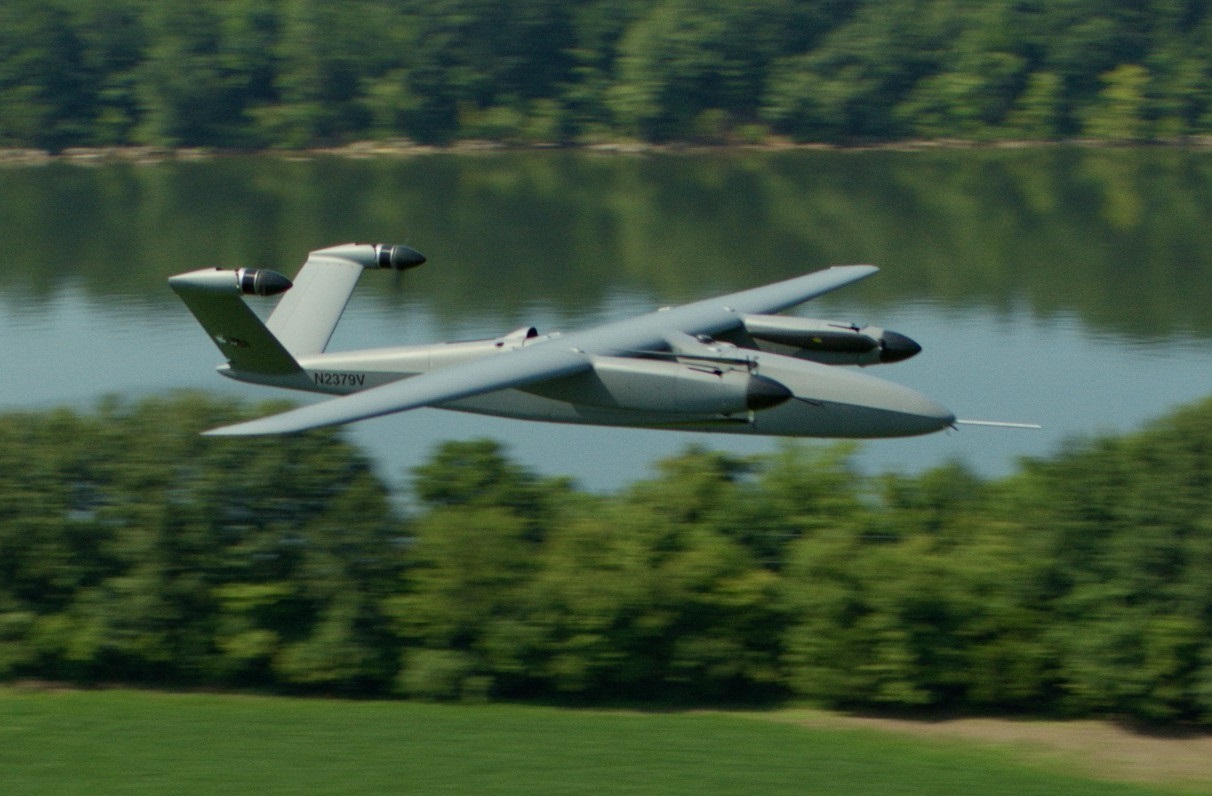
The U.S. Army has announced that it selected five companies to build prototypes for the Future Tactical Unmanned Aircraft System (FTUAS) Increment 2 (INC 2) competition.
The Army said in a release that it has awarded five Rapid Prototyping Other Transaction Agreements (OTA) to AeroVironment, Inc.; Griffon Aerospace, Incorporated; Northrop Grumman Systems Corporation; Sierra Nevada Corporation; and Textron Systems.
The awards are based on the results of a competitive evaluation and vary from ~$1M to $25M, depending on how far the Project Agreement Holder (PAH) progresses through the base and option periods.
As a Future Vertical Lift program, the FTUAS is the Army’s premier Vertical Take-Off and Landing (VTOL) Unmanned Aircraft modernization effort. FTUAS INC 2 requirements include runway independence, point take-off and landing, and a rapidly deployable Unmanned Aircraft System (UAS) capability. When fielded, the FTUAS INC 2 will provide a distinct tactical advantage over current systems due to increased maneuverability through VTOL, improved command and control supported by the On-the-Move (OTM) capability, a reduced transportation and logistics footprint, as well as significantly improved survivability due to reduced noise signature.
The FTUAS INC 2 will improve the brigade combat team’s ability to conduct reconnaissance and surveillance operations that collect, develop, and report actionable intelligence information about the enemy in degraded Global Positioning System environments.
“FTUAS will revolutionize the way our Soldiers fight and win wars by providing enhanced Reconnaissance, Surveillance, and Target Acquisition with unparalleled speed and agility” said COL Danielle Medaglia, Unmanned Aircraft Systems Project Manager.
The FTUAS INC 2 Program leverages lessons-learned from previous efforts including a prior year-long FTUAS demonstration, to field a FTUAS meeting the Army Abbreviated Capabilities Development Document (A-CDD) requirements. INC 2 will also continue to inform the doctrine, organization, training, materiel, leadership, personnel, facilities, and policy requirements leading to a follow-on production and fielding effort.
The FTUAS INC 2 effort consists of five distinct development phases including a base and four option periods occurring between 2023 and 2025. The FTUAS Rapid Prototyping effort will utilize Model Based Systems Engineering (MBSE) and other digital engineering techniques to implement the government’s Modular Open Systems Approach (MOSA). The use of MBSE and MOSA enables FTUAS INC 2 to maintain alignment with the UAS Family of Systems and higher-level system architectures. INC 2 promotes robust competition and innovation to achieve A-CDD requirements and support the Army decision for a program of record system.
After a series of design reviews in the Base through Option 2 periods, the remaining PAHs will demonstrate their capabilities through flight demonstrations and Third-Party MOSA verification activities in Option 3.
In Option 4, the remaining PAH will deliver four each air vehicles, mission system packages, payload packages, ground controllers, and two OTM controllers, all required maintenance tools and manuals, and all necessary ground support equipment for qualification testing and operational assessment. These systems will undergo numerous evaluation activities such as environmental testing, electromagnetic environmental effects testing, MOSA verification, and flight qualification testing conducted at PAH and government test facilities.
The Aviation and Missile Technology Consortium released the FTUAS INC 2 Request for White Papers on 1 October 2021. The PEO Aviation FTUAS team conducted a technical evaluation of the submissions in preparation for today’s rapid prototyping effort awards.
Also noted that taking recent world events into consideration, the US Army recognizes the need for expedited and enhanced Reconnaissance, Surveillance, and Target Acquisition.
The FTUAS Team is dedicated to the mission and determined to meet the Army’s needs today and in the future.