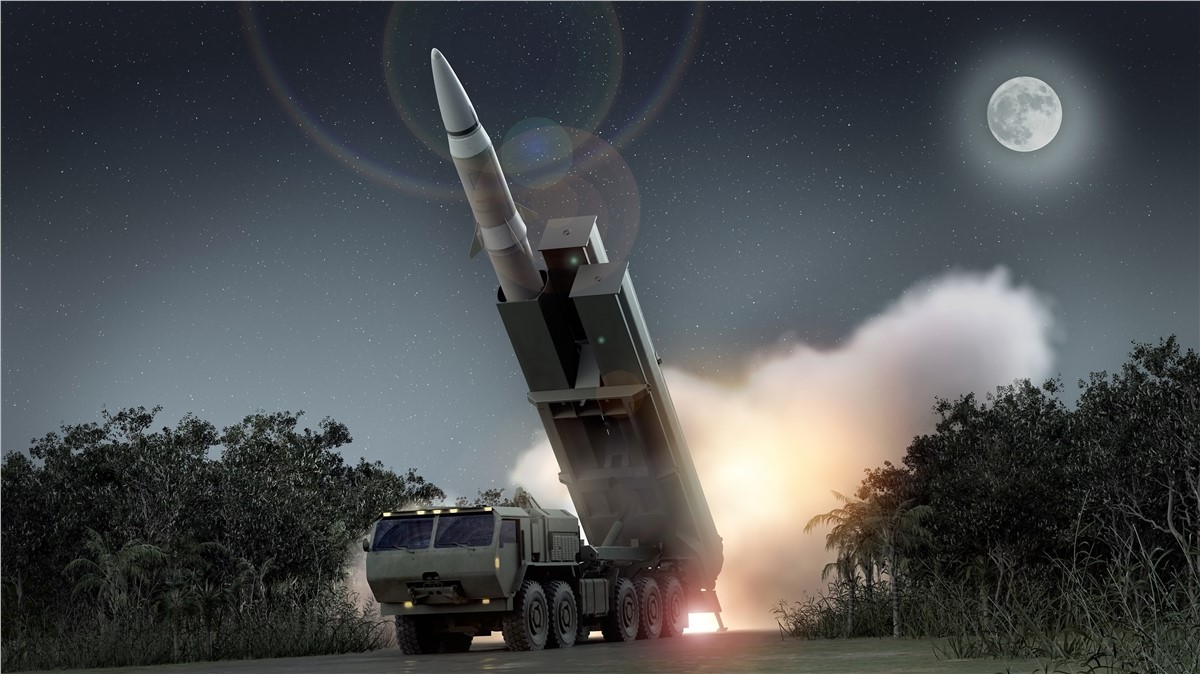
The U.S. Army has moved a step closer to fielding the newest medium-range hypersonic missile system that can penetrate modern enemy air defenses and rapidly engage time-sensitive targets.
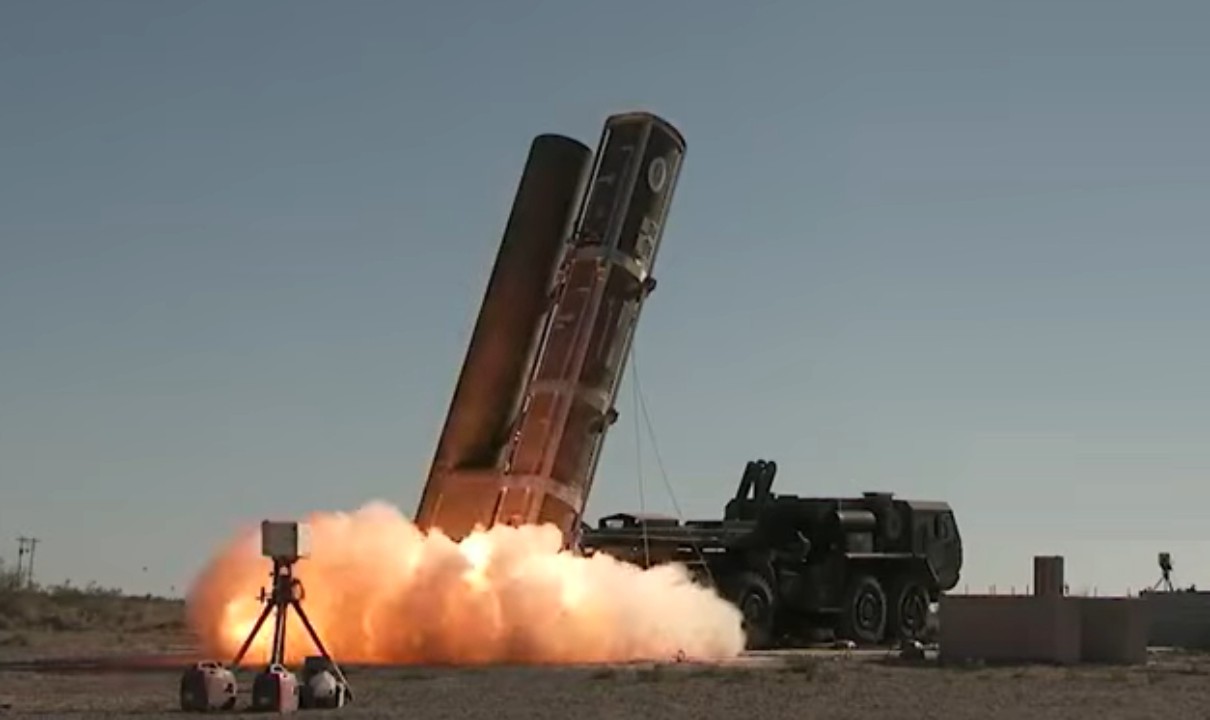
According to a recent press release from the Defence Advanced Research Projects Agency (DARPA), the program of new hypersonic missile systems called the Operational Fires (OpFires), has successfully executed its first flight test at White Sands Missile Range in New Mexico.
The OpFires system achieved all test objectives, including first ever use of a U.S. Marine Corps (USMC) logistics truck as a medium-range missile launcher, missile canister egress, stable flight capture, and use of U.S. Army inventory artillery fire control systems to initiate the test mission. Lockheed Martin built the system, which includes a Northrop Grumman rocket motor, and conducted the test.
The test demonstrated integrated technology maturation of key enabling components including the first stage rocket motor, missile canister, and missile round pallet (MRP). The MRP is designed for use with the load handling system available on USMC and Army logistics vehicles, eliminating the need for a bespoke OpFires transporter erector launcher (TEL).
“This is a promising step toward a TEL on-demand capability for accurately firing medium-range missiles from highly agile, readily available logistics trucks that are already in both the U.S. Army and U.S. Marine Corps inventory,” said Lt. Col. Joshua Stults, the DARPA program manager for OpFires. “Our successful agile hardware development approach prioritizes full-scale flight testing that will inform further design maturation this year.”
The primary goal of OpFires is the development and demonstration of a ground-launched two-stage propulsive system capable of employing hypersonic (greater than five times the speed of sound) payloads from ubiquitous U.S. military trucks (the Palletized Load System family of vehicles) that can penetrate modern air defenses and precisely strike time-critical targets. Compatibility with existing command and control, vehicles, logistics infrastructure, and operating environments ensures that OpFires is highly mobile and rapidly deployable.
“The OpFires program is a great example of how DARPA, in partnership with industry, is helping the Department of Defense facilitate rapid development and testing of advanced hypersonic technologies to accelerate the delivery of transformational warfighting capabilities,” said Michael White, principal director for hypersonics in the Office of the Undersecretary of Defense for Research and Engineering.
The OpFires program will complete an integrated system critical design review in 2022.