

US Marines evaluates transportability of its new ship-killing system

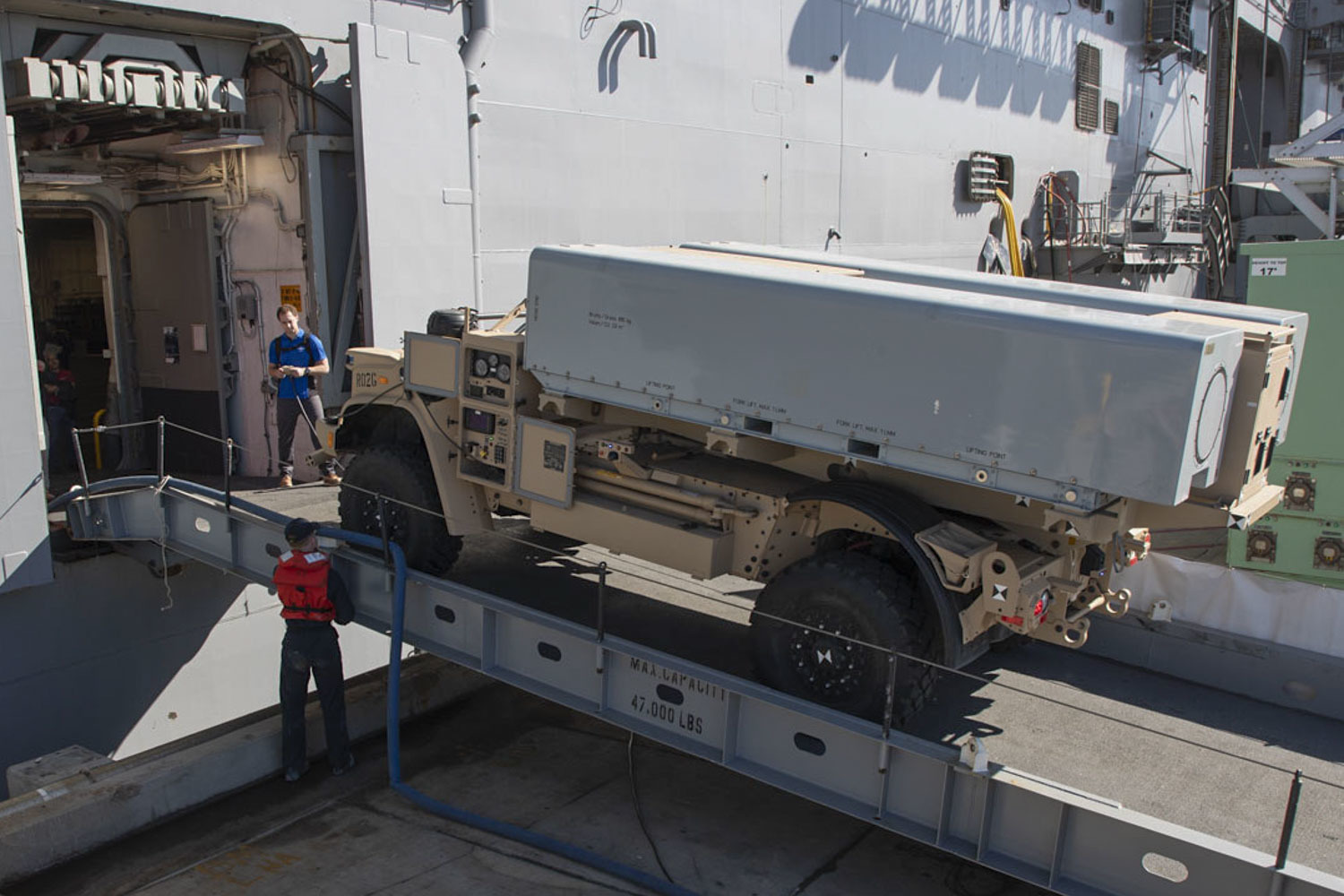
The U.S. Marine Corps is evaluating a transportability of its Navy/Marine Corps Expeditionary Ship Interdiction System, also known as NMESIS, aboard of the amphibious assault ship USS Tripoli (LHA 7).

Tripoli is the first L-class ship to embark the NMESIS as part of a demonstration of the system’s transportability aboard an amphibious ship.

The NMESIS is a robotic combat vehicle with the ability to be remotely controlled by a distant operator looked like a JLTV but without a cab, equipped with an assortment of sensors and cameras, and topped with a launcher for a multi-mission cruise missiles.

- ADVERTISEMENT - CONTINUE READING BELOW -

NMESIS integrates established, proven sub-systems, such as the Joint Lightweight Tactical Vehicle Chassis, the Naval Strike Missile and the Fire Control System used by the Navy for NSM.

The Marine Corps’ NMESIS will provide the Marine Littoral Regiment with ground based anti-ship capability to facilitate sea denial and control while persisting within the enemy’s weapons engagement-zone.

The Marine Corps also successfully demonstrated NMESIS during Large Scale Exercise 21 in August. The system launched an NSM that flew a non-linear flight path covering over 100 nautical miles before successfully hitting two targets.

“We made it fly a [non-linear] route to simulate what Marines would experience in a real-world situation, where they may have to navigate around friendly and neutral shipping or any other impediments between the ground-based firing position and the target,” said McPherson. “The ability for us to provide waypoints and plan a complex route improves the survivability and utility of the system before impact.”
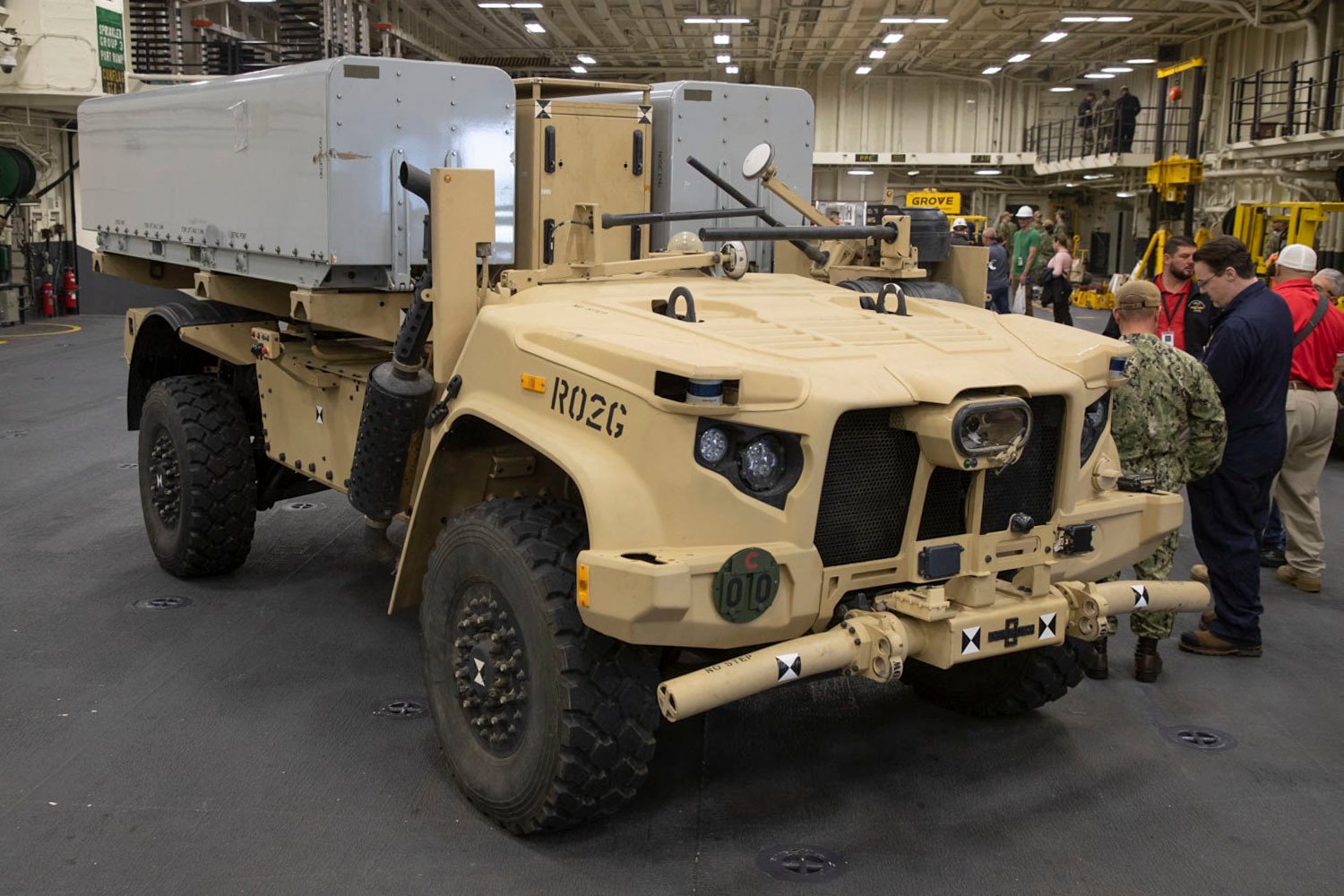
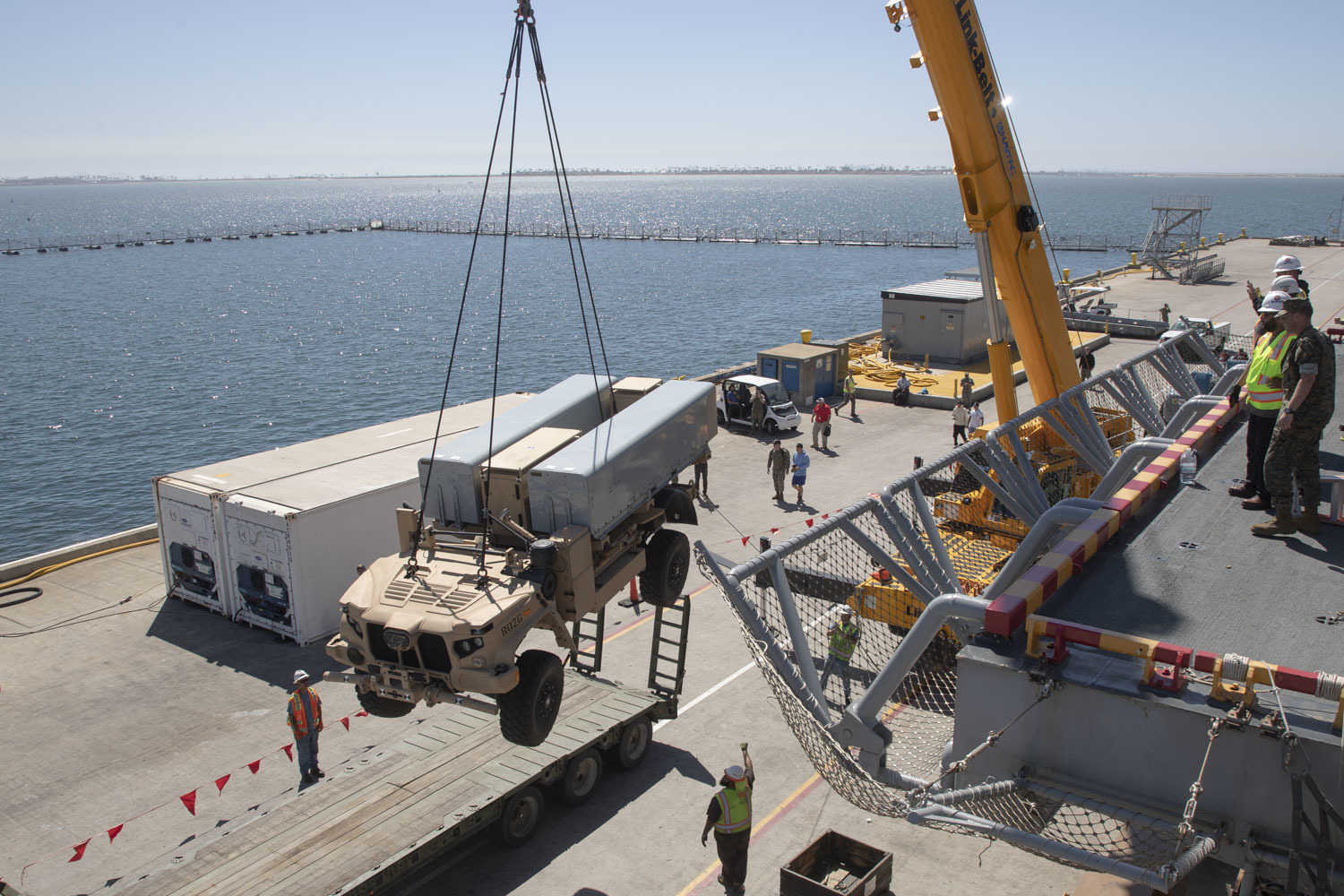
Photo by Malcolm Kelley

Readers who wish to follow our weekly coverage can subscribe to the Weekly Defense Roundup.

If you wish to report a grammatical or factual error in this article, please let us know by using the online form.

Executive Editor

Support The Defence Blog

Independent reporting takes resources. Join us on Patreon.

Become a patron

More Like This

U.S. Air Guard to buy motorized paragliders for silent infiltration flights

A North Carolina Air National Guard unit, part of the U.S. military's part-time reserve force, wants to give its people the ability to quietly...

U.S. Air Force scouts companies to build its next robot fighter jet

The U.S. Department of the Air Force published a market research notice this week seeking companies capable of designing, developing, prototyping, manufacturing and fielding...

Bell to rewire U.S. Marine Corps’ Viper and Venom fleet

U.S. Marine Corps attack and utility helicopters are heading into a major upgrade built specifically to carry the next generation of weapons, and the...

Pentagon spends $333 million to keep fighter pilots’ helmets combat ready

The U.S. Defense Logistics Agency awarded Rockwell Collins ESA Vision Systems, a Fort Worth, Texas company, an estimated $333 million contract to supply spare...

Pentagon pays $400 million to run its new missile-tracking satellites

The U.S. Space Development Agency, the Pentagon office building America's next generation of missile-tracking satellites, awarded General Dynamics Mission Systems a contract with a...