

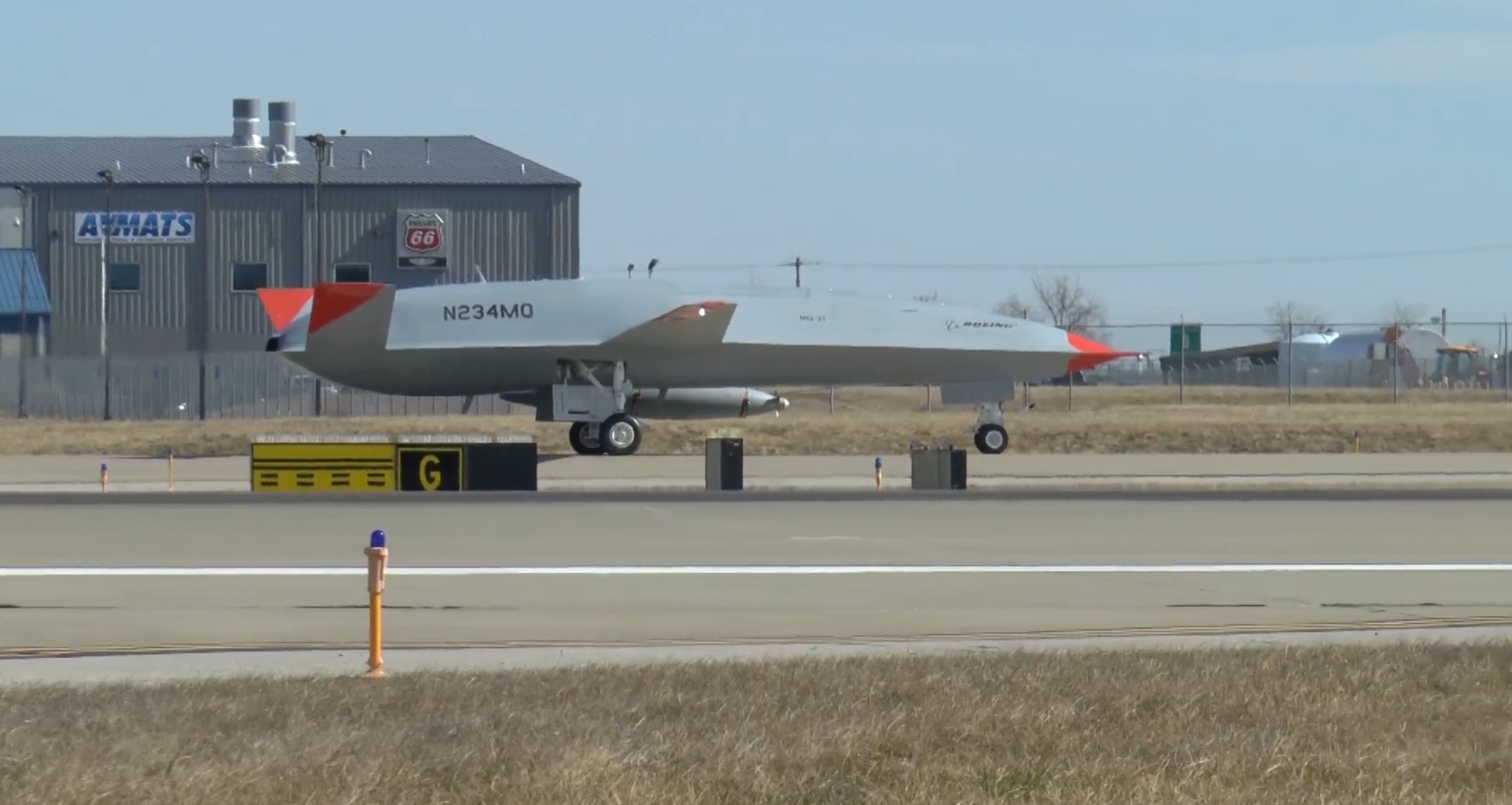
Aerospace giant Boeing announced the new milestones of the U.S. Navy’s MQ-25 unmanned aerial refueling program.
In a release Monday, American plane-maker said the MQ-25 T1 marked on a recent test flight a few milestones – its longest flight to date at more than six hours, as well as its highest flight to date with test points at 30,000 feet in altitude.
The ongoing flights continue to yield valuable lessons on aircraft performance and functionality well before the Navy receives its first MQ-25 for testing.
“We’ve modified the normal ‘buy-build-test’ acquisition development model,” said Dave Bujold, MQ-25 program director. “Instead of testing last, we’re testing first. The result is an enormous amount of data that informs our production of the Navy’s MQ-25.”
Boeing has made investments in model-based engineering, with the objective of detailing each system, component, wire, metal or composite surface in a digital model of the aircraft. These models are used to project how the aircraft will perform – and each data point captured in flight test helps validate the model for greater reliance and confidence.
“The flights follow on many hours in the lab using the models to simulate flight and aircraft performance,” said Jim Young, MQ-25 chief engineer. “Digital modeling is also being used to support MQ-25 production, and to model sustainment planning and growth for the future.”
T1 is currently flying in its aerial refueling configuration, following a planned modification to the aircraft in 2020 that integrated the Cobham aerial refueling store – the same one currently used by F/A-18 fighter jets for air-to-air refueling, and the same store that will be used on operational MQ-25s.
Continued flight tests result in large amounts of aircraft performance and key systems data, such as propulsion and guidance and control across the flight envelope. Next up for T1 is testing of the aerial refueling hose and drogue, to include wake surveys, followed by receiver flights with an F/A-18 Super Hornet.
“The aircraft is performing well across the flight envelope, and we’re hitting our stride with the processes and procedures for flying this aircraft on a routine basis,” said Boeing test pilot Ty “Grouch” Frautschi. “We’ve had Navy testers with us every step of the way taking advantage of the early learning this aircraft provides.”