

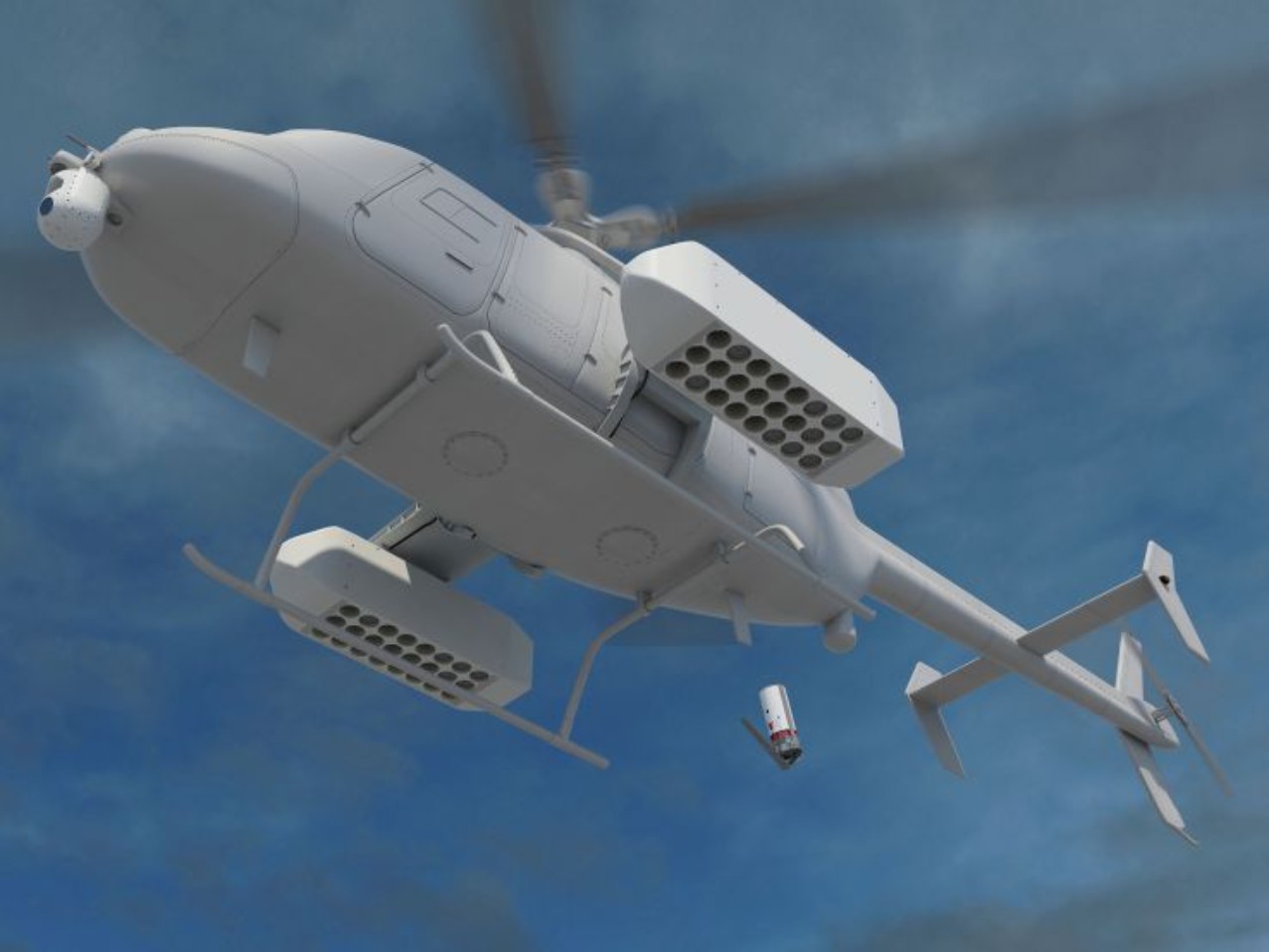
Northrop Grumman presented an upgrade to the U.S. Navy autonomous helicopter system equipped with external pods to dropping Ultra sonobuoys.
Earlier this week, the corporation has shared pictures of its advanced version of the MQ-8C Fire Scout unmanned aircraft system upgraded for anti-submarine warfare.
NG says this is the latest enhancement to Fire Scout’s highly-versatile multi-mission platform that will increase the capability of the MQ-8 currently fleet.
The released picture showing an unmanned Navy helicopter system carrying two pods, each with 24 cells, on a plank-type mounting system running through the center of the fuselage.
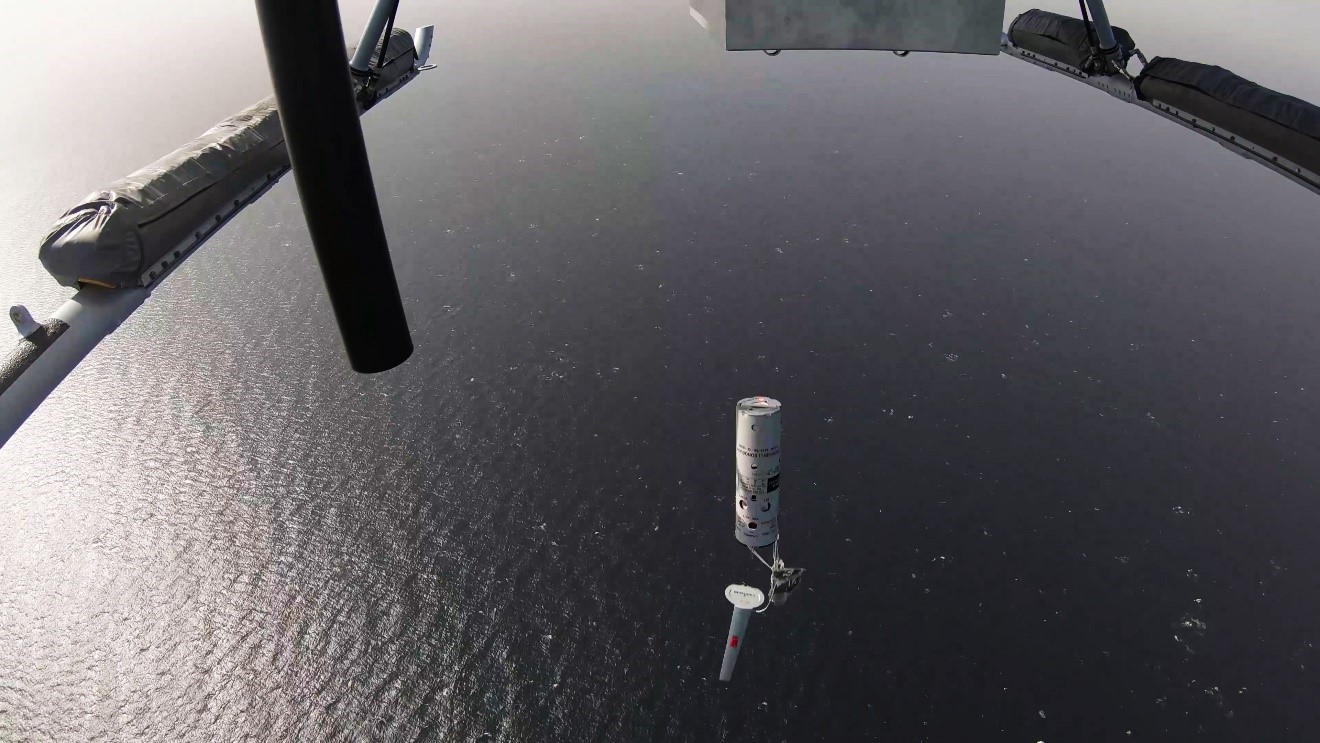
The company already demonstrated unmanned anti-submarine warfare capability during test at manned Bell 407 (acting as an MQ-8C Fire Scout surrogate) platform with Ultra sonobuoys, receiver and processor to complete an unmanned aircraft system (UAS) anti-submarine warfare (ASW) capability demonstration.
This successful demonstration of the UAS ASW mission on October 29 was the first time a vertical takeoff surrogate unmanned aerial system (VTUAS) had been used to conduct a large area multistatic acoustic search. The mission payload and effects were controlled from the ground with the resultant ASW picture disseminated to locations across the globe.
“Adding an ASW capability to Fire Scout’s existing multi-mission capabilities would further enhance this highly-versatile platform,” said Dan Redman, Fire Scout maritime mission expansion lead, Northrop Grumman. “This ASW capability would offer commanders flexibility to employ not only UAS systems in this particular ASW role, but also utilize the increased availability of crewed aircraft more incisively against an expanded mission set. This would increase the total available effect of the manned/unmanned teamed force mix.”
By jointly developing and demonstrating UAS ASW capabilities, initially on an MQ-8C Fire Scout manned surrogate as part of an industry-led initiative, the two companies are combining their world-leading expertise and experience with the aim of bringing unique ASW solutions to global customers. While the U.S. Navy has not yet identified a clear requirement for UAS ASW capability, it has shown interest in the development and continues to support and monitor progress.
“Operating prototype hardware in a high-pressure real-world environment can be challenging,” said Thomas Link, president of Ultra Maritime. “Our partnership will bring an innovative and leading ASW capability into operation, combining both manned and unmanned ASW systems that will help defend our warfighters and provide increased capability to our forces.”
The MQ-8C Fire Scout can fly missions in excess of 12 hours, providing commanders an unrivaled level of layered multi-source/sensor intelligence, surveillance, reconnaissance (ISR) and command and control/comms relay capabilities over land and sea. When operating in a manned-unmanned teaming concept, Fire Scout enables commanders to employ manned assets in a more focused manner, allowing them to exploit hybrid manned/unmanned teaming opportunities.
The MQ-8C achieved initial operational capability in June 2019 and is scheduled for its first deployment in 2021.