

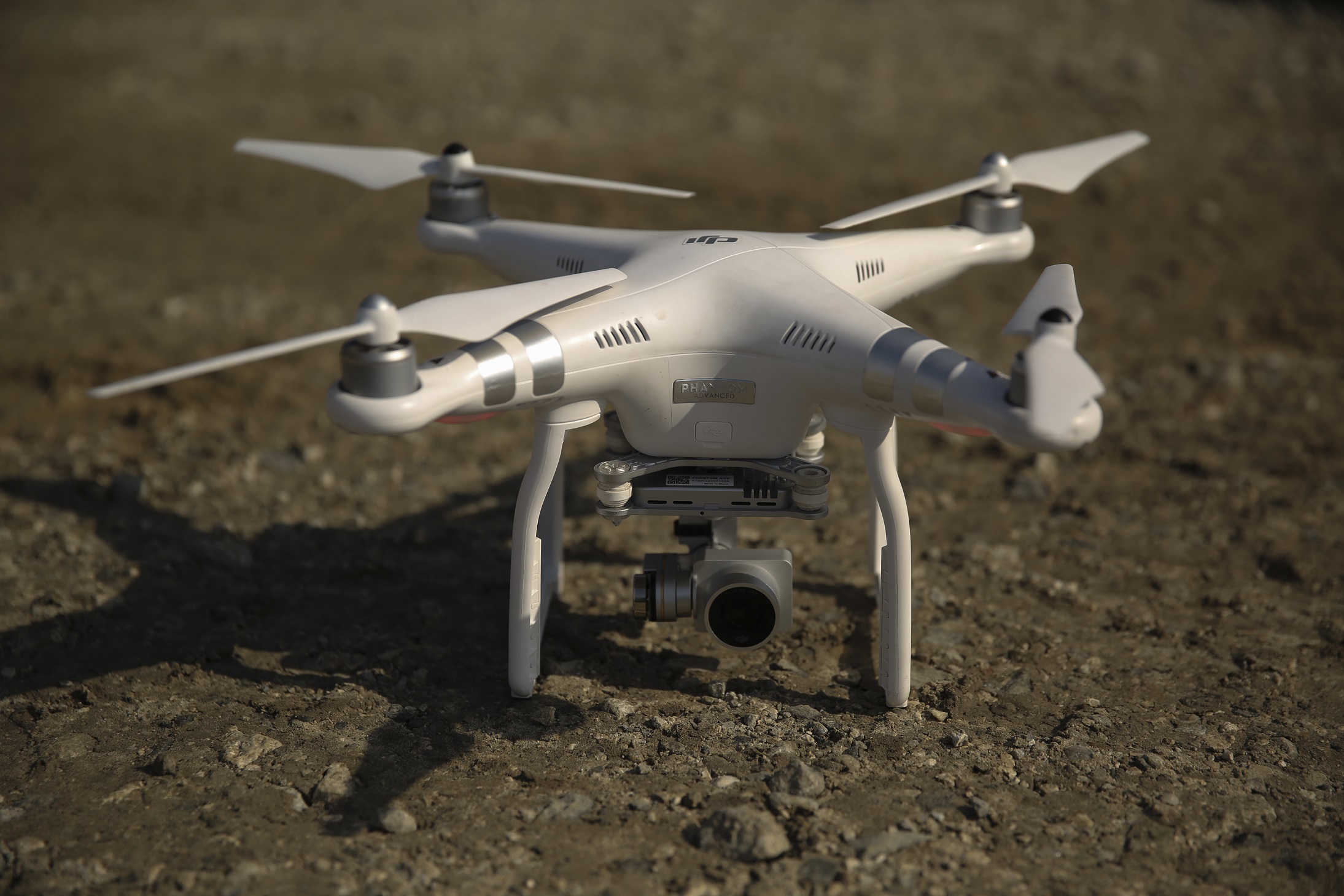
The U.S. Department of Defense is getting rid of Chinese-manufactured drones over cybersecurity concerns.
The U.S. Pacific Command announced on Thursday that the Defense Department and the entire federal government will have access to secure, trusted, and American-made commercial drones on the General Service Administration schedule.
This new DIU initiative, dubbed Blue small unmanned aircraft systems (sUAS), is the culmination of 18 months of work by the Army and DIU to tailor the best technology from U.S. and allied companies to develop small unmanned aircraft systems that can be safely adopted by men and women in uniform, Acting Undersecretary of Defense for Research and Engineering Michael Kratsios announced at a virtual event hosted by the Defense Innovation Unit (DIU).
During the Aug. 18 DIU event, Kratsios said it also has important impacts for the nation’s broader economic and national security.
“UAS technologies have incredible promise and potential to not only provide great economic benefit for the American people, but also to enhance safety and security for our nation. We need a strong, secure domestic UAS manufacturing base to ensure American leadership in this critical field,” he said. “Blue sUAS represents a tremendous first step toward building a robust and trusted UAS domestic industrial base that ensures sustained delivery of highly-capable, secure UAS to the warfighters that depend on it.”
DOD recognizes the growing value and capabilities of sUAS, from providing on-demand intelligence and reconnaissance capabilities in contested battle spaces, to routine monitoring of critical infrastructure, to transporting products, he said. However, until now, the Department was not able to adopt these systems safely due to security and supply chain concerns posed by Chinese-made sUAS, he added.
Through the work of Blue sUAS, five U.S.-manufactured drone configurations will be made available to provide trusted and secure sUAS options to the military and U.S. government.
Blue sUAS also showcases how DOD partners with industry and allies to quickly pilot and scale cutting-edge technologies across the joint force and the other federal agencies.
Haven Wynne, General Services Administration supply chain management branch chief and program manager, said GSA is drawing up a 20-year contract, to include five-year options. He noted that the contract allows for the growth of additional accessories to be added to the platforms at a later time if required.
“Blue sUAS is a great example of DOD acquisition reform by lowering the barrier to entry for nontraditional companies to rapidly iterate shoulder to shoulder with warfighters to deliver highly capable sUAS tailored to mission needs,” Ellen M. Lord, undersecretary of defense for acquisition and sustainment, said at DIU’s virtual event.
Chris O’Donnell, deputy assistant secretary of defense for acquisition and sustainment, platform and weapon portfolio manager, said that warfighter experiences in Iraq and Afghanistan demonstrated the importance of small UASs to warfighters on the battlefield.
DOD awarded $13.4 million to five companies to begin producing sUASs beginning next month: Vantage Robotics, Skydio, Parrot, Teal and Altavian.
According to DIU’s website, the sUASs will have a range of at least 3 kilometers, 30 minutes or more flying time, the ability to fly through rain and dust, assembly time of two minutes or less, a weight of under 3 pounds on takeoff, high-resolution day and night optics, thermal imaging, open source protocol architecture, and simple integration with ground controllers.