

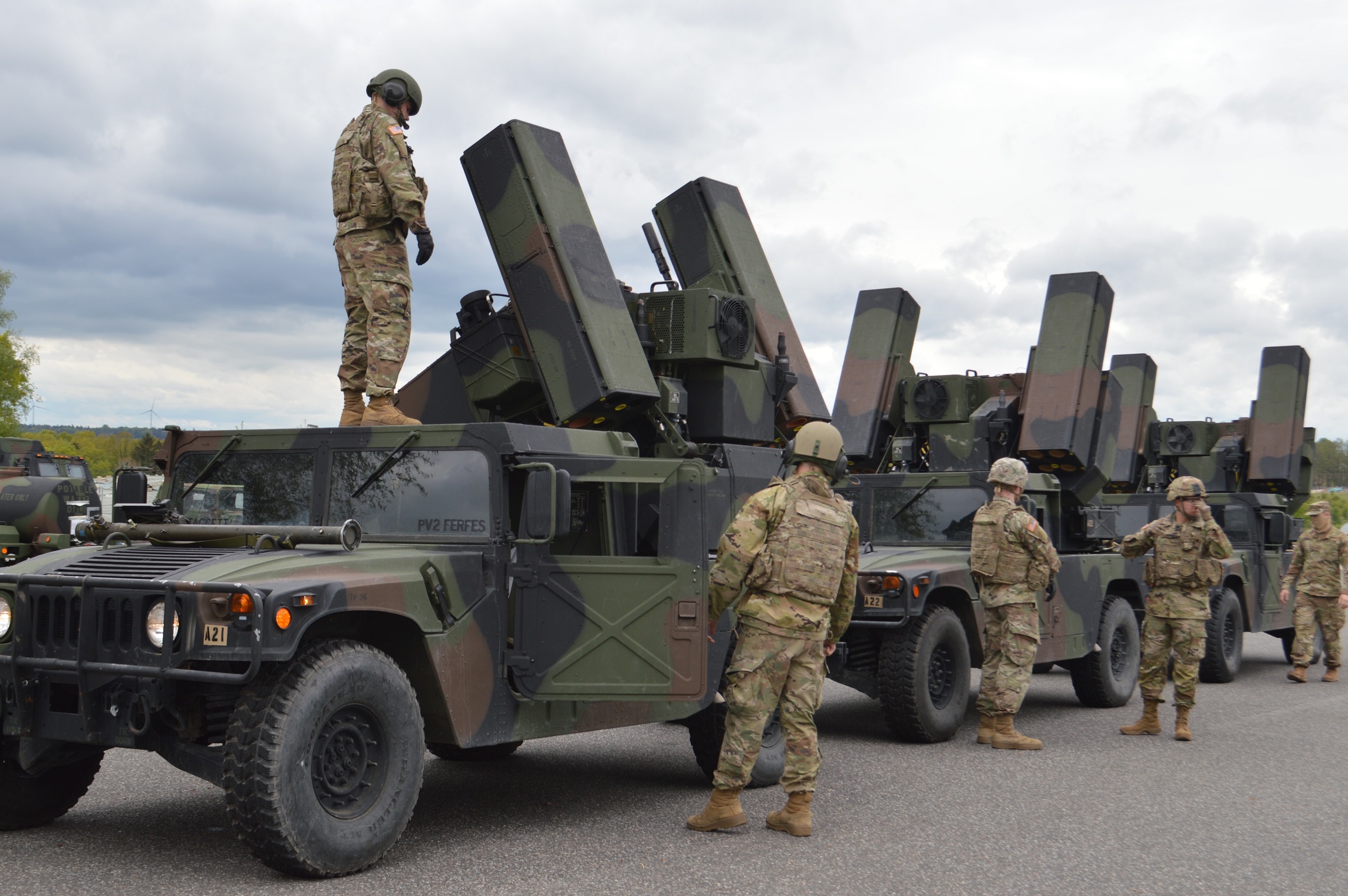
The U.S. Army announced on Tuesday that short-range air defense, 5th Battalion, 4th Air Defense Artillery Regiment (5-4 ADAR), 10th Army Air & Missile Defense Command continues to train amid COVID-19 pandemic.
Crewmembers of Avenger weapons systems, which are vehicle-mounted short-range air-defense systems that fire Stinger missiles, are maintaining their combat proficiency in a COVID-19 environment.
Operating the Avenger, a self-propelled short-range air defense missile system, the assigned 14P air and missile defense crewmembers must maintain a Table 8 certification to remain proficient.
There are 10 tables total for an Avenger crew. Tables are a tiered approach to certifying crews according to Lt. Col. Todd Daniels, 5-4 ADAR commander. Each table is progressively more challenging and complex. The Soldiers must pass all previous tables (or steps) to continue to the next until they reach the eighth table, which certifies them as a team able to employ their Avenger in combat.
“We are replicating everything the crews would do on a live fire range, minus them actually firing live rounds,” said Sgt. 1st Class Shawn Richardson, battalion master gunner. “According to our gunnery training circular, every table that these crews had to do prior to going to a live fire are being accomplished in this (COVID-19) environment right now.”
According to Richardson, the only physically distancing challenge is when the crews have to pass off the Stinger missiles when loading the Avenger. It has also changed the way some of the master gunners train.
“I can’t get in there with my hands and show them,” said Richardson. “I can voice it and have them replicate what I’m telling them.”
Creating a sense of realism is the biggest challenge when it comes to training.
“I get it, it’s kind of like a video game (referring to the Avenger Table Top Trainer (AT3)) so the level of urgency might not be there,” said Staff Sgt. Christopher Long, Charlie Battery master gunner. “What we did was designed new scenarios on the tabletop trainers to make it little more difficult, a little more realistic so these guys can get some quality training and it’s not a check the block thing.”
Improving the proficiency of the crews while maintaining combat power is the ultimate goal of the battalion during peacetime or pandemic times.
“It’s still getting us spun up on the stuff that we need to know and we get a lot more time to work on (the AT3) so once we get out on a real Avenger system, it’s pretty much the same thing and we know exactly what to do,” said Sgt. Emmanuel Hopkins, Charlie Battery air and missile defense crewmember. “It’s great practice especially for the new guys just getting hands on, mistakes can be made now (before a live fire).”
The “We Attack” battalion conducts all the training on Shipton Kaserne and, once certified all the crews are qualified for six months.
“I am extremely proud of how our units are continuing to train in this new environment. They continually find new and creative ways to not only maintain their units’ readiness, but actually improve it,” said Daniels. “While our opportunities for collective training with other units was delayed due to COVID-19, we maximized the time to improve our Soldiers’ lethality at the individual and crew level while minimizing the risk of exposure to COVID-19 through employment of appropriate force health protection measures.”