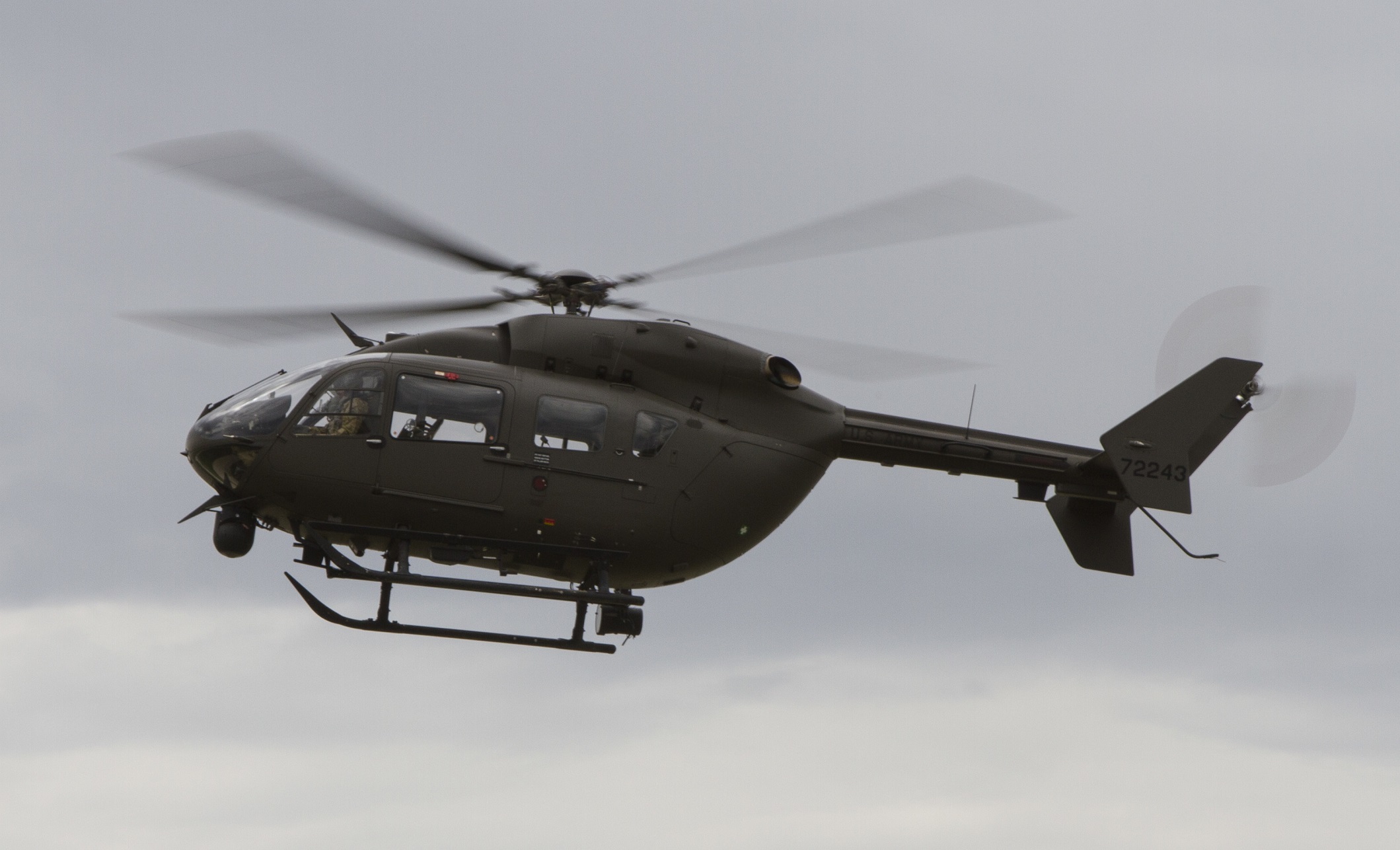
The UH-72A Lakota multi-mission helicopters will assist in transporting COVID-19 tests, according to a recent service news release.
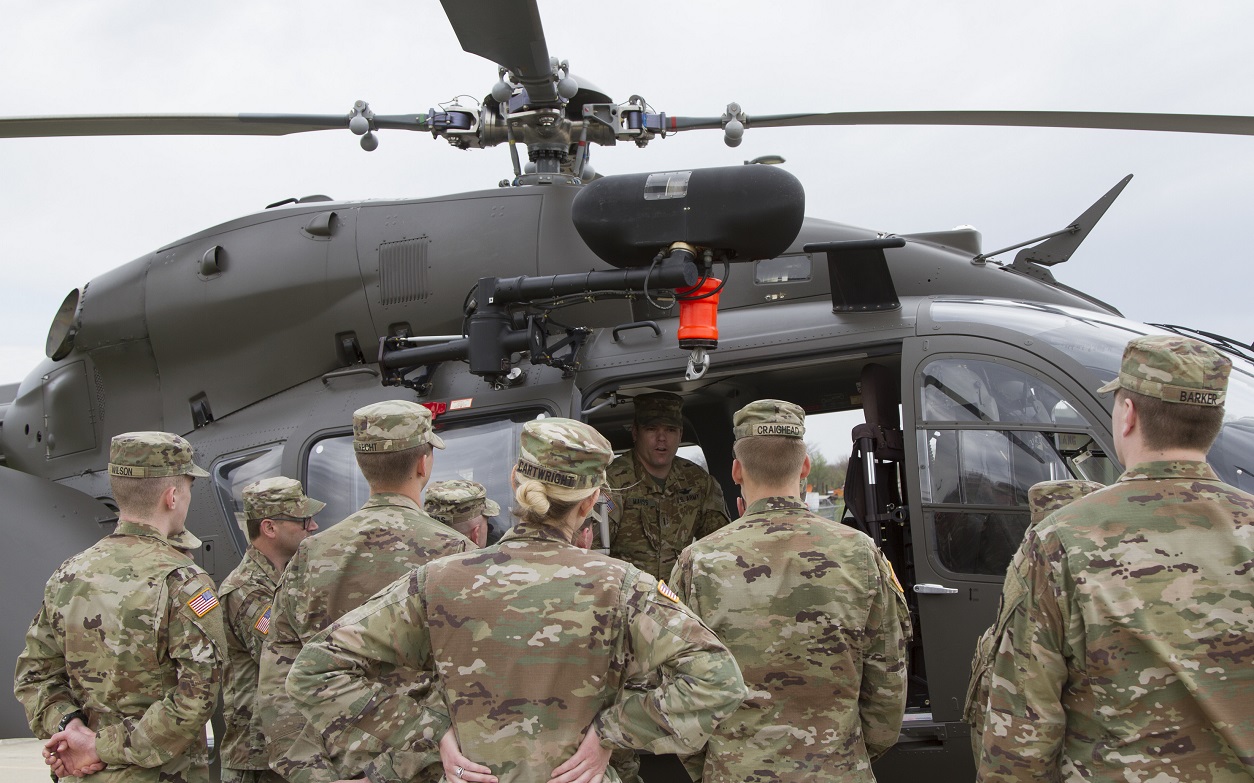
On Tuesday, the 135th Mobile Public Affairs Detachment press release said that two UH-72 Lakota helicopters landed at the readiness center at the Iowa National Guard Readiness Center in Iowa City in order to train Soldiers with the 209th Medical Company Area Support who will assist in transporting COVID-19 tests to be processed at the State Hygienic Laboratory in Coralville.
The Army’s website said the UH-72A is a twin-engine, single-main-rotor commercial helicopter. It has seating for two pilots and up to six passengers or two NATO standard litters. Two Turbomeca Arriel 1E2 engines, combined with an advanced four-blade rotor system, provide lift and speed in a wide range of operating conditions. The LUH can be configured with two NATO standard litters, passenger seating for a medical attendant and a crew chief.
The UH-72A is equipped with modern communication and navigation avionics. It includes a 3-axis autopilot and single pilot Instrument Flight Rules capability. The cockpit is compatible with night vision devices. In addition to the MEDEVAC configuration, the UH-72A is also being fielded in a VIP, ARNG Security & Support (S&S) and Combined Training Center (CTC) configurations.
The Lakota is a version of the technologically-advanced and operationally-proven Airbus’s H145 family multi-mission helicopter, which is used worldwide for law enforcement, emergency medical transportation, search and rescue, offshore and utility operations, and corporate transportation.
Incorporation of proven and new COTS technologies, combined with the UH-72A’s operational capabilities, result in an aircraft that is exceptionally easy and affordable to operate and maintain. Extensive use of new, lightweight manufacturing materials and extensive system modularity simplifies maintenance, reducing lifetime ownership costs and logistics requirements.