

Pentagon’s No.1 weapons supplier Lockheed Martin Corp has announced that it tested next-generation long-range missile designed for the Army’s Precision Strike Missile (PrSM) program at White Sands Missile Range, NM. All objectives were achieved in a flawless second performance following the missile’s inaugural flight last December.
“Today’s flight test further demonstrated the reliability, precision and critical capabilities Lockheed Martin is building into the PrSM,” said Gaylia Campbell, vice president of Precision Fires and Combat Maneuver Systems at Lockheed Martin Missiles and Fire Control. “The missile performed exactly as expected and successfully engaged the target with pinpoint accuracy.”
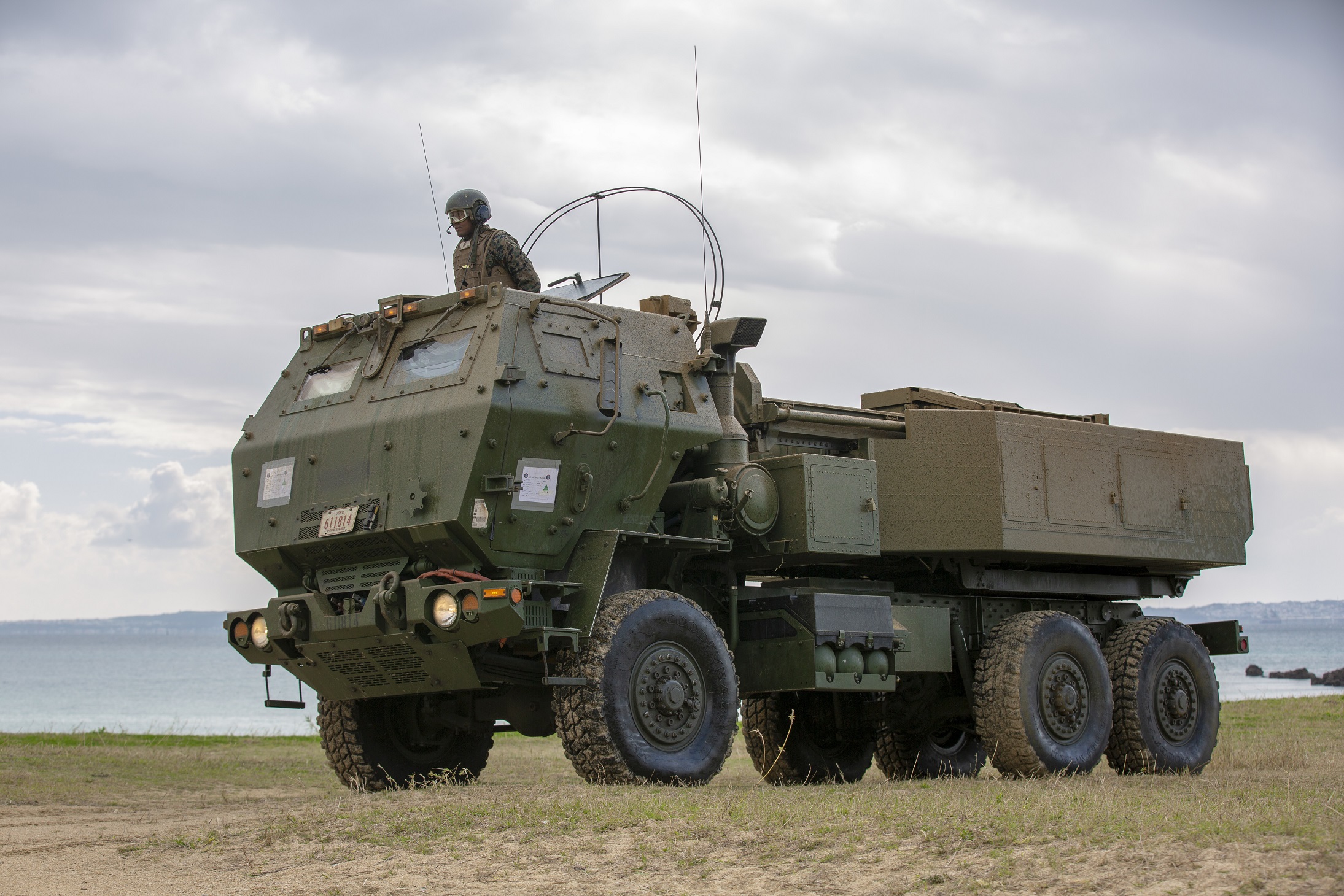
PrSM was fired from Lockheed Martin’s High Mobility Artillery Rocket System (HIMARS™) launcher and flew a nominal trajectory approximately 180 kilometers to the target area, culminating in a highly accurate and lethal warhead event.
Test objectives included confirming the missile’s flight trajectory, range and accuracy from launch to warhead event, as well as warhead lethality, HIMARS launcher integration and overall missile performance.
“This second consecutive successful flight test of Lockheed Martin’s PrSM validates our missile technology and confidence that Lockheed Martin is uniquely positioned to deliver this important, cost-effective capability to meet our U.S. Army customer’s priorities,” Campbell said.
The next-generation precision-strike, surface-to-surface weapon system will deliver enhanced capabilities for attacking, neutralizing, suppressing and destroying targets at depth on the battlefield and give field artillery units a new long-range capability while supporting brigade, division, corps, Army, theater, Joint and Coalition forces.
We celebrated another successful flight test of our precision-strike missile with the @USArmy. More on this milestone: https://t.co/COqMQXfprr pic.twitter.com/E7or4GsUVV
— Lockheed Martin (@LockheedMartin) March 10, 2020