

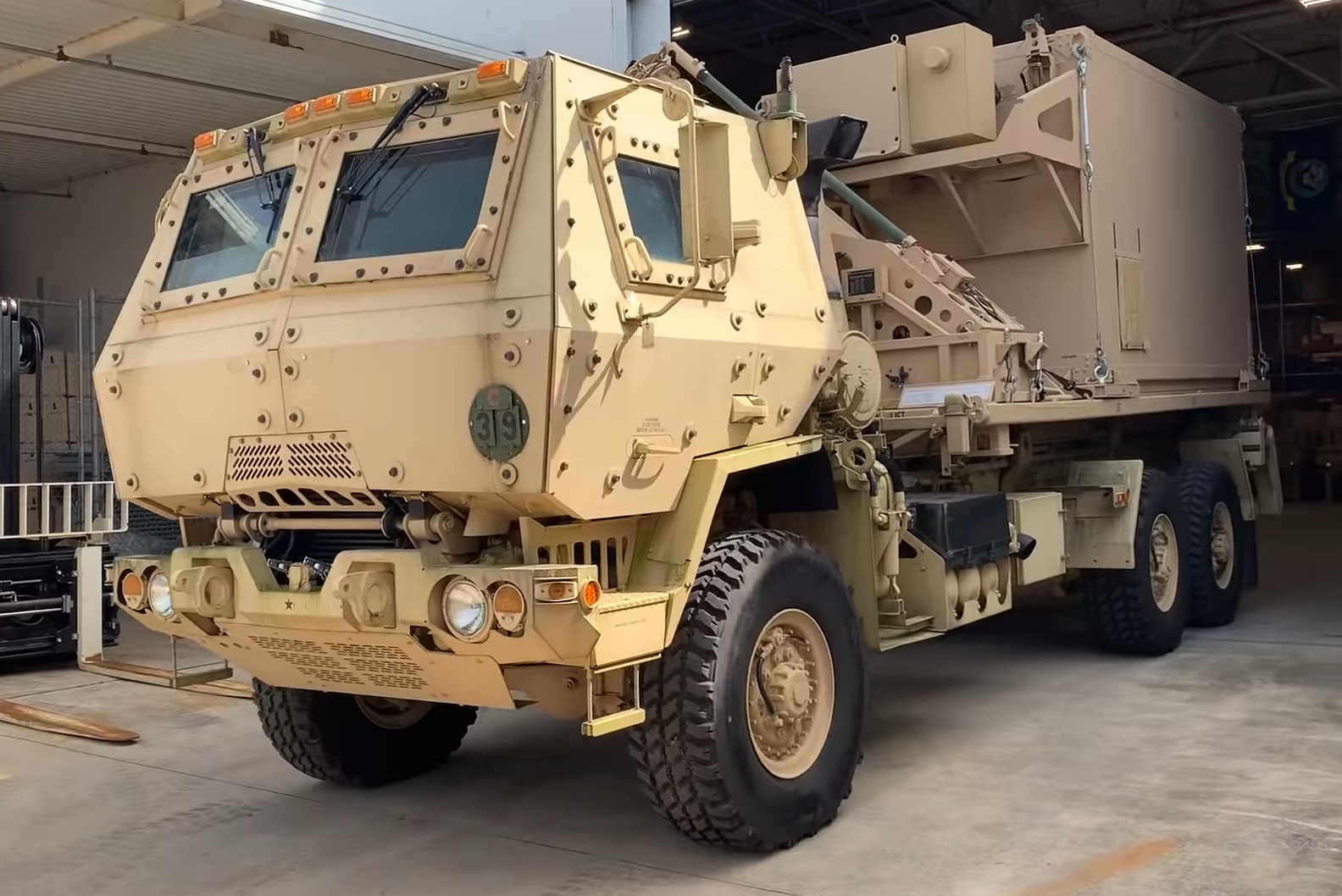
The U.S. Department of Defense and Northrop Grumman Corporation announced an agreement worth about $60.6 million for continued work on the Integrated Air and Missile Defense Battle Command System program.
The Integrated Air and Missile Defense Battle Command System, or IBCS, is a revolutionary command-and-control (C2) system developed to deliver a single, unambiguous view of the battlespace. This significantly enhanced aircraft and missile tracking improves the ability of combatant commanders and air defenders to make critical decisions within seconds.
This contract enables ongoing support for engineering, logistics, integration, test and evaluation, training and program management as IBCS progresses through the design and development phase in preparation for fielding. This work supports an upcoming IBCS Limited User Test (LUT), which will start in second quarter 2020, and leads into a Milestone C decision expected in third quarter 2020.
“In partnership with our Army customer, we have demonstrated through numerous tests and exercises that IBCS performs exceptionally well in realistic and increasingly complex operational environments,” said Dan Verwiel, vice president and general manager, missile defense and protective systems, Northrop Grumman. “IBCS is mature and well positioned for both the LUT and a successful Milestone C decision.”
IBCS is the cornerstone of the Army’s IAMD modernization program. The ability of IBCS to network all available sensors and interceptors enhances battlefield survivability by providing redundancy, cyber resiliency and eliminating vectors of attack.
IBCS further enhances survivability by allowing air defenders to have a broader view of the battlespace. IBCS integrates and fuses data from disparate sensors into a single integrated air picture with unprecedented accuracy. Networked operations enabled by IBCS expand the area of protection and allow action to be taken against threats at greater ranges.
IBCS successfully demonstrated this advanced beyond-line-of-site, engage-on-net capability in an August flight test, where a combination of Patriot and Sentinel radars connected over the IBCS Integrated Fire Control Network were used to detect and intercept a low-flying cruise missile target using a Patriot Advanced Capability-3 (PAC-3) interceptor. This was the farthest ever intercept by a PAC-3 air defense missile.
IBCS has been further validated through a series of exercises, checkout events and training activities conducted by U.S. Army soldiers.
IBCS is managed by the U.S. Army Program Executive Office for Missiles and Space at Alabama’s Redstone Arsenal. Work under this latest contract will be performed by Northrop Grumman in Huntsville, with an estimated completion in 2021.