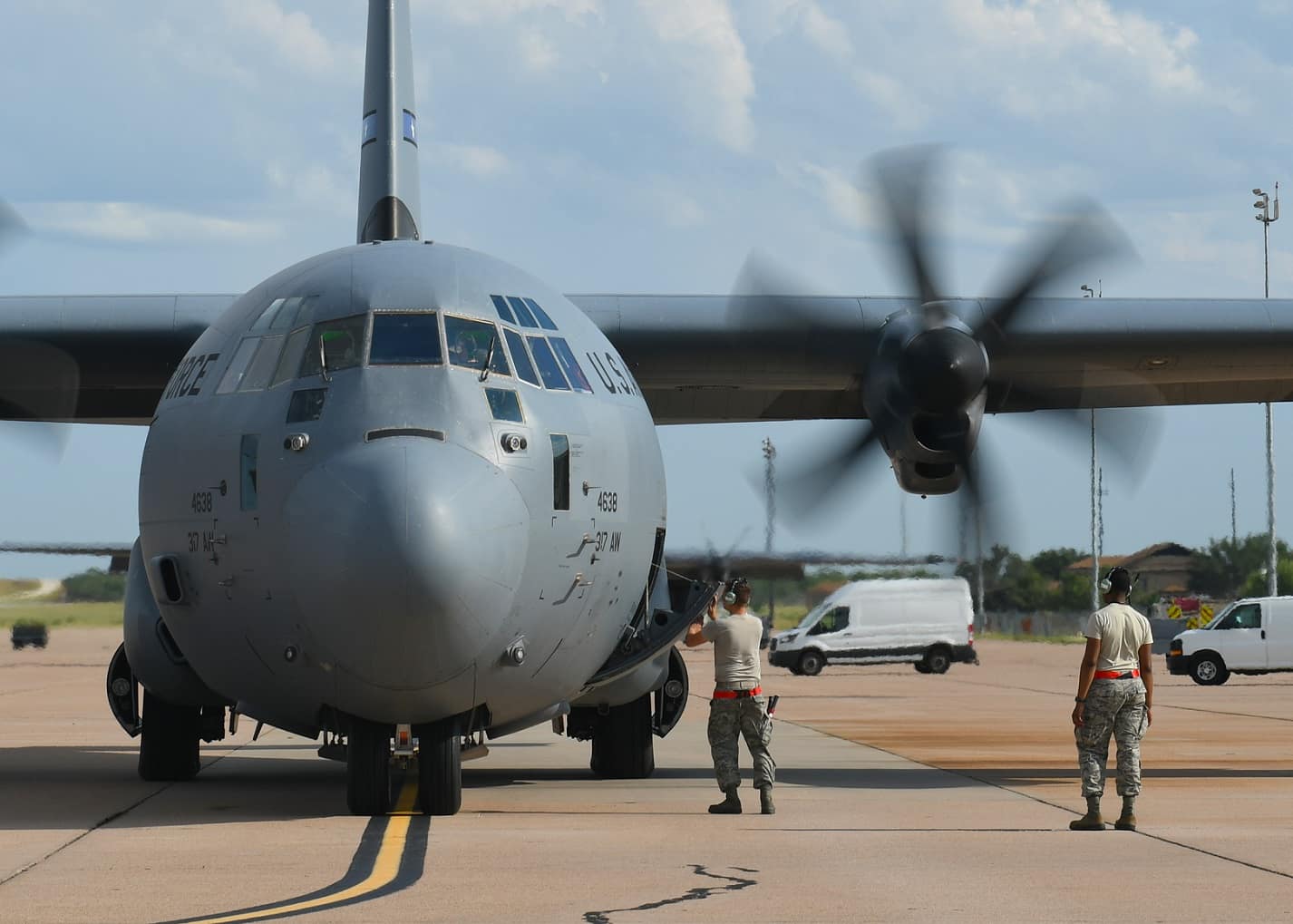
The U.S. Department of Defense has announced that the Air Force awarded a nearly $20,8 million contract to General Electric Aviation for R391 propeller system for Lockheed Martin’s C-130J Super Hercules.
The Dowty Propellers Inc., a business unit of GE Aviation, has been awarded a delivery order for Option I quantities of R391 propellers and spares to support the C-130J aircraft, in conjunction with the commercial Rolls Royce AE2100D3 engine managed by Warner Robins, Air Logistics Center, Tactical Airlift Division.
Work will be performed in Sterling, Virginia, and is expected to be completed by May 29, 2023.
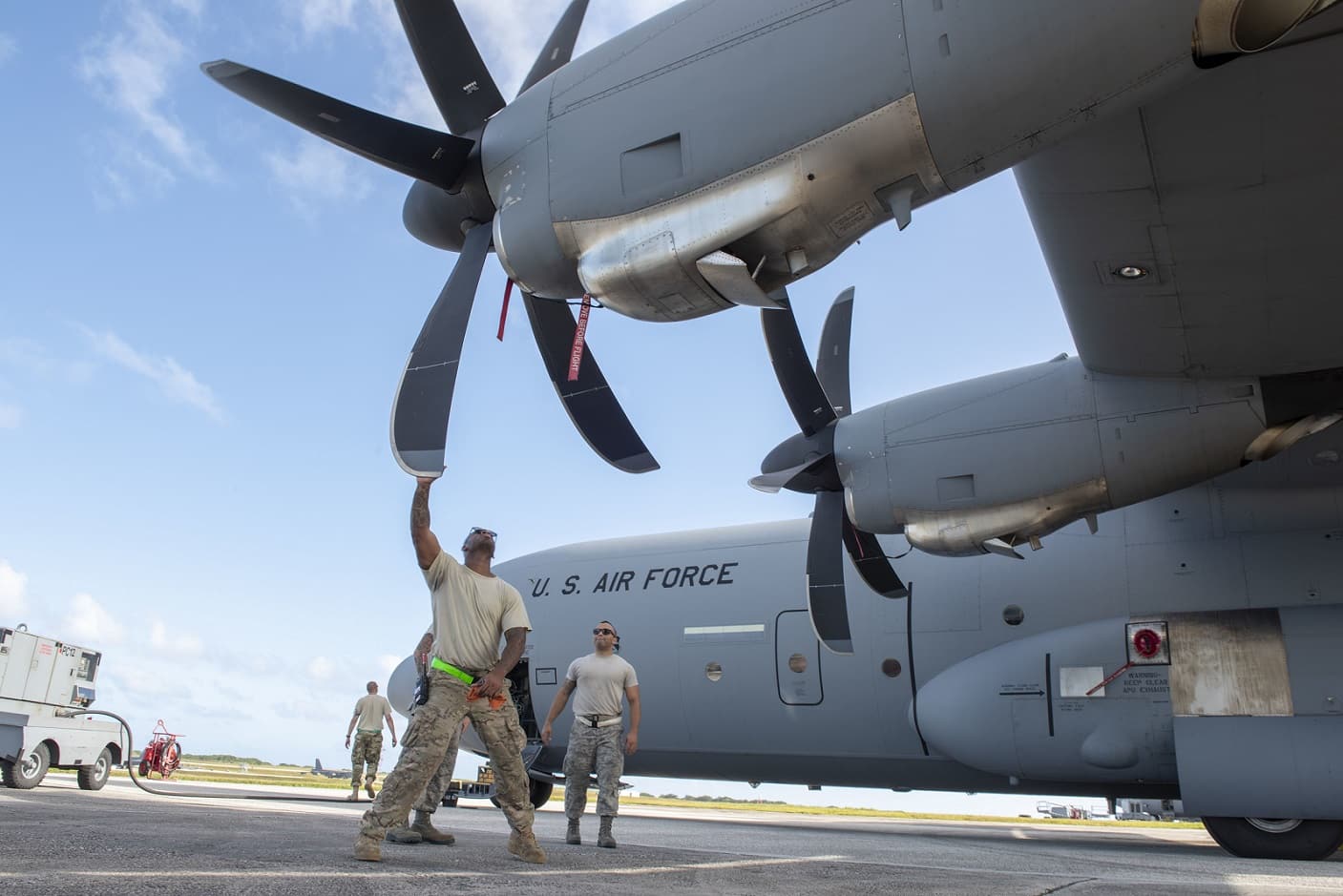
The Dowty Propellers’ website said the six-blade R391 propeller system has proven itself in some of the most challenging operational conditions during front-line and support deployments of Lockheed Martin C-130J Super Hercules four-engine turboprop airlifter.
Incorporating composite blade technologies developed and refined by Dowty Propellers since the 1980s, the R391 utilizes advanced swept-blade design and optimized ARA-D/A airfoil sections for excellent take-off and climb performance, as well as low noise levels. It combines low system weight and a service-proven rugged construction, with an unmatched record of operational safety and reliability built on a heritage that spans more than 60 years of service.
Also, the company added that the propeller system incorporates a fail-safe electronic control system that is operated by a single lever in the cockpit, and is fully integrated with the engine controls on the C-130J’s 4,700 shp. Rolls-Royce AE 2100D3 engines. Maintenance is facilitated by the R391’s modular configuration, its low parts count and simple hub construction, along with the elimination of mechanical linkages to the cockpit.
As to C-130J, this is the latest addition to the C-130 fleet and has replaced aging C-130Es and some of the high time C-130Hs. The C-130J incorporates state-of-the-art technology, which reduces manpower requirements, lowers operating and support costs, and provides life-cycle cost savings over earlier C-130 models. Compared to older C-130s, the J model climbs faster and higher, flies farther at a higher cruise speed, and takes off and lands in a shorter distance.