

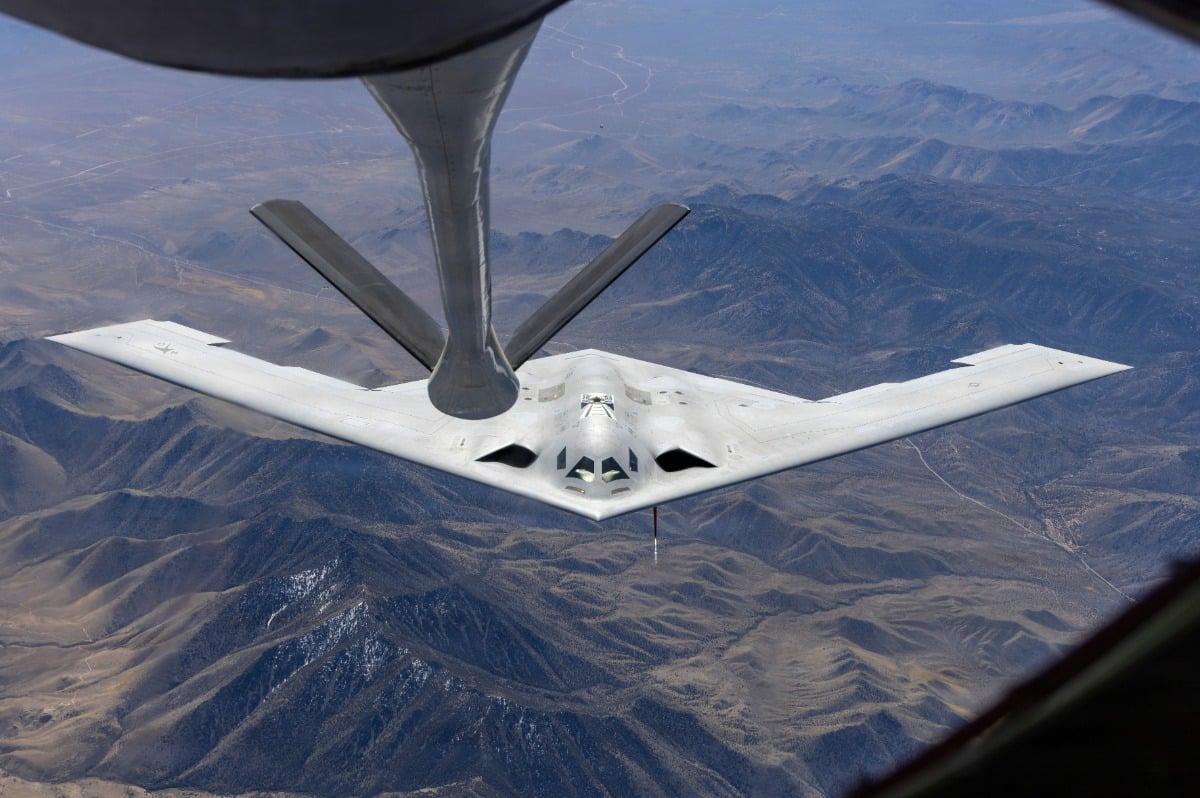
- An operational test pilot flew the B-21 Raider alongside a developmental test pilot at Edwards AFB, the earliest combined DT/OT integration in modern U.S. aircraft testing history.
- Gen. Dale White told the Raider Combined Test Force on June 8, 2026 that the B-21, Sentinel, and F-47 are the three programs the nation's future depends upon.
In what Air Force officials described as the earliest such integration in modern test history, an operational test pilot flew the B-21 Raider alongside a developmental test pilot at Edwards Air Force Base in California, signaling that America’s next-generation nuclear bomber is transitioning from proving it can fly to proving it can fight.
The flight was conducted by the Raider Combined Test Force at Edwards, and the Air Force confirmed it breaks down historical barriers in the flight test pipeline that have separated developmental and operational evaluation on every major aircraft program before it.
Developmental testing, the kind that has occupied the B-21 program since its first flight in November 2023, focuses on whether an aircraft meets its technical specifications, flies safely, and performs as designed. Operational testing is a fundamentally different evaluation, asking whether the aircraft is combat-effective, survivable in contested airspace, and suitable for use by the actual warfighters who will fly it in conflict. Historically, those two phases have been conducted sequentially, with a significant gap between them. Compressing them into a single combined environment, with both pilot types sharing the same cockpit, is the Air Force betting that the B-21 is already mature enough to support that kind of evaluation years earlier than any comparable program.
Col. Matt Guasco, commander of AFOTEC Detachment 5 at Edwards, the unit responsible for the operational test contribution to the B-21 program, put the historical weight of the moment plainly. “We put an operational test member in the pilot seat with an Air Force Test Pilot School graduate in the other,” Guasco said. “In the history of modern test, we’ve never done that so early in a program.”
Lt. Col. Matthew Gray, commander of the 420th Flight Test Squadron and Raider Combined Test Force director, described what the operational tester’s presence actually changes about the evaluation program. “Bringing operational testers onto the team at this early point in the program now means we can evaluate the bomber’s true combat utility, not just its flying characteristics,” Gray said.
The B-21 Raider is the U.S. Air Force’s next-generation stealth bomber, developed by Northrop Grumman, designed to penetrate the most advanced air defense systems in the world and deliver both conventional and nuclear weapons at intercontinental range. It will replace the B-2 Spirit and eventually the B-1B Lancer, leaving the B-52 Stratofortress as the only other bomber in the U.S. inventory. The Air Force lists a minimum inventory objective of 100 aircraft at an average procurement unit cost of approximately $692 million in base-year 2022 dollars, with initial operational fielding targeted at Ellsworth Air Force Base in South Dakota in 2027. Two test aircraft are currently flying at Edwards, with the second arriving in September 2025 and enabling the program to move beyond basic flight performance checks into the mission systems and weapons integration work that the operational tester’s presence is now specifically designed to evaluate.
The program’s test timeline has been consistently faster than historical precedents for aircraft of this complexity. The B-21 completed its first aerial refueling trials with a KC-135 Stratotanker in April 2026, with Air Force Global Strike Command commander Gen. S.L. Davis linking the milestone directly to “penetrating long-range strike anywhere in the world,” and former flight-test personnel commenting on the program’s pace specifically identified reduced regression testing as the most probable explanation for the compressed timeline. The B-21 Combined Test Force integrates Air Force developmental testers, Northrop Grumman engineers, stealth specialists, mission-system evaluators, and software teams into a single structure, eliminating the organizational handoffs that historically slowed the transition between test phases.
Gen. Dale White, the Department of War’s direct reporting portfolio manager for the weapon systems most critical to national security, addressed the Raider Combined Test Force at Edwards on June 8, 2026, and made clear that he views the B-21 not as one procurement program among many but as a cornerstone of American strategic power with an urgency that should shape every decision the test team makes. “There are three programs the future of our nation depends upon: Sentinel, B-21 and F-47,” White told the assembled workforce. “These are the capabilities our nation will turn to in its darkest hour.”
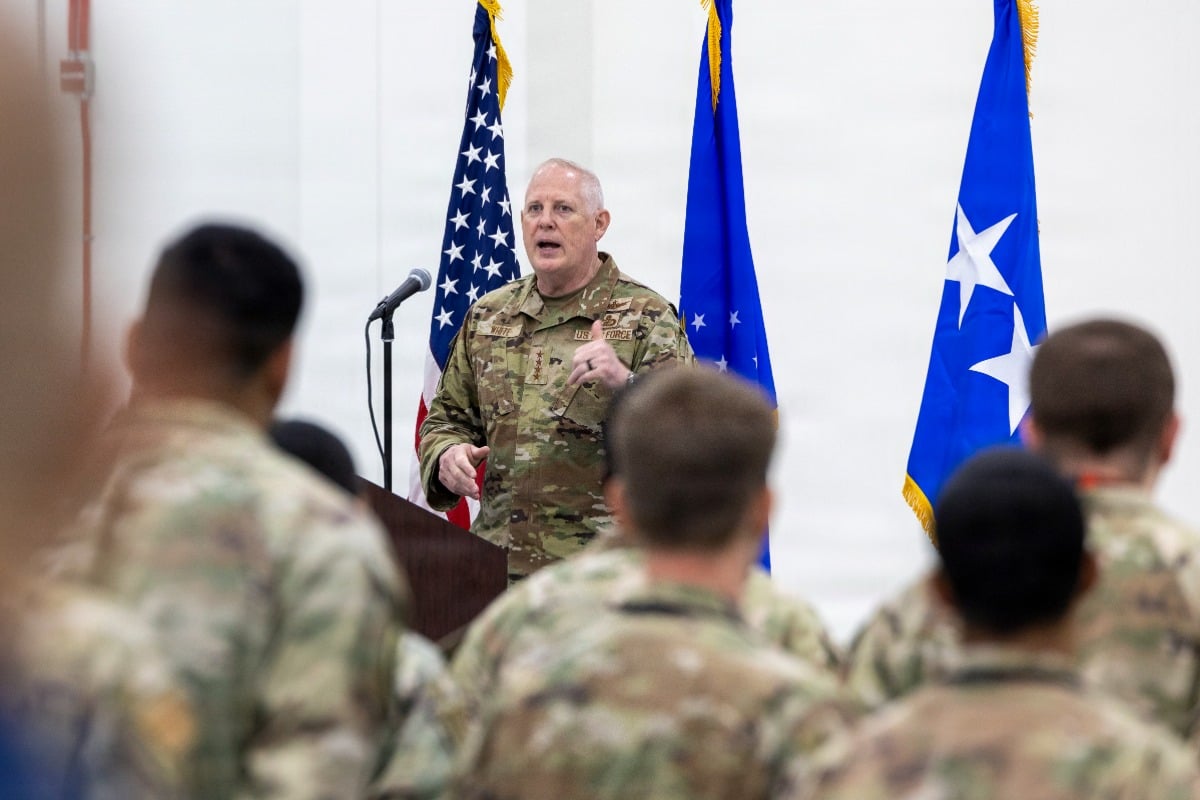
“I’m not going to be reckless and say go faster,” he said, before asking the team directly: “How can I clear the way?”
When a team member asked what keeps him up at night, White’s answer was unambiguous. “I worry that we don’t embrace urgency. I worry that talk is cheap. I worry about the courage to challenge leaders,” he said.
On February 23, 2026, the Department of the Air Force and Northrop Grumman agreed to apply $4.5 billion in already authorized and appropriated funding to increase annual B-21 production capacity by 25 percent, a decision that makes the accelerated test timeline more than just a milestone to celebrate. When production rates increase, the cost of discovering and correcting a design or integration problem grows proportionally, because each fix must be retrofitted across a larger number of aircraft. Early operational testing that identifies crew-interface problems, weapons-employment issues, or survivability gaps before the production line accelerates is not just good practice; it is a financial and operational imperative.
The B-21 program went from public unveiling in December 2022 to maiden flight in November 2023 to combined developmental and operational test in June 2026, a timeline that anyone familiar with the history of American stealth aircraft programs would have described as implausible a decade ago.