

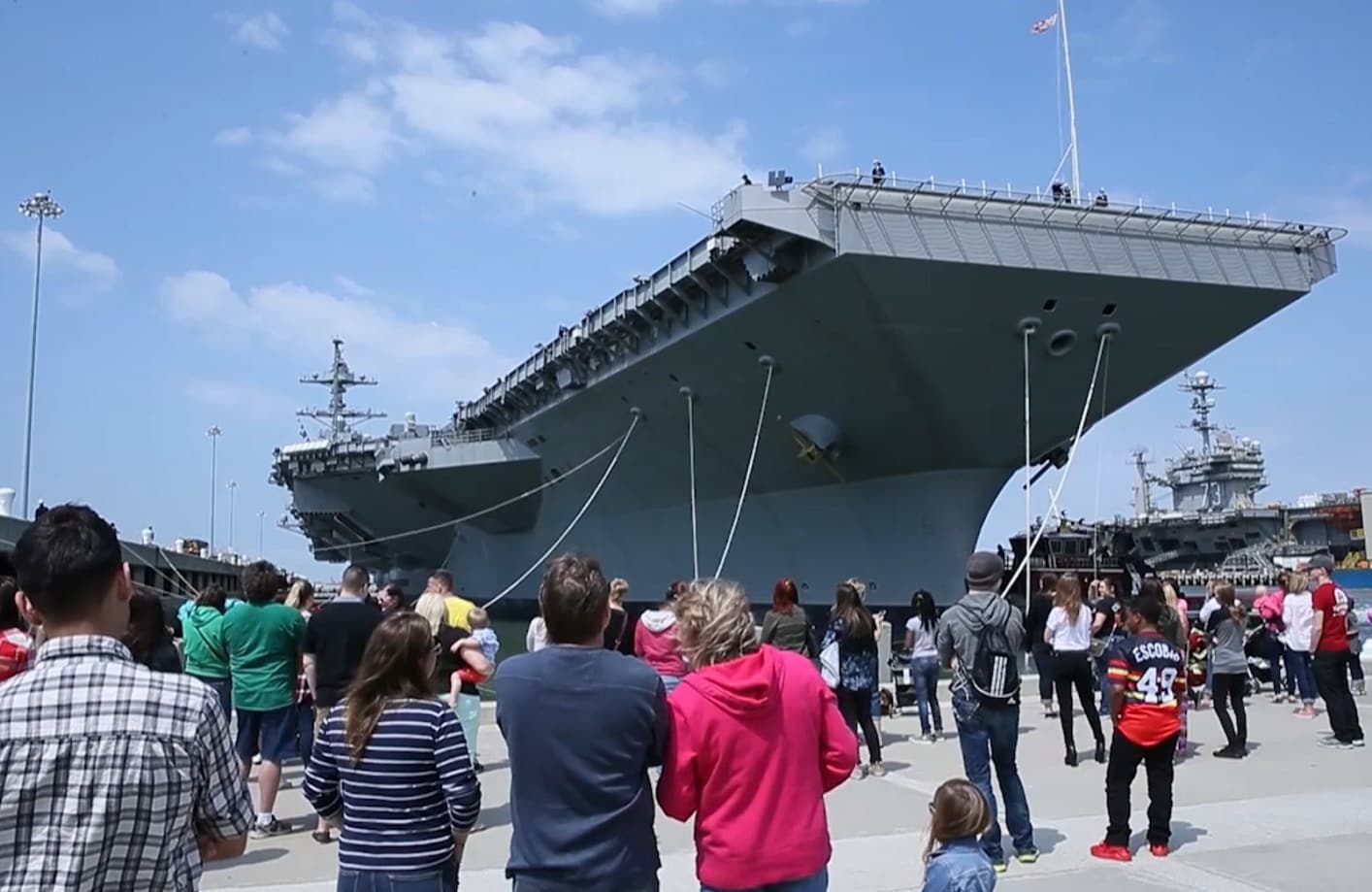
Defense company Raytheon and the U.S. Navy completed the final developmental test of the latest generation of the Ship Self Defense System, or SSDS, Integrated Combat System for the USS Gerald R. Ford (CVN 78) aircraft carrier.
The aerospace giant reported the test was conducted off the coast of California from the Navy’s unmanned Self Defense Test Ship simulating a scenario CVN 78 may encounter once deployed.
During the raid scenario exercise, two anti-ship missile surrogate targets were located, classified, tracked and engaged using the SSDS Integrated Combat System adapted for CVN 78.
“This successful dual-target test demonstrates the maturity of the Ship Self Defense System ICS and paves the way for operational testing to begin,” said Mike Fabel, Raytheon’s SSDS program manager. “SSDS is a critical capability that enables CVN 78 to defend herself and her crew against current and emerging threats.”
The Raytheon Ship Self-Defense System ICS includes:
- Dual Band Radar: This technology searched for, located and tracked the targets. DBR then provided uplink and radar illumination to the Evolved SeaSparrow Missile to support missile guidance.
- Cooperative Engagement Capability, or CEC: The capability validated and processed the Dual Band Radar data for SSDS. CEC is responsible for providing a single, integrated air picture by fusing data from multiple sensors to improve track accuracy.
- Ship Self Defense System: SSDS processed the CEC data, classified the targets, determined the appropriate engagement ranges, passed launch commands to the interceptor missiles, and scheduled Dual Band Radar support for the engagements.
- Evolved SeaSparrow Missile and Rolling Airframe Missile: Successfully engaged and defeated both targets using live and simulated interceptors.
The Ship Self-Defense System ICS for CVN 78 has now successfully engaged three of three targets over the course of its first two test exercises.
SSDS is an open, distributed combat management system in service on US carriers and amphibious ships, including CVN, LSD, LPD, LHA and LHD classes. SSDS MK 2 is the premier self-defense system for the U.S. Navy. SSDS is integrated with Raytheon’s Cooperative Engagement Capability for the seamless extraction and distribution of sensor-derived information. This further enhances each ship’s anti-air warfare capability through sharing of available data to all participating CEC units, improving situational awareness, increasing range, and enabling cooperative, multiple, or layered engagement strategies.