

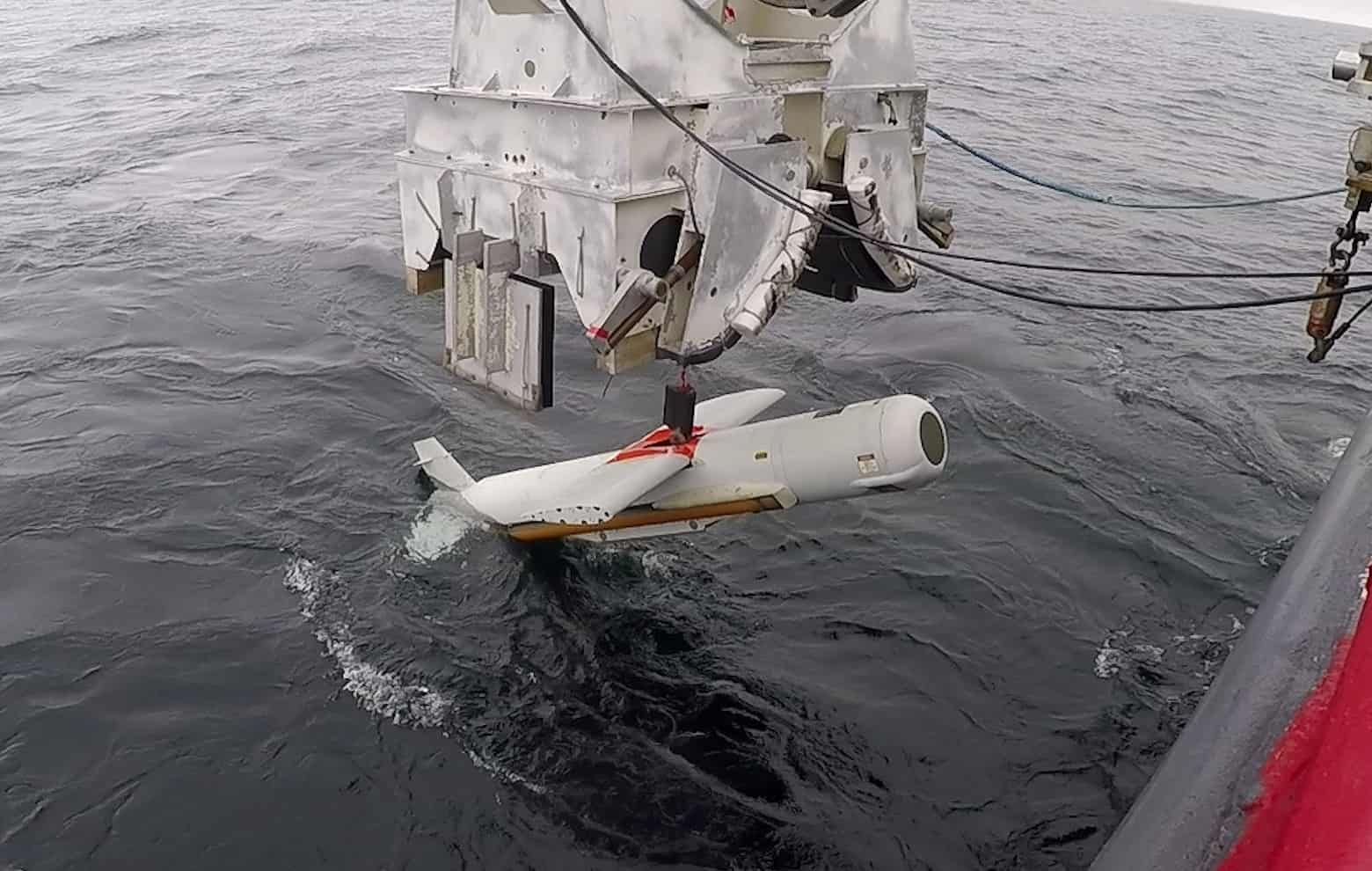
Naval Surface Warfare Center Panama City Division has announced that U.S. Navy successfully completes developmental testing of ‘Q-20C towed minehunting sonar.
After completing Developmental Testing (DT) in February of 2019, the U.S. Navy is another step closer to delivering the AN/AQS-20C (Q-20C) towed minehunting sonar to the Fleet. The Q-20C has advanced acoustic and electro-optic sensing capabilities that will detect, localize and classify bottom, close-tethered, moored, and volume-moored mines.
According to Naval Surface Warfare Center Panama City Division’s (NSWC PCD) Q-20C Lead Project Engineer Joe Thomas, the Q-20 C variant has increased capabilities, particularly with regard to searching in multiple modes in the water column.
“This is a multi-modal search sonar,” said Thomas. “When you put the Q-20C sonar sensor in the water, it looks down, to each side, and is also forward-looking. The C-variant upgraded acoustic array technology as well as an integrated, electro-optic identification sensor. Previous versions of this sensor had to swap the volume-search module for an electro-optic identification module. With the latest improvements, it’s essentially looking everywhere in the surrounding volume of water.”
NSWC PCD is considered the nation’s premier technical center for Mine Warfare and Mine Countermeasures (MCM). NSWC PCD’s subject matter experts partnered with Q-20C post mission analysis (PMA) operators during this phase of DT to evaluate the system performance with these latest improvements.
Thomas said the improvements implemented into the C-variant ready the system to be integrated with its intended tow platform, the MCM Unmanned Surface Vehicle (MCM USV) in Fiscal Year 2020.
Designated on Oct. 8, 2018 as a Program of Record, the MCM USV is a long endurance, semi-autonomous, diesel-powered, all-aluminum surface craft that supports the employment of various MCM payloads.
“The Q-20C will be one of the payloads expected to be deployed from the MCM USV,” said Thomas. “By utilizing both Subject Matter Experts and Fleet Sailors as PMA operators during the Q-20C DT, we were able to better evaluate the system from technical and end-user perspectives. We also experienced significant success with the initial training, the hardware, and the PMA during this phase of testing.”
Thomas reported the PMA operators’ input and recommendations would be reviewed by the technical team for incorporation into the Q-20C for further evaluation and ultimately be useful for the system’s integration with the Fleet Users in MCM.
“We’re excited to finally finish Developmental Testing after the ‘pause’ caused by Hurricane Michael. This test marks a major milestone in delivering this capability to the Fleet” said Thomas.
PMA operators Aerographer’s Mate Chief Petty Officer Larry Pacquer and Mineman Petty Officer First Class Jonathan Roden reported an equally optimistic outlook for the Q-20C’s potential Future Naval Capabilities.
“As part of the Littoral Combat Ship’s MCM Mission Package, this sensor, when deployed by the MCM USV, can help to clear minefields,” said Pacquer.
“Once integrated with its intended tow platform, the Q-20C has the potential to facilitate ships safe passage through maritime channels,” said Roden. “It’s going to be technologies like these that will enable the Navy to remove Sailors from the minefields.”