

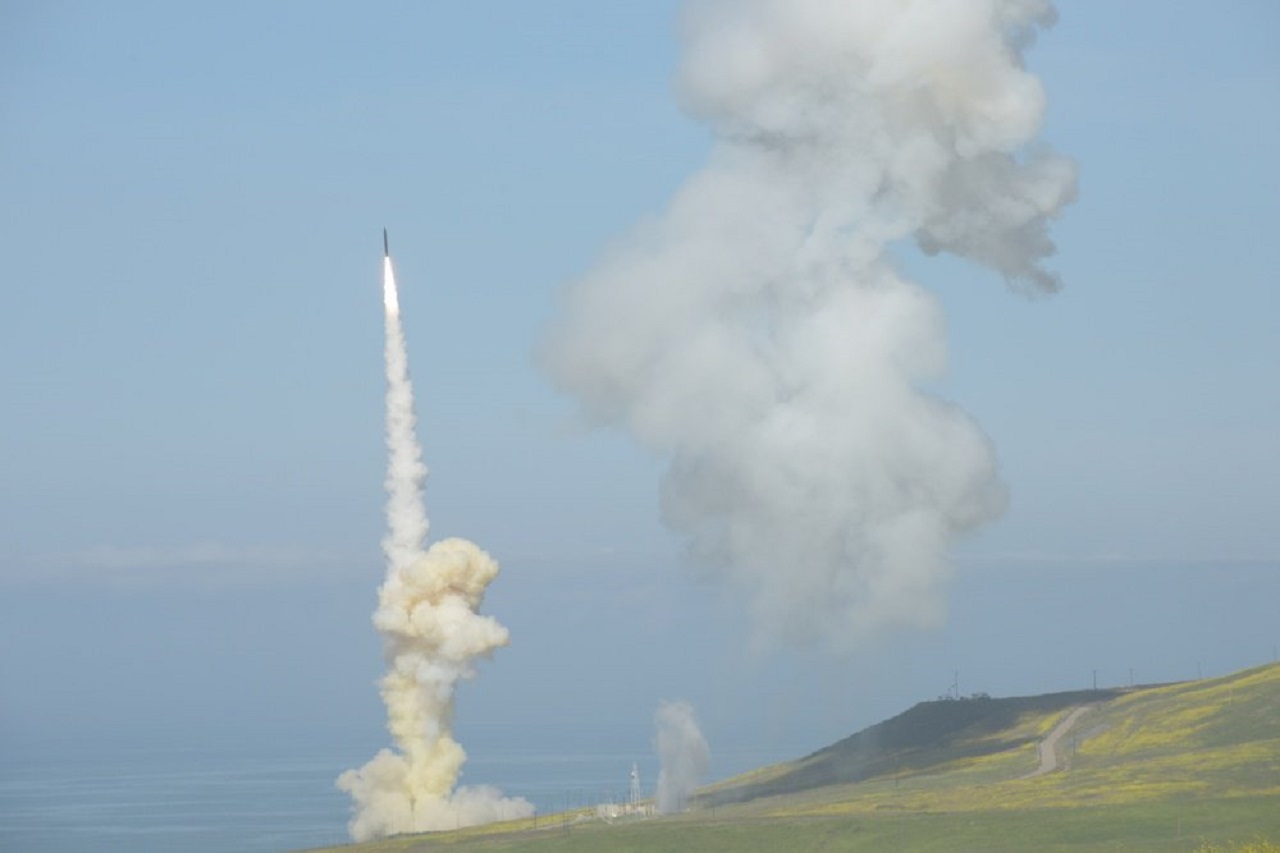
U.S. Missile Defense Agency complete historic missile interceptors test

The U.S. Missile Defense Agency and aerospace giant Boeing for the first time launched two Ground-based Midcourse Defense system interceptors to destroy a threat-representative target, validating the fielded system protects the United States from intercontinental ballistic missiles.

According to a statement by the U.S. Missile Defense Agency, two ground-based missile, or GMD, interceptors in rapid succession Monday from Vandenberg Air Force Base in California against a simulated intercontinental ballistic missile launched from a test site on the Kwajalein Atoll in the Pacific.

In the test, one interceptor struck the target in space. The second interceptor observed that intercept before destroying additional debris to ensure missile destruction. The test is known as a “two-shot salvo” engagement. The target launched from Kwajalein Atoll in the Pacific Ocean while the interceptors launched from Vandenberg Air Force Base, California.

- ADVERTISEMENT - CONTINUE READING BELOW -

“The data collected from this test will enhance missile defense for years to come and solidify confidence in the system,” said Paul Smith, Boeing vice president and program director, Ground-based Midcourse Defense. “We continue to increase the system’s reliability as the U.S. government plans to expand the number of interceptors protecting the country.”

GMD interceptors are located at Vandenberg Air Force Base and Alaska’s Fort Greely. The system is an integral part of America’s layered ballistic missile defense architecture. Boeing has been the GMD prime contractor since 2001.


Readers who wish to follow our weekly coverage can subscribe to the Weekly Defense Roundup.

If you wish to report a grammatical or factual error in this article, please let us know by using the online form.

Executive Editor
  • In this story
  • USA

Support The Defence Blog

Independent reporting takes resources. Join us on Patreon.

Become a patron

More Like This

U.S. Air Force B-52 bomber crashes in California

One of America's most iconic warplanes went down Monday morning at a military base in the California desert, setting off a large fire visible...

Shield AI brings its runway-free autonomous fighter jet to Eurosatory

Shield AI, the San Diego-based defense technology company that has been supplying AI piloting software to U.S. military aircraft since 2019, is showcasing X-BAT...

U.S. troops can now sequence DNA in the desert, Arctic, or at sea

Somewhere in a desert exercise or an Arctic field camp, a U.S. Navy microbiologist or hospital corpsman can now pull out a portable DNA...

U.S. Army pilots test 3D audio that changes how they hear combat

Flying a military helicopter in combat means managing a constant stream of radio chatter from multiple sources simultaneously, often while navigating at low altitude,...

U.S. Guard soldiers flew HIMARS cross-country and simulated deep strikes

Michigan National Guard soldiers loaded a HIMARS rocket artillery launcher onto a C-130J transport aircraft in Michigan and flew it more than 3,200 km...